
Otter
Species Information
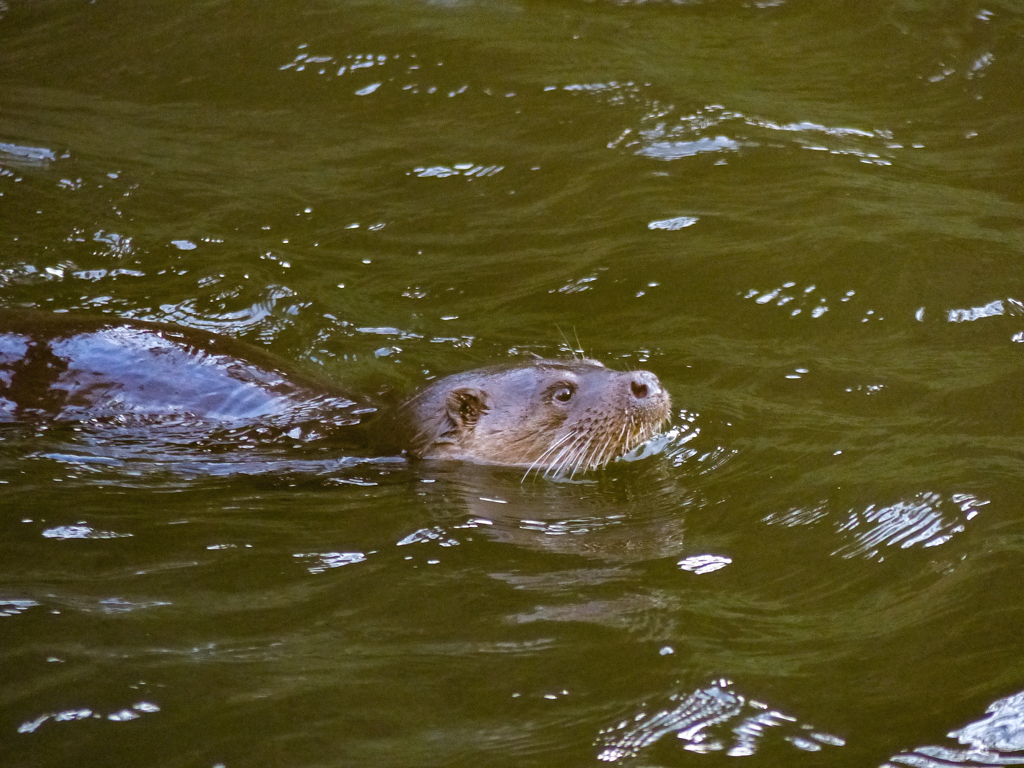
Rachel Bielby © Otter swimming in Union Canal
Statistics
Scientific Name: Lutra lutra
Length: 60-80cm (Tail: 32-56cm)
Weight: 6-8kg
Average lifespan: 5-10 years
Conservation status
Otters are listed as Near threatened on the global IUCN Red List of threatened species. Within the UK They are protected under the Wildlife and Countryside Act, 1981. A priority species under the UK post 2010 Biodiversity framework.
When to see
January to December
About
Otters are one of Scotland’s most loved mammals, feeding on mainly fish but also water birds, amphibians and crustaceans. Otters have their cubs in underground burrows called ‘holts’ and they are excellent swimmers from a young age with the cubs being in the water from 10 weeks of age. Otters have webbed feet evolved for swimming, dense fur to keep them warm and can close their ears and nose under water. They also have several long, stiff, sensitive vibrassae (whiskers) to help them find their prey. All these adaptions make them well suited to life on water. Otters require clean rivers and abundance of food and a lot of vegetation to hide their holts.
In order to survive in cold water, otters have to consume 15-25% of their body weight every day and have a thick fur coat with 70,000 hairs per cm²!
How to identify
Otters are large powerful mammals with grey-brown fur a broad snout, a white chest and throat. This white marking is different for each of them and as a result is an easy way to identify each individual in the wild. Otters can be mistaken for mink but can be distinguished by their much larger and broader face.
Did you know ?
Otters are very elusive animals, you are far more likely to see the signs of an otter along river banks and water ways then you are to see the otter itself. Look for five toes foot prints that are around 6-7cm in length. Otters leave dropping or ‘spraints’ in prominent places like fallen trees, weirs and bridges as scented messages which help them to find mates and defend their territories. Within these droppings visible fish bones can be seen and they have a distinctive smell reminiscent of jasmine tea. The European otter is said to be the most territorial otter in the world, the area they protect can be up to 25 miles wide.
How you can help?
Did you know you can help wildlife in your local river ? You can do this in many ways from reporting pollution to SEPA, by not flushing wet wipes down the toilet and even at one of our many conservation volunteer days. Check out our Get Involved page for more information on how you can get involved with your local river.