100 years in the life of a Woodland Creation officer
by Graeme Duncan
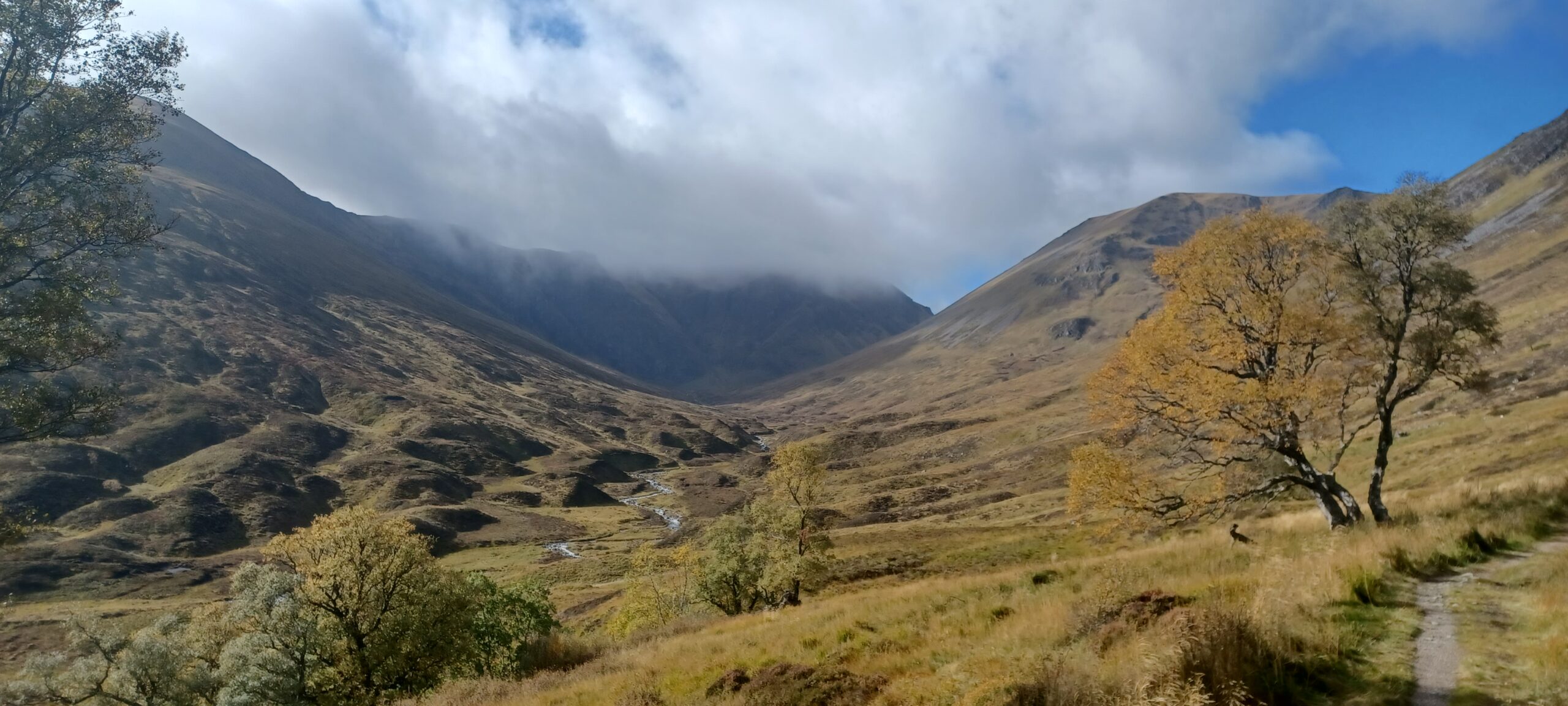
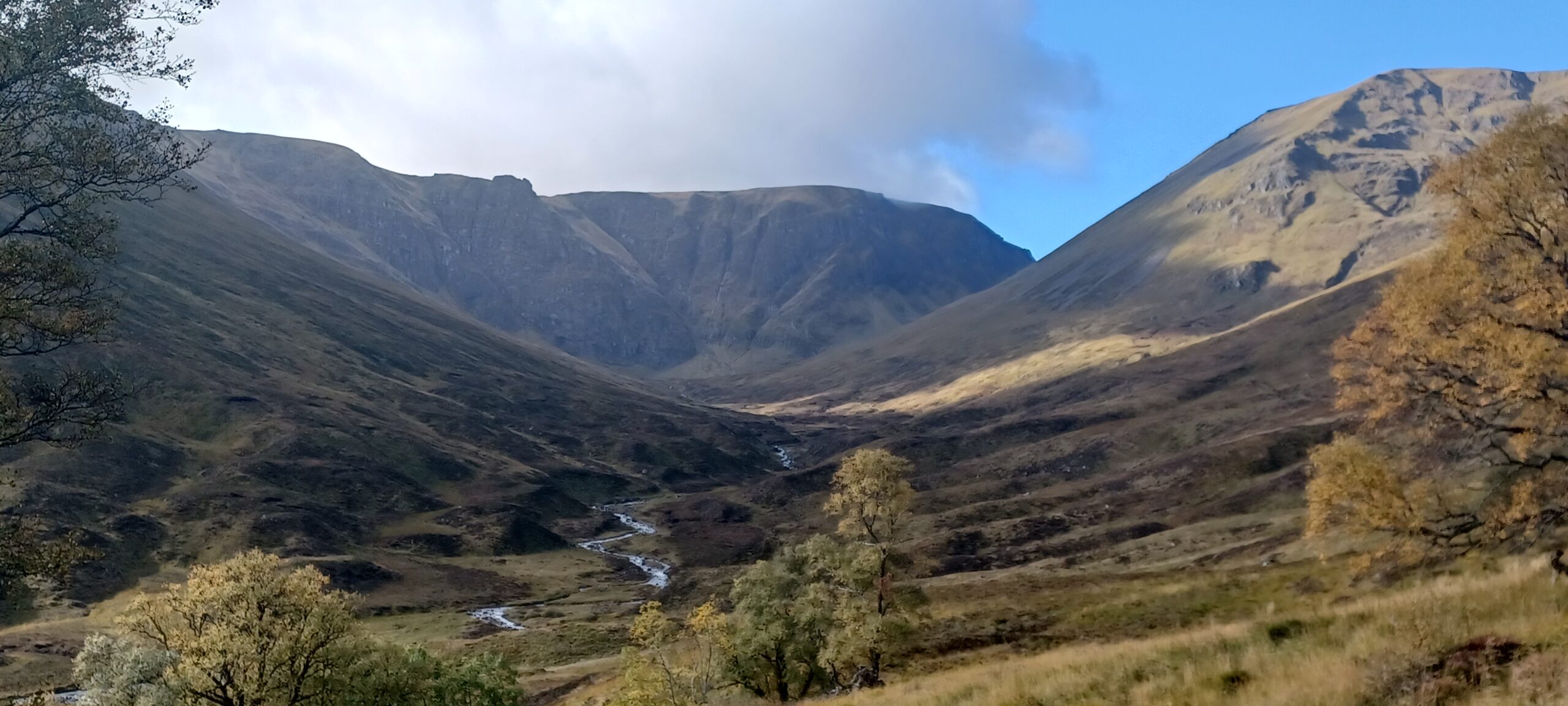
Standing low down near Loch Laggan and looking up towards the thunderous mountains that lay before me, I took a minute to admire the sprawling scenery, peppered with seasonal autumnal oranges and browns. The highland landscape stretched over smooth hillsides split down the middle by a cascading river before reaching craggier outcrops far off in the distance. A near perfect day for a wee jaunt in the hills. Consistent rain showers interspersed with blinding sunshine and warmth. Before too long I was an expert in taking my heavy rain jacket off and on with one arm. This, on a recent visit to Creag Meagaidh Natural Nature Reserve in the Highlands, I had witnessed something that is fairly rare in our Scottish wilderness.
As impressive a sight as it was, the real treat from my point of view, was the vast areas of young trees that seemed to break out in every direction. Spreading all the way from the lochside to halfway up the mountain and everywhere in between and off to the sides too. ‘Some planting project they’ve done here,’ I thought. Oh, how wrong I was. Some project, oh yes. But planting? Oh no. I was to discover that this rarity began as a blank canvas way back in 1986, when NatureScot took it over and designated it an NNR. Years of overgrazing had decimated any semblance of natural-ness, with dwarf-versions of Rowan and Juniper clinging on and not much else. Hardly something you could call biodiverse or natural. Thus began an ambitious plan. I can only imagine what sort of talk was going on in those early management discussions. No doubt modern-phrases such as ‘nature-forward’ and ‘landscape-scale restoration’ were being thrown around so willingly.
The absence of natural predators had resulted in unsustainable deer numbers impacting the environment. By seriously reducing the grazing pressure on the landscape, natural regeneration of the woodlands would have time to establish, and trees will grow without consequence of becoming sheep or deer fodder. No need for fences. No need for planting trees. NO PLASTIC TREE TUBES! No huge cost in labour and materials. Let’s just mimic nature and let nature do its thang. That’ll work, right? 37 years later, the results speak for themselves. The reserve hosts a number of breeding bird species including some of the rarest species found in the UK. Nationally important plant species also thrive including arctic-alpine plants and several ancient woodland plant species. Otters, Mountain Hares, Pine Martens and Ptmarigans have all been sighted here. A pioneering project and a mentality rarely implemented in such large areas. Hard work indeed, but well worth it and still work to be done. No doubt receiving its fair share of flack along the way and good on ‘em for staying the course. It surely did pay off big time. Their influence can be seen in a succession of like-minded projects in places such as Glen Affric, Dundreggan and Mar Lodge. All have natural regeneration and rewilding at its heart, albeit with slight differences and site-specific challenges.
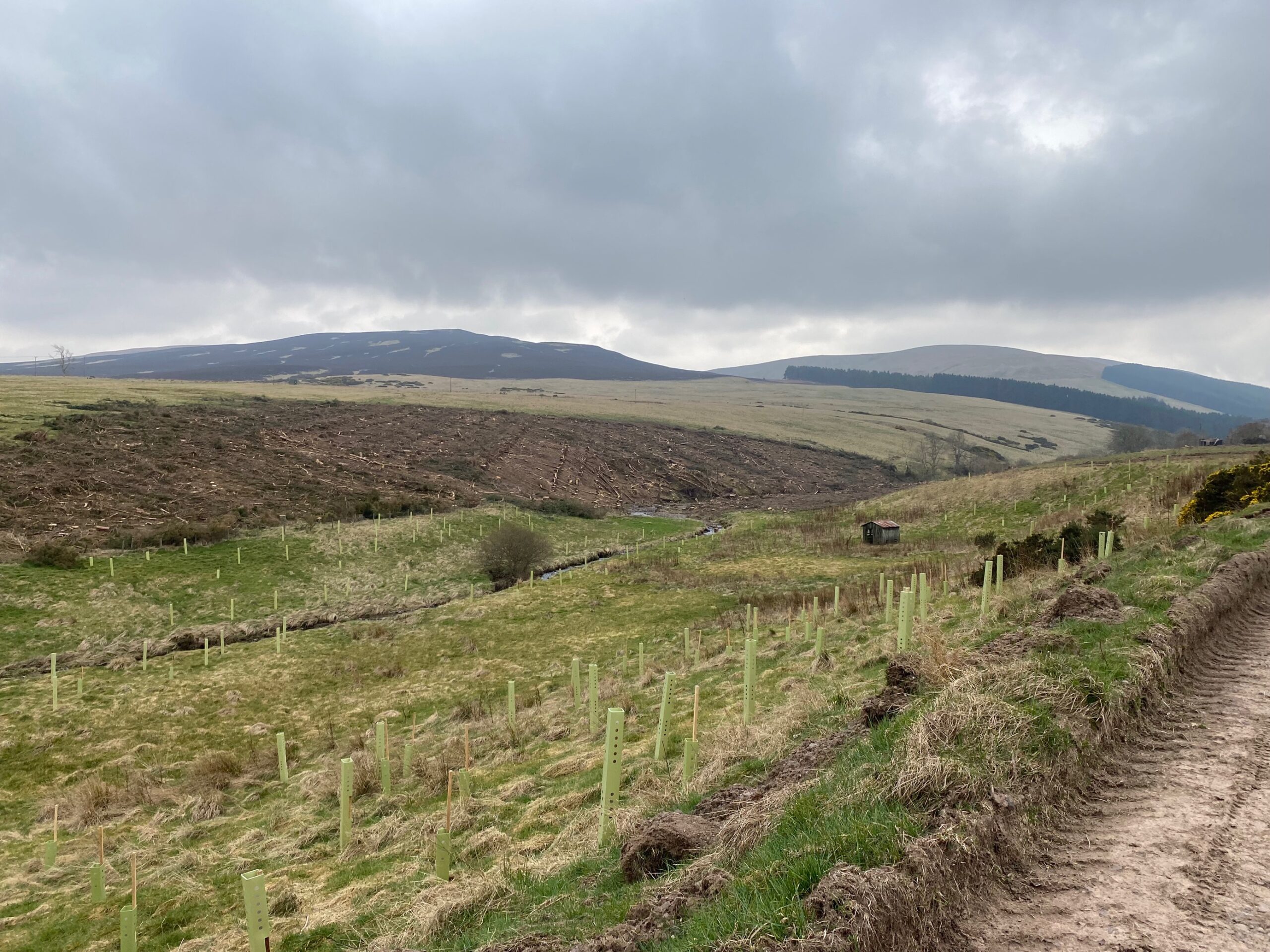
My curiosity in this area allows me to look back at our own work and plans for the future. Creating sustainable habitat and ecosystems for both freshwater and terrestrial species is one of our key objectives. We have done this by prioritising riparian woodland creation in areas of the upper catchment. Starting at the source we can address a number of issues with our river systems such as reducing temperatures and creating habitat for juvenile fish species and protecting vital spawning grounds. We are also adopting more holistic and nature-based solutions to our projects with minimum intervention including floodplain reconnection, greenbanking techniques using live willow spiles to support riverbanks and introducing large woody debris into our rivers. We are also taking steps to ensure that natural regeneration of trees can take place wherever possible. We hope that what we do now will have a positive and lasting impact to our vitally important rivers and streams.
Although, I’m well aware that as a small rivers trust, we are at a significant disadvantage in our access and ability to enact landscape scale restoration, but we try pretty darn hard to do what we can. As a woodland creation officer, you need a good sense of imagination and foresight. What’s this woodland going to look like in 30, 50, 75, 100 years? Can I imagine this tree growing tall and healthy, stretching over the river, allowing its seeds to fall in and be carried downstream and embed itself in a riverbank somewhere down the way? Hoping that all matter of wildlife will begin to return and flourish? Looking at Creag Meagaidh, you can see it. Looking at all the benefits it brings, it’s definitely worth waiting for.