
An update on the River Larig Project
As you drive up the Braes of Balquhidder, heading up the Glen towards Inverlochlarig Farm, you cannot help but notice a change. Driving up the winding road, below on your left is a rapidly expanding line of objects – filling up like a loading bar getting nearer and nearer to completion. This rapidly expanding line snaking along the south shore of the river Larig is trees; lots and lots of trees. To be precise, it is 5,938 trees being planted along the north and south banks of the River Larig at Blaircreich and Inverlochlarig farms as part of a larger project to boost riparian tree cover and provide shade for the river and its wildlife during prolonged hot spells. The areas chosen for planting will bridge the gaps present between the existing riparian cover, in turn creating an unbroken corridor of riparian cover on the south bank of the river.
This tree planting is part of the wider Biodiversity Challenge Fund Larig Restoration Project (also funded by Loch Lomond and Trossachs National Park), which includes green bank restoration (by way of bank reprofiling and installation of Large Woody Structures) on this and other sites further up the glen. All reprofiled banks were lined with trees to assist in strengthening their integrity and provide riparian tree cover for the river. Between the Biodiversity Challenge Fund and Loch Lomond and Trossachs National Park funding, a total of 7,270 trees will be planted across a combined area of 3.35 hectares.
The programme of works started in June 2021 with installation of Large Woody Structures. Further green bank protection continued into the winter months with willow spiles being installed at two different locations, making up approximately 80 metres of willow spile in total. However, the main task throughout the winter for our team of 5 and crew of volunteers has been the small matter of planting those 7,000+ mixed riparian species trees of alder, aspen, downy birch, rowan, willow and bird cherry.
Three methods have been used for the planting, which was designed to fit the terrain, promote natural growth patterns and encourage more natural regeneration. Firstly, further up the glen, on higher, more uneven terrain, 333 tree pods have been created along the riverbanks. Each pod is comprised of deer fencing and houses 4 trees. Further down the glen along the flatter, softer banks of the river at Blaircreich enclosures have been created. Made of stock fence, these enclosures vary in size from up to 100m long to as small as 10m long. The enclosures have also been designed to mimic natural growth patterns and utilise a protective layer of 1.8m tubes (recommended deer fence standard height) around the outsides as a deterrent to herbivores jumping into the enclosures for an easy snack. In in the centremost protected area of the enclosures, a mix of 1.5m tubes and trees with no tubes have been planted. Following completion of planting in enclosures, single trees will also be planted in target areas, such as along the coir matting used to protect banks after reprofiling.
None of our work would have been possible without the dedicated small team of staff and our very generous volunteers who have worked tirelessly in all weathers towards meeting our March deadline for completion of this project. More than a dozen volunteers have already given over 222 hours towards the project since November, and that number will likely double between now and March.
With thanks to our funders and supporters of this project, this includes NatureScot’s Biodiversity Challenge Fund, Loch Lomond & The Trossachs National Park and the Forth District Salmon Fishery Board.

Work begins on one of our willow spiles
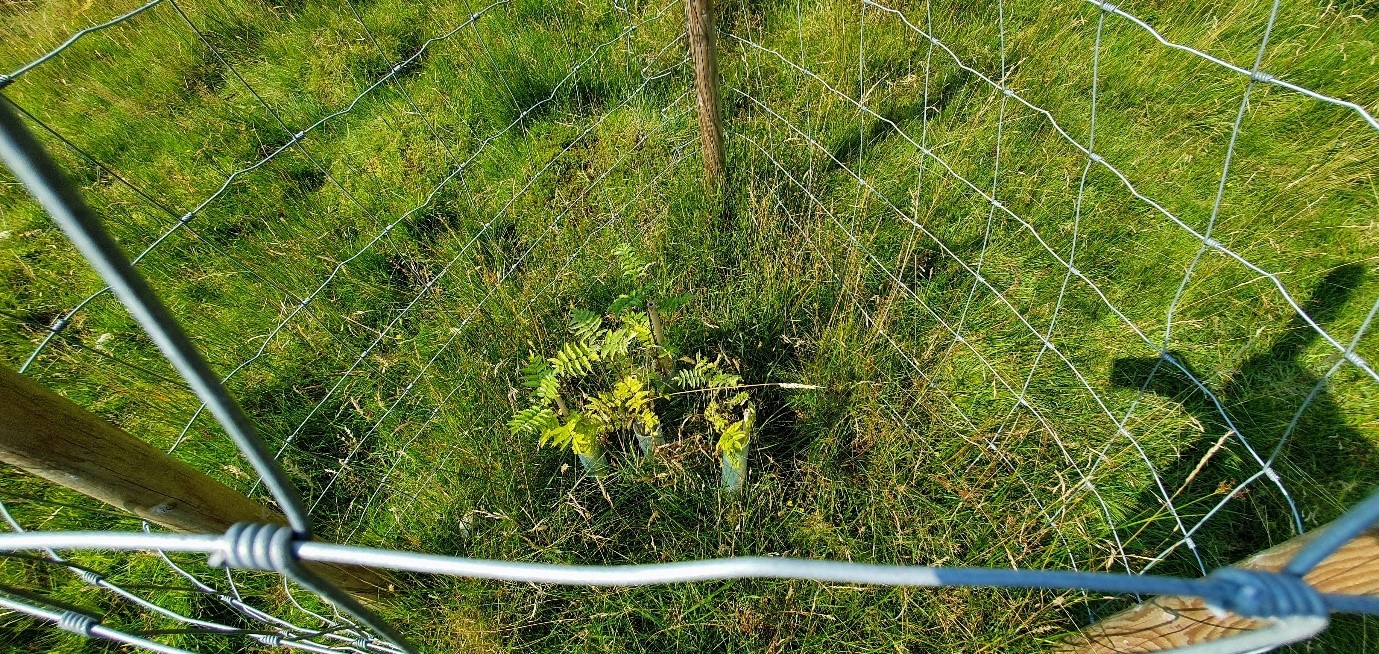
Rowan saplings nestled inside their riverside pod

Mixed size stock fence enclosures
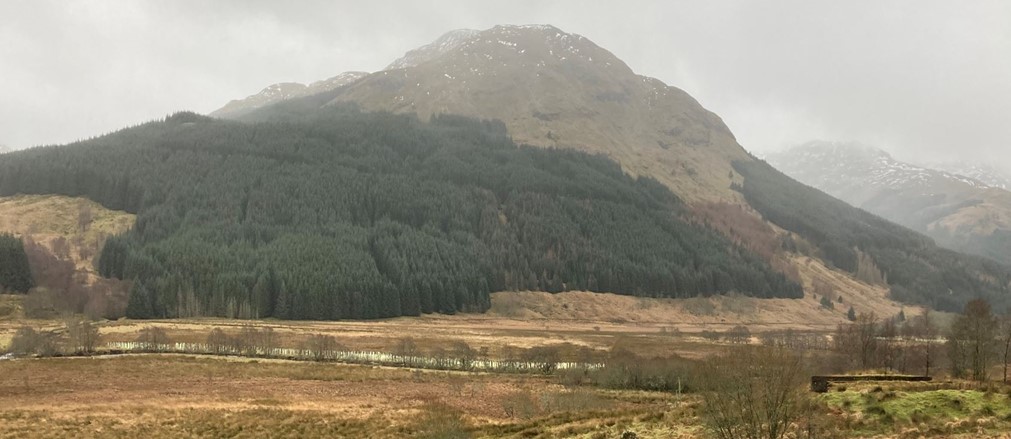
Trees, trees and more trees along the River Larig south shore at Blaircreich
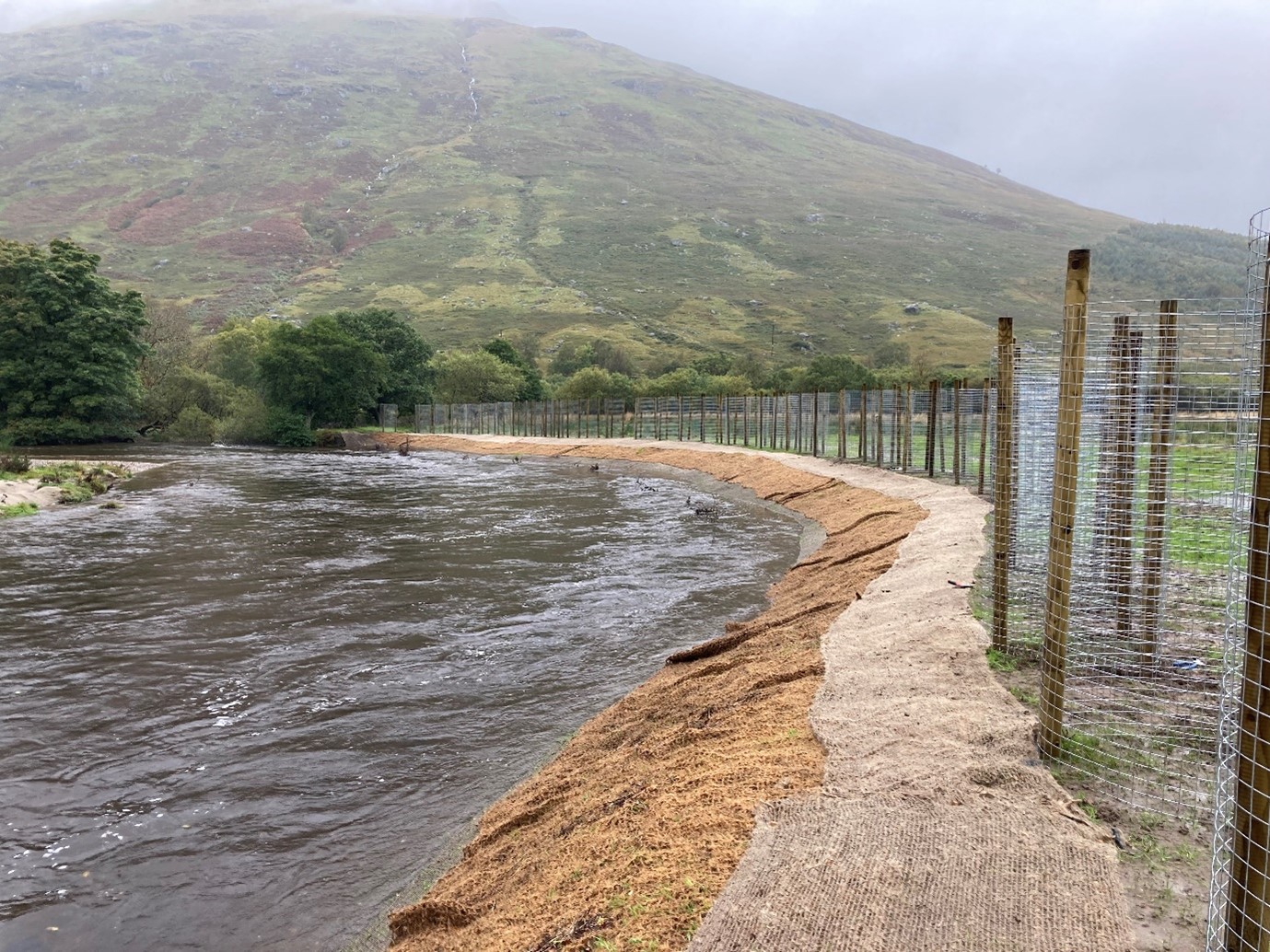
Large woody structures and reprofiled, coir matted bank serving their purpose in elevated rainwater flows on the Inverlochlarig Farm side of the river Larig

Our two completed willow spiles catching river debris and breaking impacts of fast flowing meltwater from the surrounding snowy hills

Our two completed willow spiles catching river debris and breaking impacts of fast flowing meltwater from the surrounding snowy hills