Blaircreich Renaturalisation Project
An exciting new project to restore wetlands and improve rivers in the Trossachs wins support from Nature Restoration Fund!
Between 2019 and 2021 at Blaircreich Farm and further upstream in the Inverlochlarig Glen, a riparian woodland corridor of approximately 8km has been planted with trees and lined with large woody debris (Larig Restoration Project). While tree planting and large woody debris on sites at Blaircreich (and other areas) will go a long way to begin the transformation of the rivers into a much healthier and species diverse places, there is much more opportunity within wider landscape for further connectivity and improvement.
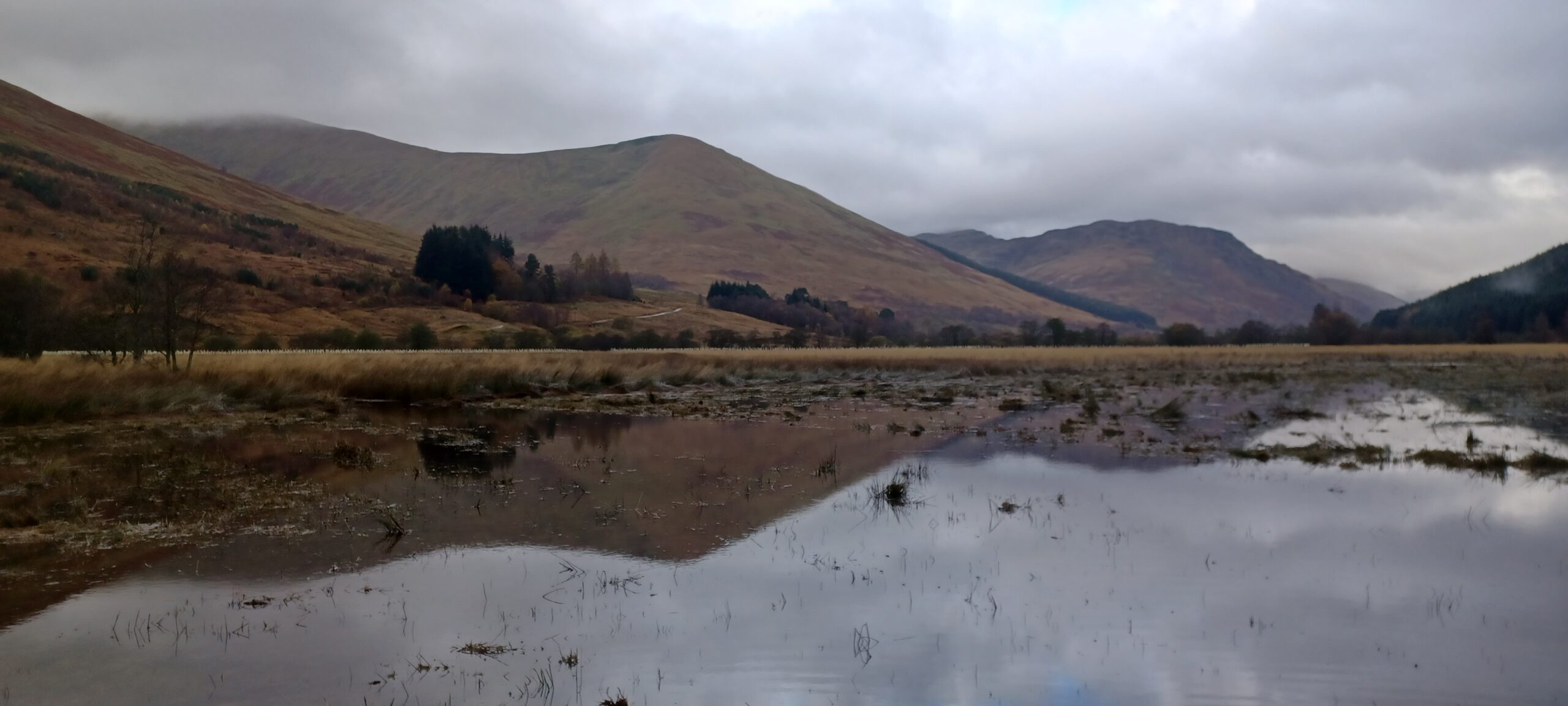
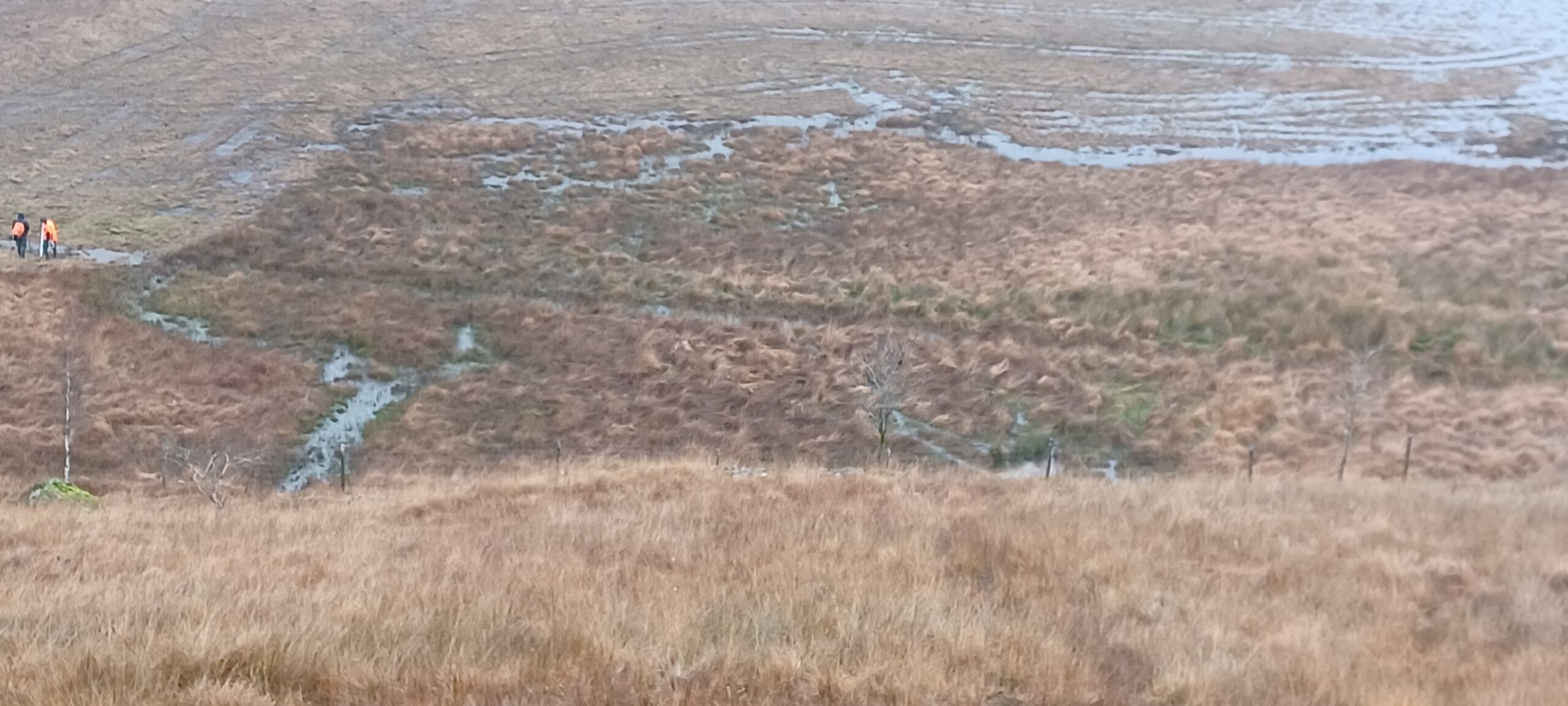
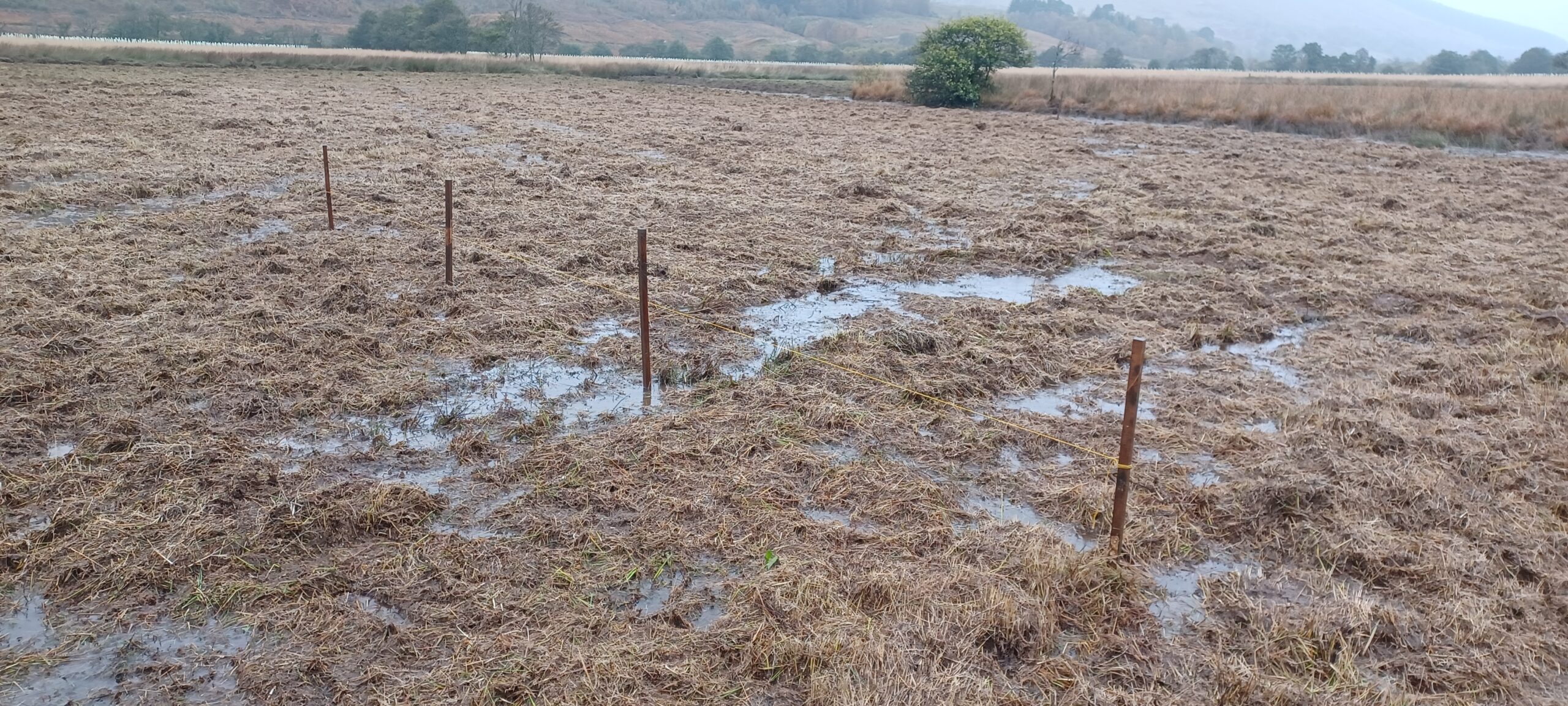
This next phase of restoration work at Blaircreich Farm is funded by the Nature Restoration Fund and targets improvements within the wider landscape that benefit riparian habitat along with the floodplain. Our team have been on site since October to improve floodplain efficiency on disused farmland by increasing wetland habitat on areas which should normally retain water for longer periods of time before it filters into the river. Blocking historical drainage ditches with natural materials and creating connective scrapes to join up wet areas are all part of a plan to create more wetland habitat at Blaircreich Farm.
Increasing storage on the floodplain will help reduce impacts on river habitat of sedimentation and run off from the hillsides surrounding the area, as well as provide increased habitat for wading birds, amphibians and a host of insects including dragonflies, damselflies and water beetles.
The next phase of our project will be to install 200m of willow spile along the banks at Blaircreich Farm. Green bank protection is a great tool to reduce erosion in a green and environmentally friendly way. Keep an eye out for more updates on this in the New Year!
This project is supported by NatureScots Nature Restoration Fund and Loch Lomond & The Trossachs National Park.
Alison Baker, Director of the Forth Rivers Trust said:
Nature is in crisis and protecting and enhancing habitat for the preservation of wildlife for future generations is key to protect our river catchments. Wetlands provide benefits such as water purification combating against sediment run off, natural flood management benefits and much more and we are pleased that NatureScot see catchment management of this nature as a priority providing this funding through the Nature Restoration Fund.
Francesca Osowska, NatureScot CEO, said:
“We are all now more aware than ever before of the urgency of the climate change emergency. But there is hope. By restoring nature, protecting and enhancing habitats and safeguarding marine life, we can secure a better future for nature and for ourselves.
“Scotland is taking action now to meet the huge challenges and pressures that nature is facing; it is individual projects like this that will make the difference and set us on the road to recovery.
“Climate change needs nature-based solutions, not only to help us reach net zero by 2045 but also to create a healthier, more resilient Scotland.”
Simon Jones, Director of Environment & Visitor Services at Loch Lomond & The Trossachs National Park Authority said:
We’re delighted to support this work which sees local land managers working with the Forth Rivers Trust to re-build nature in the National Park. Allowing rivers the chance to run more naturally and regain their bankside woodlands has benefits for wildlife, climate and people.