
Written by Gyuguo Gigya
As a part of third year in my Environmental Management course at Glasgow Caledonian University, I had the opportunity to undertake a placement with the Forth Rivers Trust to gain experience with practical environmental work. The Trust is an environmental charity and non-profit organisation with the goal of protecting and improving rivers and their surrounding ecosystems, to bring benefits to nature, wildlife, and communities.
Some of the Trust’s activities include habitat restoration, assisting fish migration, controlling Invasive Non-Native Species (INNS), wetland creation, and tree planting along riverbanks. Practical habitat restoration works help support native fish including salmon (Salmo salar) and trout (Salmo trutta), with the Trust’s projects ranging from barrier removal, renaturalisation of rivers, implementing natural flood management techniques to help reduce flood risk, community engagement activities, delivery of education programmes, offering environmental advice and providing volunteer opportunities.
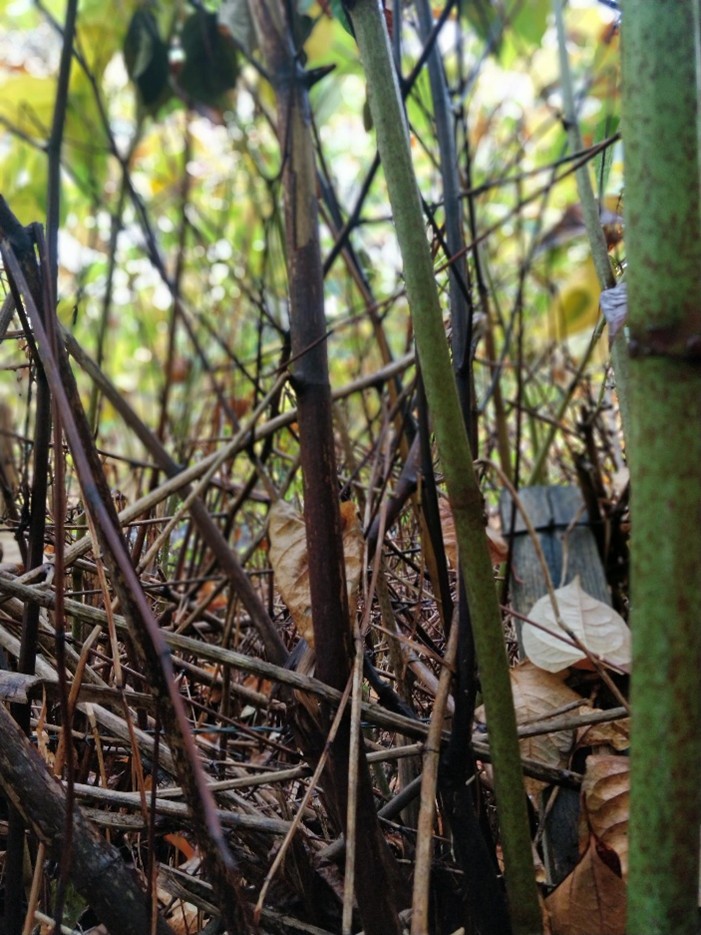
Under the canopy: Japanese Knotweed (Fallopia Japonica) stems. This invasive non-native species reduces biodiversity and can grow through concrete.
My role in the placement was the Engagement and Research intern, who supports projects that strengthen local partnerships and help accelerate collective action on climate resilience and nature restoration across the catchments in the Forth. A key focus of my role was to support collaboration between two group of stakeholders: farmers and landowners, and community groups.
The daily tasks that I carried out during the placement consisted of collating desktop research on funding streams, assisting report writing, using JotForm software to create a grant-making funding form, using Airtable to gather workshop data for outputs across the catchment, and work to create the Leven community springboard website including implementing a news and events page for the website and adding a community springboard webinar video.
Fieldwork on the main projects I worked on consisted of 1-to-1 farm visits to engage and communicate with stakeholders, for both the Leven Catchment Collective and the Forth 2O Water Resilient Landscape projects. On farm visits I assisted with the promotion of creating a farmer and landowner cluster in both the Leven and Upper Forth catchment, discussing the workshops and events available to stakeholders, and advising around nature-based solutions to combat issues such as flooding and biodiversity decline.
From the placement I enjoyed the various opportunities to gain experience with different projects and activities in the Trust. I participated in stem injecting of Japanese Knotweed, an invasive plant, mapping the plant to help track its spread in the catchment, conducting control produces in safe manner and learning more about the impact of INNS. I had a lot of fun doing tree planting and tree maintenance in farm sites and working alongside volunteers, and we learned about different methods to protect the plant in the growing phase.

Tree maintenance: Checking and maintaining young trees along the Allan Water – also known as ‘beating up’ the trees.
The skills I have gained and developed on my placement; I developed technical skills from using various different types of software, such as Office and productivity tools, Excel on spreadsheets, word processing, working with formatting and templates systems like JotForm, improved my web and digital skills by working with content management systems including Beaver Builder and WordPress to add content to the Leven community springboard, and through creating designs to populate the new page.
During the placement I also gained and developed soft skills including improved communication skills; allowing me to clearly and effectively communicate when engaging with stakeholders, to prioritise the tasks that I have been given, and to understand how this supports projects, teamwork and collaboration throughout the Trust’s team. I have gained critical thinking, and strategic thinking skills from undertaking my tasks with the Trust, and though the exploration and implementation of nature opportunities that can come from workshops and events. I learned more about the ways to implement nature-based solution on stakeholders’ farms, a method to help reduce flooding in areas – and about managing having trade-offs while improving on biodiversity and maintaining a successful business.
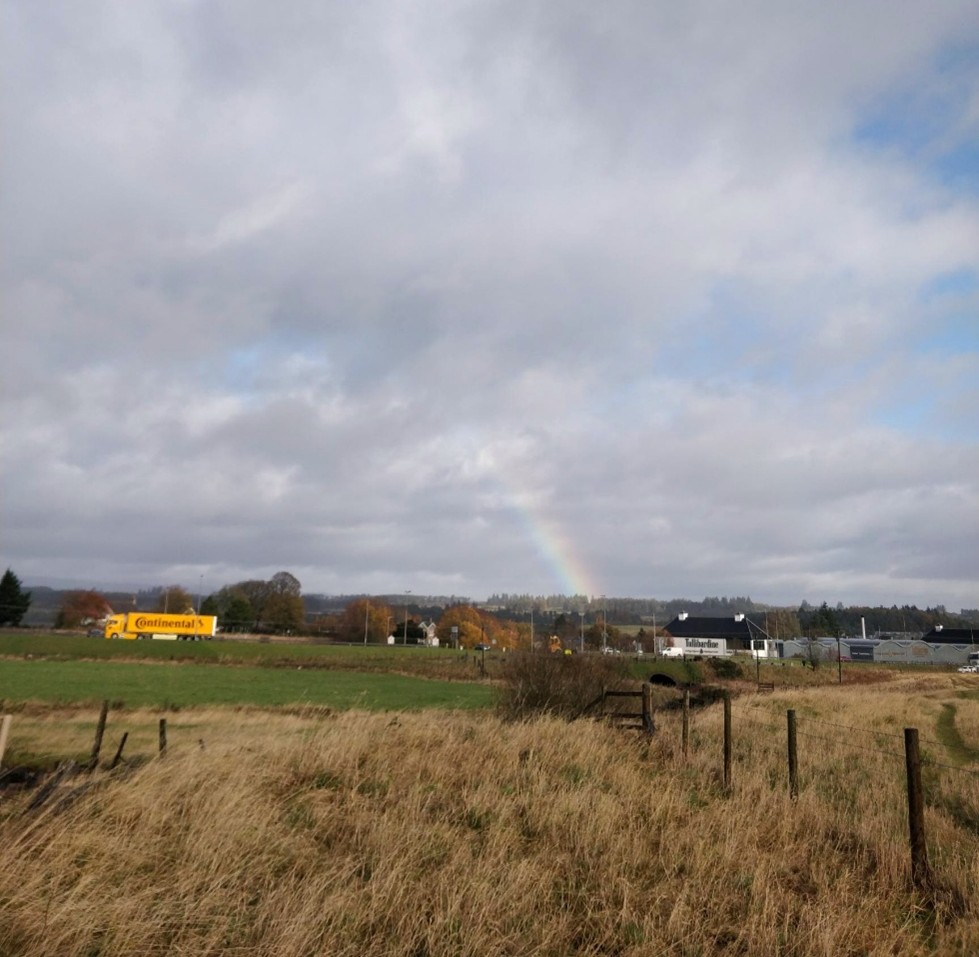
Rainbow over Tullibardine Distillery: clear weather for a tree maintenance day.
Throughout my time in the Trust, I was open to feedback from the tasks I completed, I received dynamic feedback during the progress of tasks, listened to feedback, and improved on what I did not do well, learning from this. I gained customer empathy though the stakeholder engagement I did, learned how to bring up sensitive topics like flooding, and understood how stakeholders view problems in their local area. In my time on the placement, I gained and developed professionally in the Trust via the health and safety training and reading and understanding Trust workplace policies to engage with stakeholders in an ethical and fair manner.
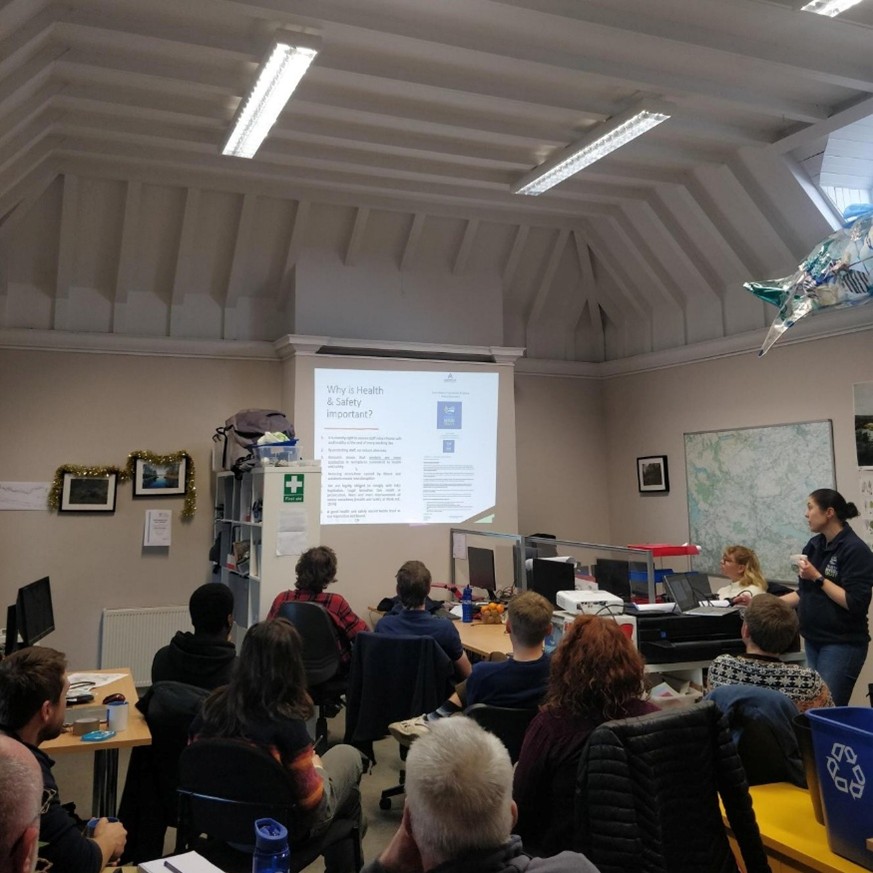
Health and Safety Refresher training: Discussions included the importance of water safety, lone working practices, emergency procedures, COSHH and more.
Key insights I gained from the placement: I gained communication skills through working closely with stakeholders and land managers; from this work I also learned the importance of being understanding about the challenges facing farmers, how to best understand their needs and to form a structured plan to know what information we want to gather from stakeholder meetings. I improved my understanding of how funding requirements affect the funding approval process in project management, and the importance of having long term contacts and funding to increase the effectiveness of the project with long-term commitment and ongoing monitoring. I developed insight in conversation practices and land management; I gained experience in hands-on environmental work as part of the team and though scoping and mapping out sites to explore nature-based solutions. I learned how online information processing is used to implement and identify opportunities from desk research form workshop output, and how the data can be used to encourage collaboration between organisations and communities.
Though the placement I also gained greater insight and learning from attending two conference events, the Future Farming Conference, and Nature Connections. At these events I learned more about the way different farmers can make their practices more sustainable and more profitable, and the challenges of retaining funding, and difficulties around policies limiting their chances to be more sustainable. This was a valuable opportunity to increase awareness of regeneration projects going on around Perthshire and the Loch Lomond National Park area, and at the events I developed the ability to network with other organisations attending, to further build connections.

Young trees on the Allan: The thousands of trees planted on this site will increase biodiversity and create a riparian corridor along the River Allan.
My placement at the Forth Rivers Trust was overall, an amazing learning opportunity to gain useful experience, to work in professional manner, and to gain knowledge of the field, widening my understanding of project management and the importance of long-term funding, as well as contracts with stakeholders to ensure projects have a long-lasting effect, and practical environmental work of conservation practices from INNS treatment to tree planting and maintenance.