Cop 26 and how the Trust is tackling climate change
COP 26 officially opens today and is billed as the last ditch attempt to save the planet from climate change. At COP 26, governments from around the world are coming together to discuss what climate action is needed by everyone around the world, to reduce Co2 emissions and to protect our planet and future generations.
This is therefore the perfect time to highlight some of the work that the Trust is carrying out to try and help habitats locally survive a changing climate.
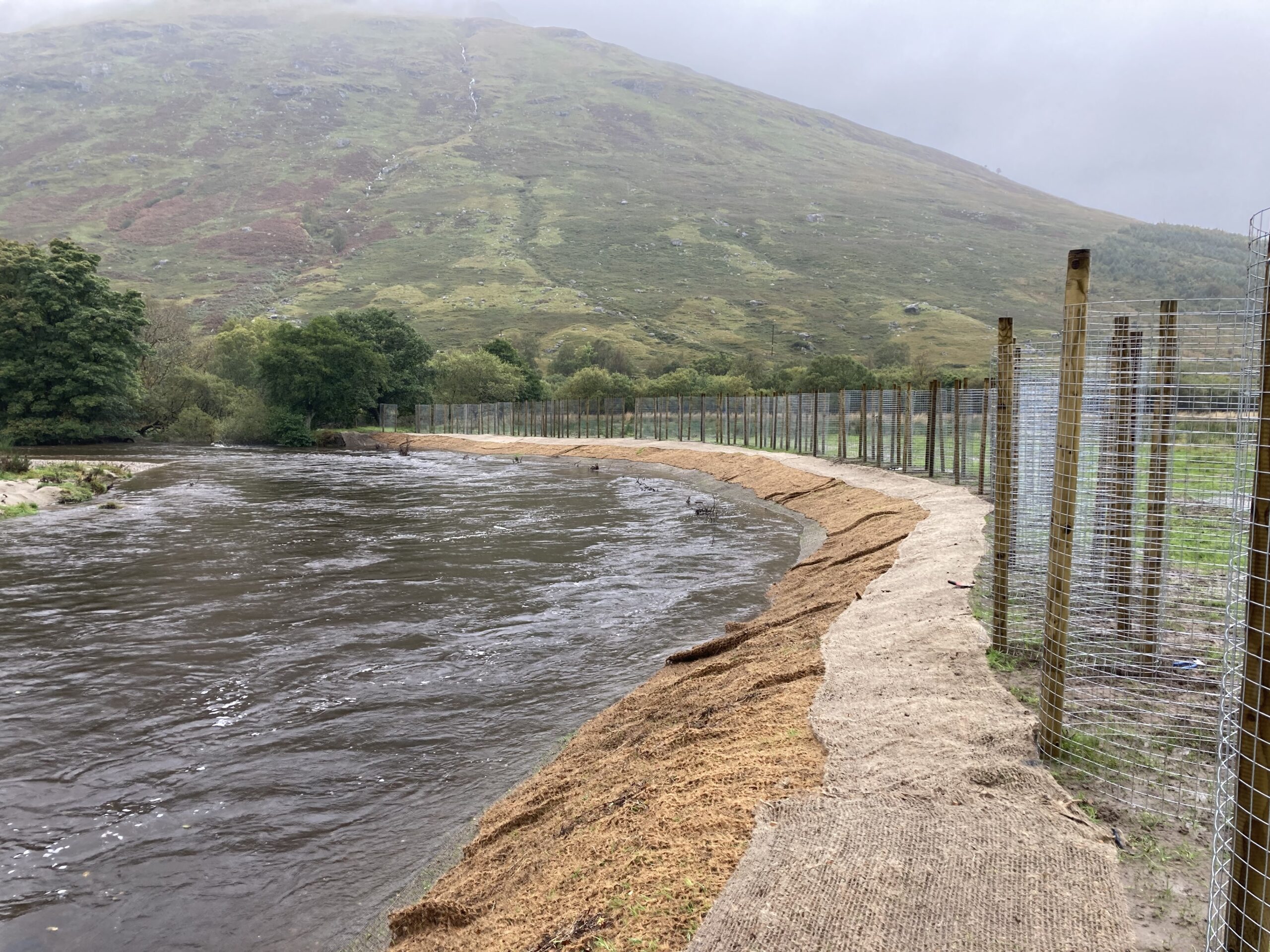
To kick things off, we are highlighting our project on the River Larig within the Teith catchment. The Teith Catchment Project is working with landowners in the headwaters to boost riparian tree cover, tackle excessive erosion and add large pieces of wood to kick start natural processes and increase nutrients and cover within the river.
In this upper part of the catchment, the lack of trees along the riparian corridor is having an impact on numbers of salmon and trout but also on the invertebrates within the river which fish rely on as a food source. After a number of years monitoring fish populations within the upper catchment, we knew something was wrong based on the low numbers and size of fish despite there being good quality gravels for spawning. Most fish were small and looked malnourished which was a red flag to staff that something wasn’t right.
Trees drive rivers and they provide multiple benefits for the habitats and wildlife within them such as increased nutrients from falling leaves and branches which leads to more invertebrates for fish to eat, cover for fish to protect themselves from predators and shade during prolonged hot spells. Trees also absorb carbon dioxide from the air and expel oxygen.
In the upper catchment along roughly 8km of the River Larig, there were few riparian trees. So few we could probably count them all on two hands. This led to us engaging with the landowner who agreed to work with us to boost riparian tree cover which ultimately will benefit fish.
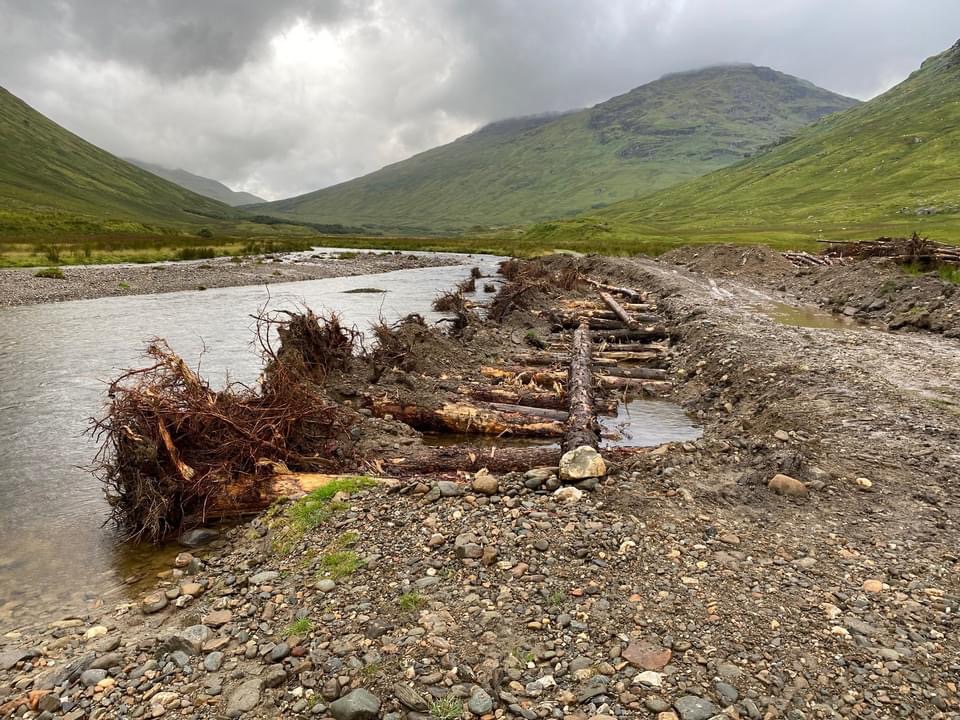
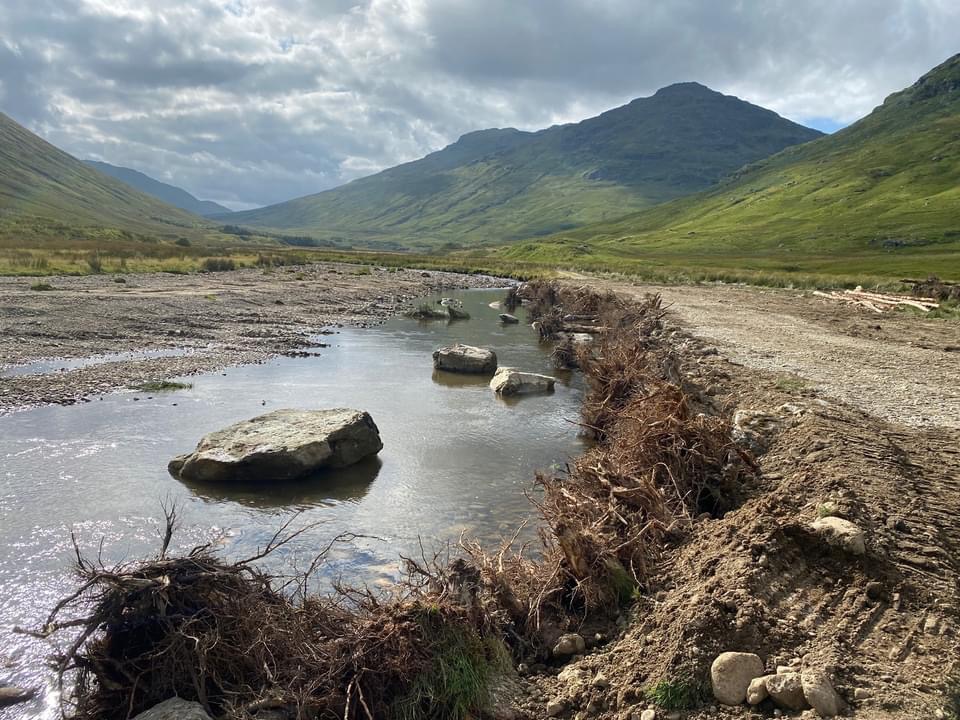
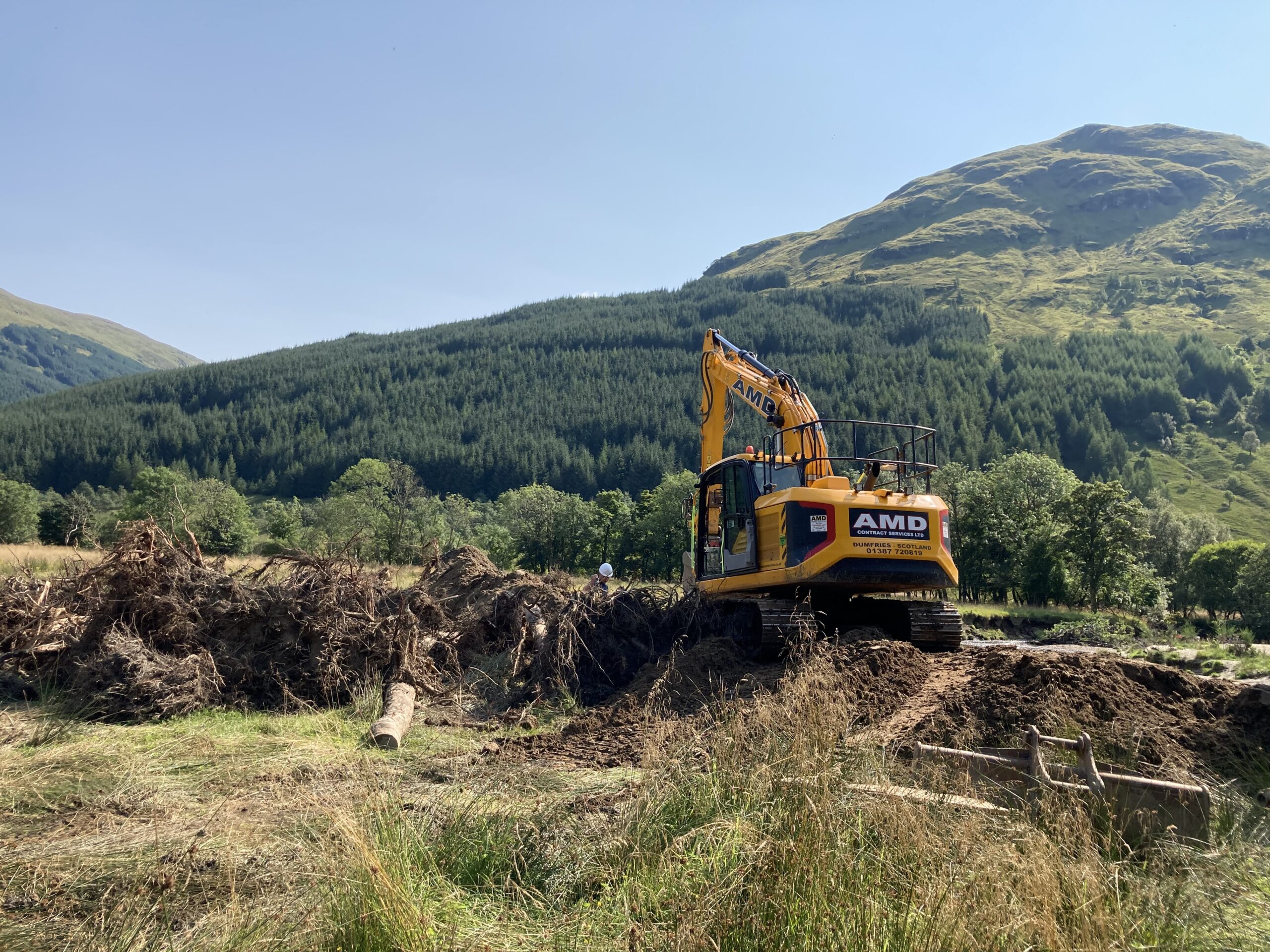
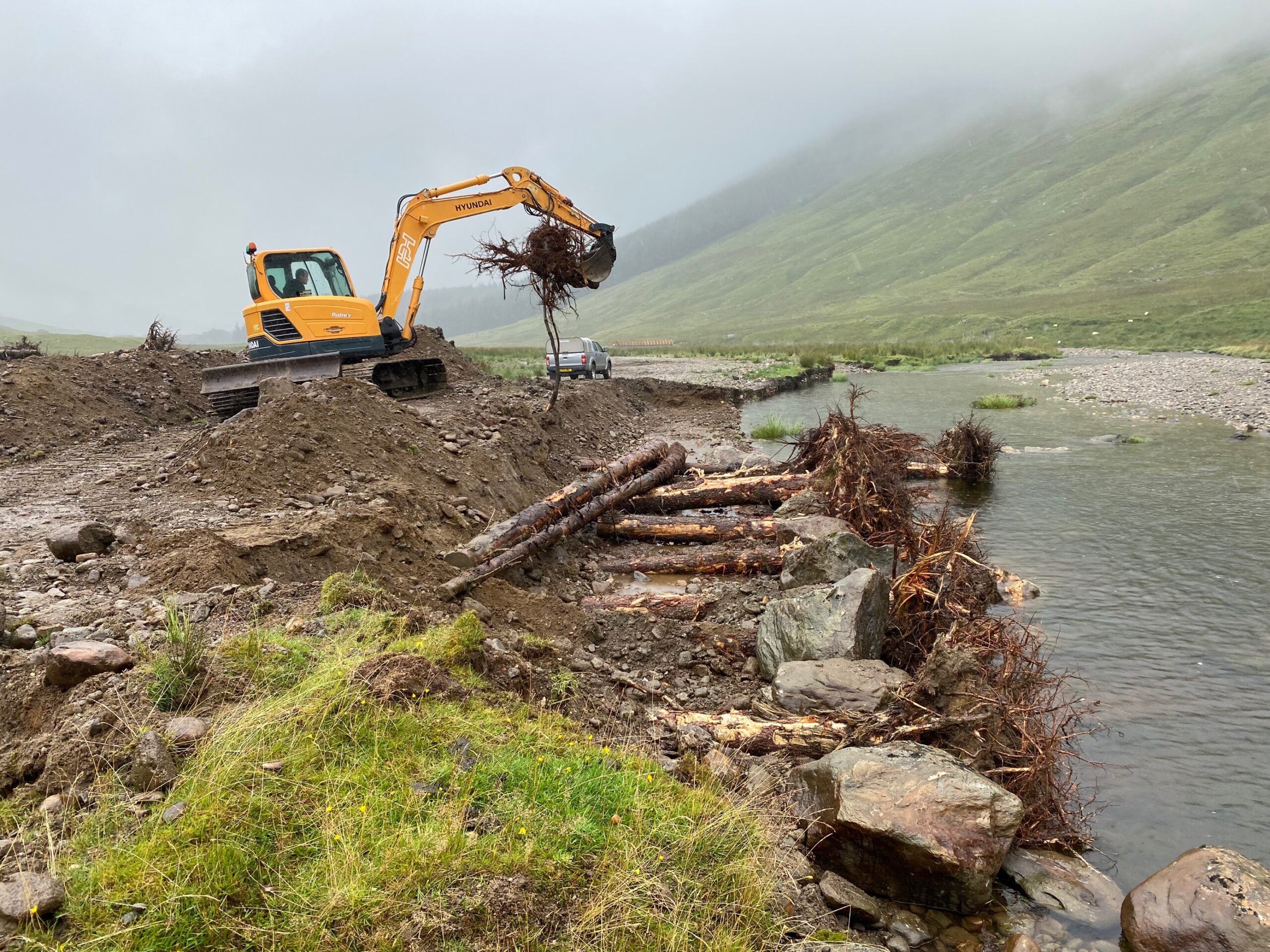
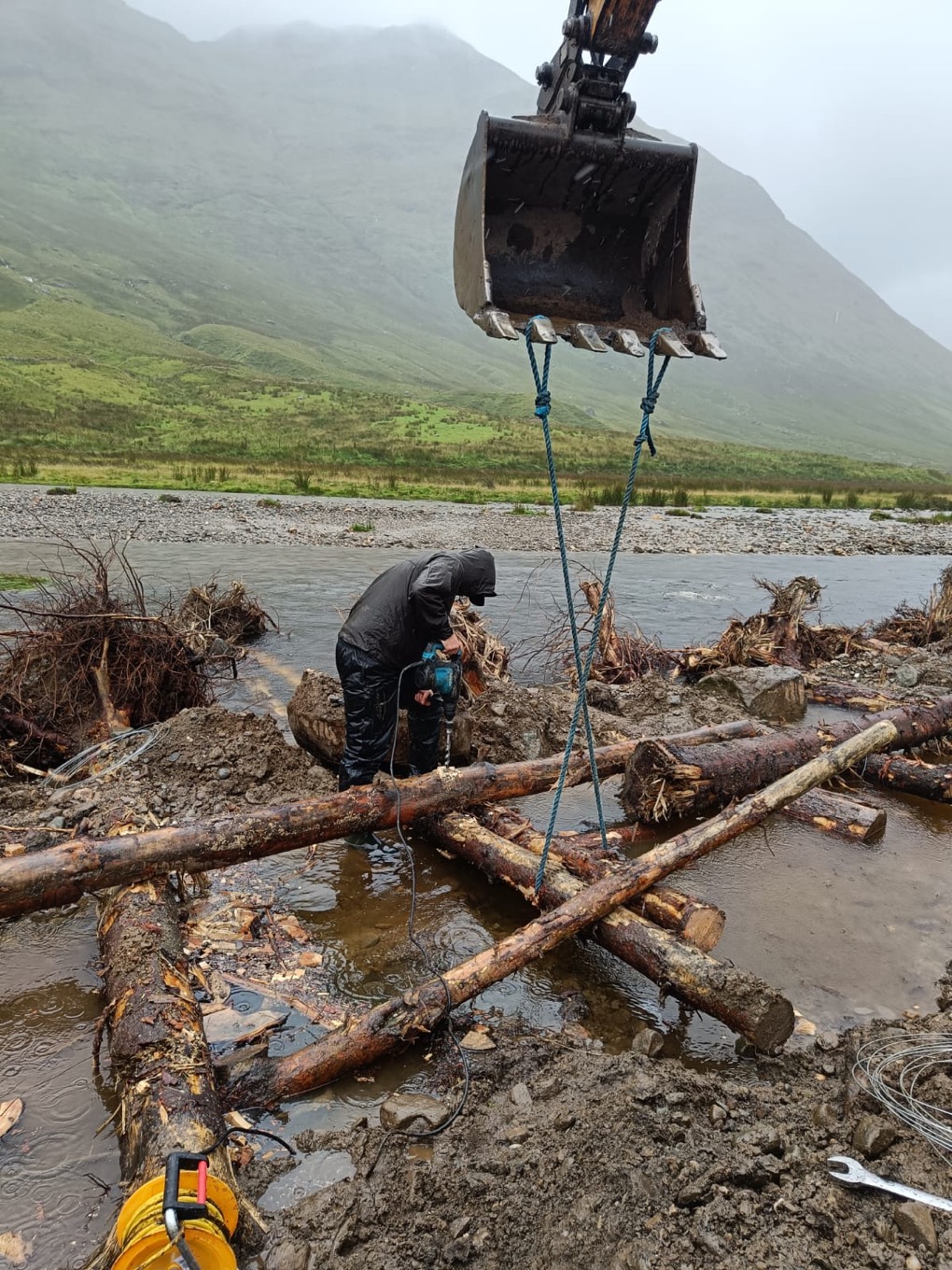
Another key issue within this area is the mobility of gravels. In a healthy river system, gravels should move as this is part of the natural cycle of a river. What we found however was that due to the lack of trees and wood within the channel, gravels were moving after each flood and by a substantial amount. This posed issues for salmon and trout redds as they were often washed out and destroyed. Naturally, wood within the river will slow this process down, trapping gravels in place, creating pools and runs but this was not happening. We have installed a number of tree trunks into the river bed and banks along 8km of river to try and recreate this process and slow down the flow of gravels. It is hoped that this will be a temporary fix until the trees we plant along the river banks grow and eventually help contribute to the wood in the channel.
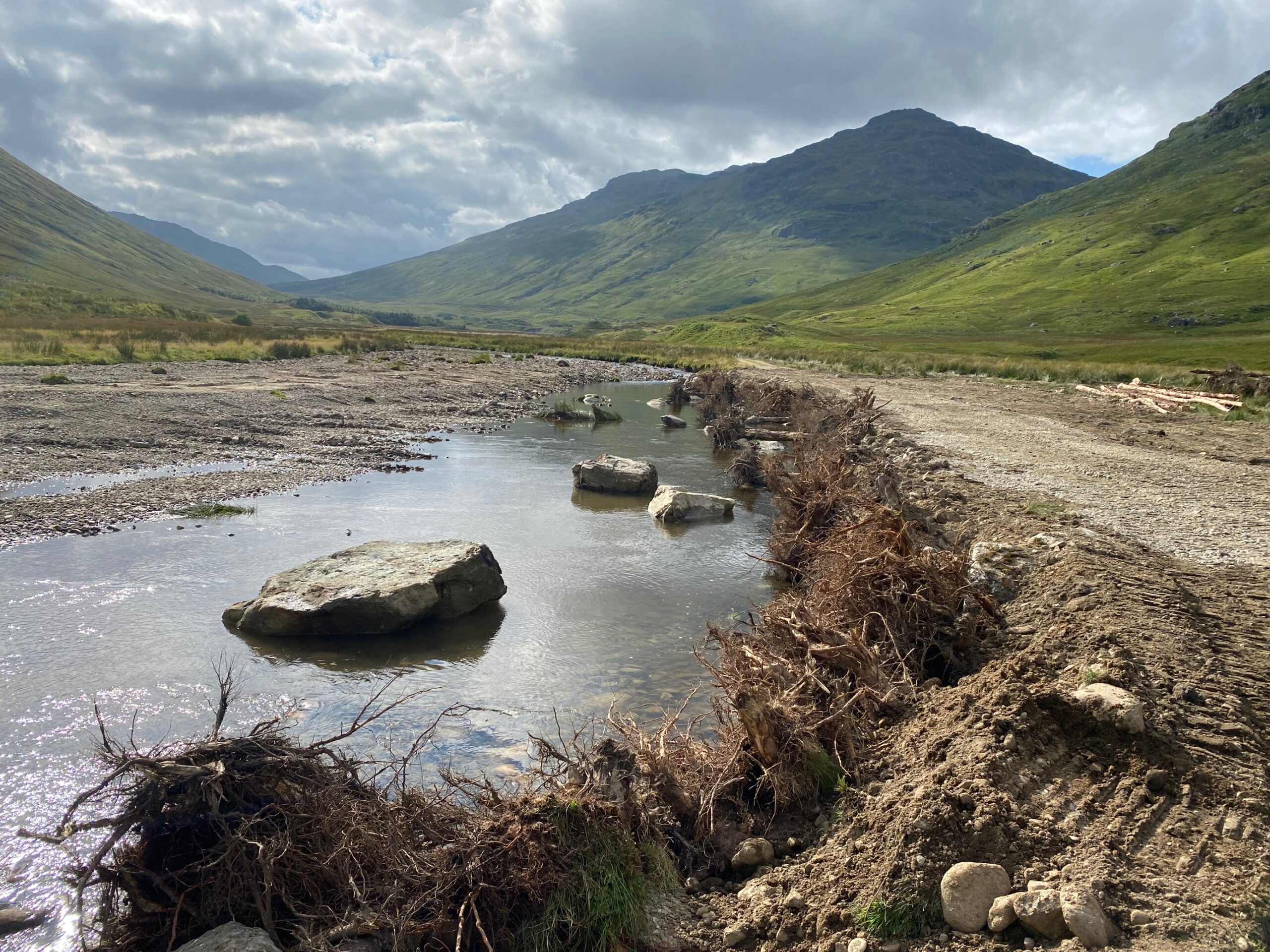
As well as the wood and trees, we are also installing green bank protection at a number of key sites. These sites were having an impact on the infrastructure of the land use in the area. The erosion was further exacerbated by the lack of trees holding the banking together. Using tree trunks and root wads, we have lined the banks with this to create a woody structure to slow down the erosion. This not only protects the bank from excessive erosion, using wood and natural materials in this way helps fish by increasing nutrients available as the wood rots down and provides cover for fish to hide in.
All of this is helping the River Larig and surrounding habitats adapt to a changing climate, whether that is increased rainfall causing more floods or prolonged dry spells we seem to be experiencing more regularly.
This phase of the project will finish in March 2022 but more can still be done to improve the river. Over £350,000 of funding was received through the Nature Scot’s Biodiversity Challenge Fund with match funding and support from Loch Lomond & The Trossachs National Park.
You can support the Trust deliver projects like the above by donating today! – Donate | Forth Rivers Trust