The Danny Burn Tree Planting Project
By Blyth Walker
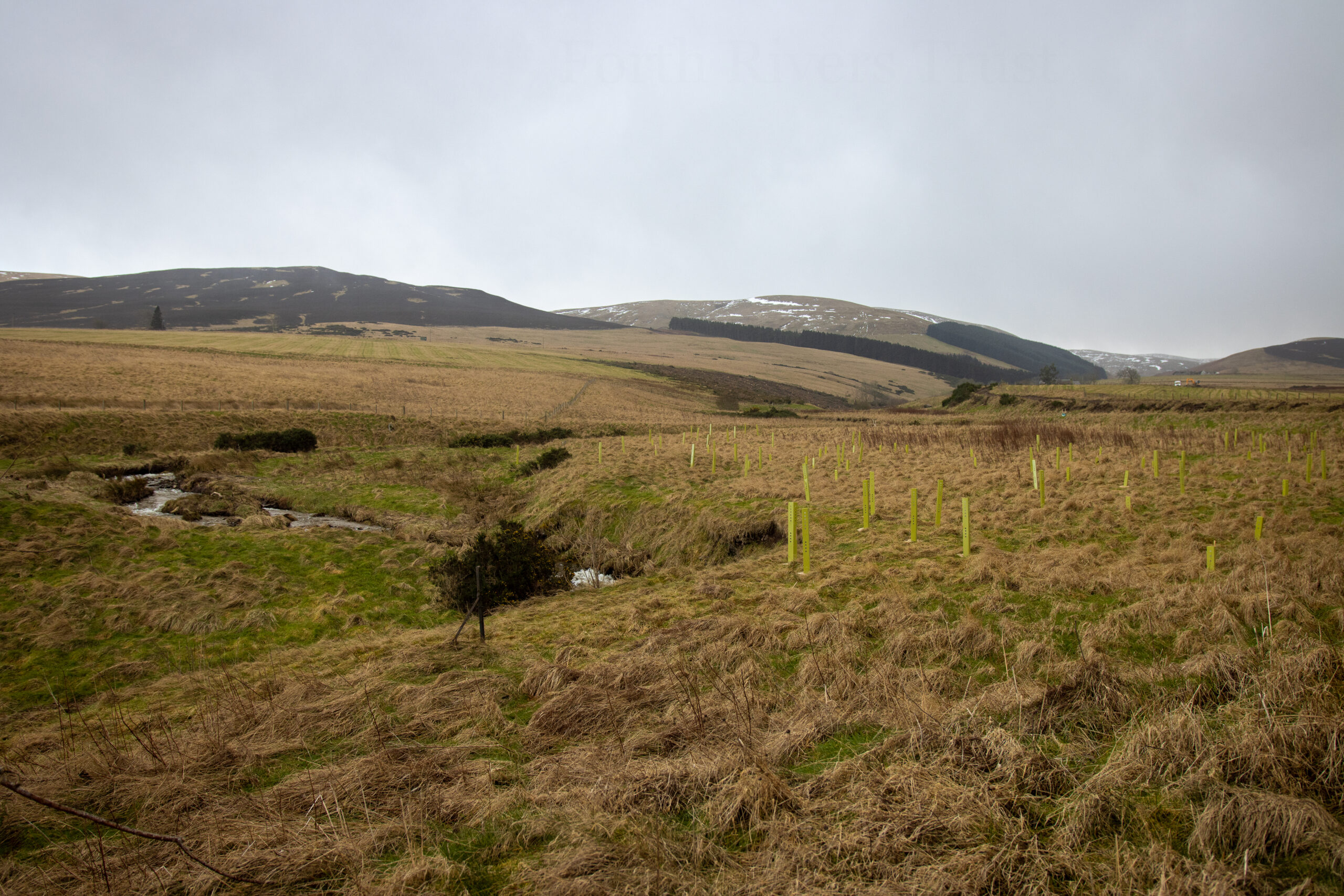
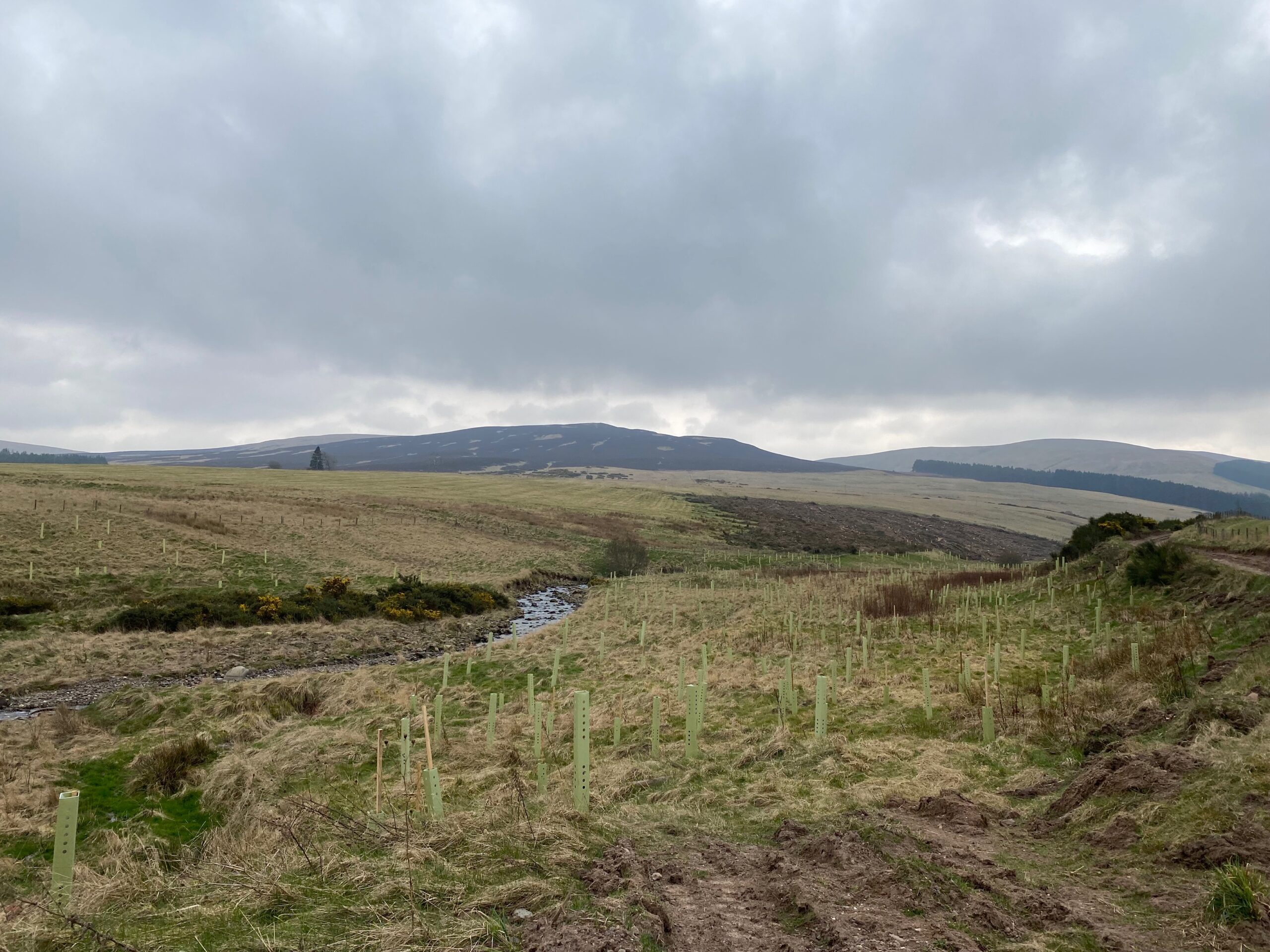
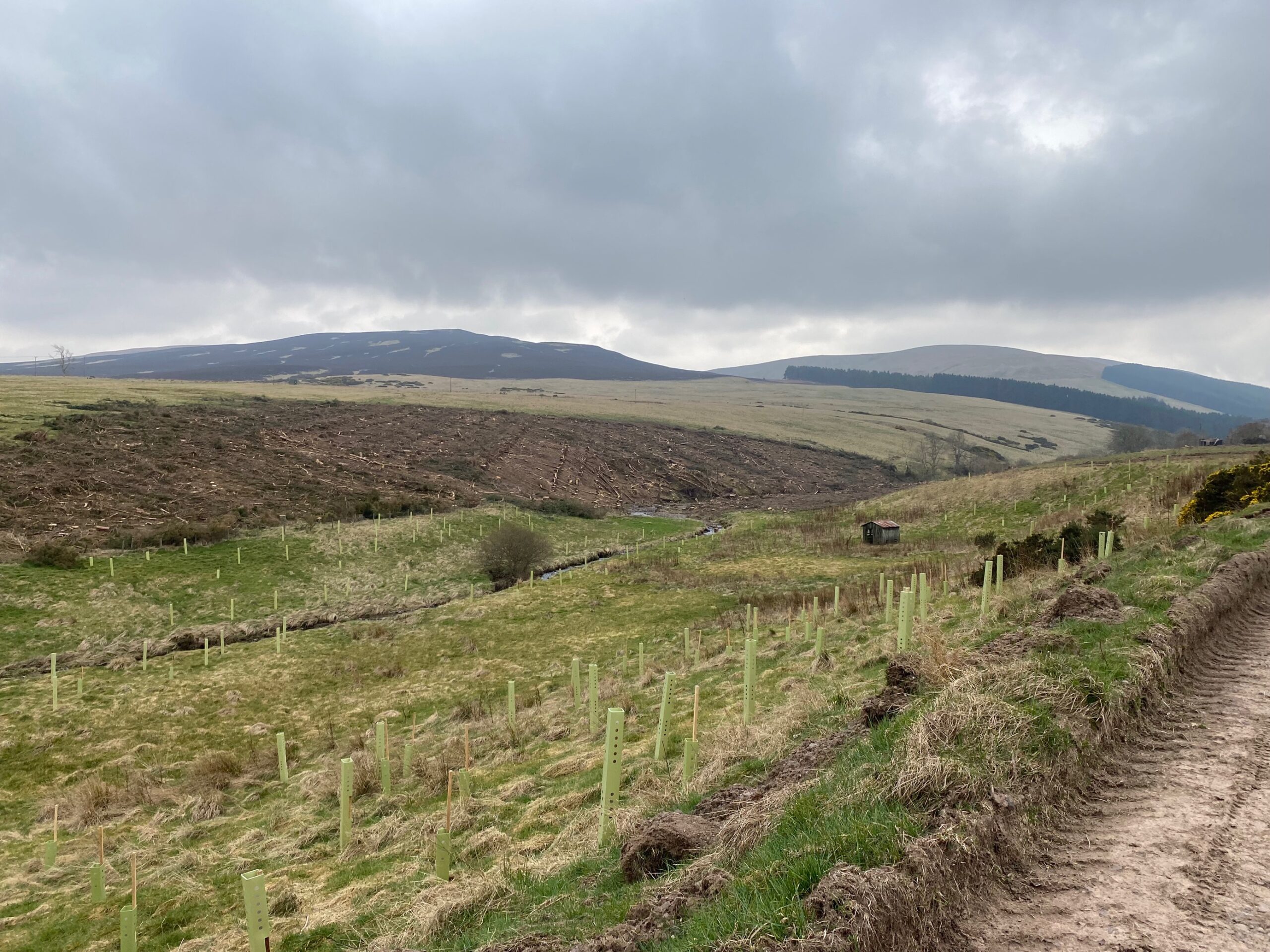
The Danny Burn which is a tributary of the Allan Water that arises in the Ochil Hills near Blackford on the Blackford Estate currently has very fragmented native tree cover. The Danny Burn Tree Planting Project aimed at changing this by planting 2000 native trees along the Danny Burn and was one of five projects that the Trust has been working on recently as part of the wider Allan Water Improvement Project.
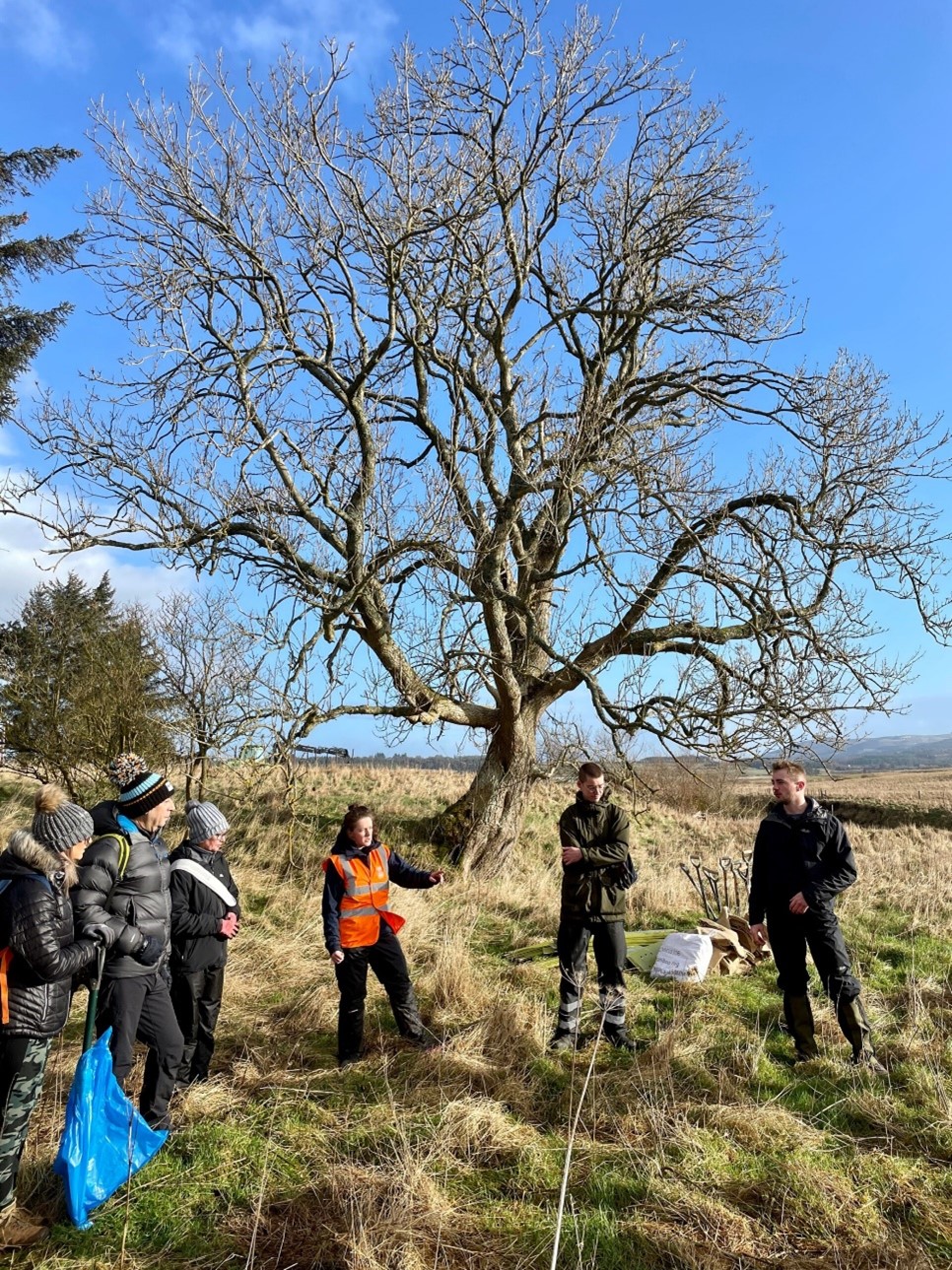
To ensure that the tree planting was done properly and to ensure the best benefits would be gained by this project, surveys of existing woodland were carried out across the proposed planting site. These surveys showed that the main woodland type across the site was predominantly composed of Common ash (Fraxinus excelsior) which was all succumbing to Ash diedback (Hymenoscyphus fraxineus) although a large amount of Wych elm (Ulmus glabra) and Hazel (Corylus avellana) were also present. These surveys ensured that the correct mix of species was chosen to be planted in this project and because of this it was decided that 15 species of trees and shrubs would be planted in this project with the most common tree planted being Pedunculate oak (Quercus robur) followed by Wych elm and Hazel. When these trees have grown they form a similar woodland type as the existing ash woods on the site after the ash trees have died from dieback. No Ash trees were planted in this project because of dieback.
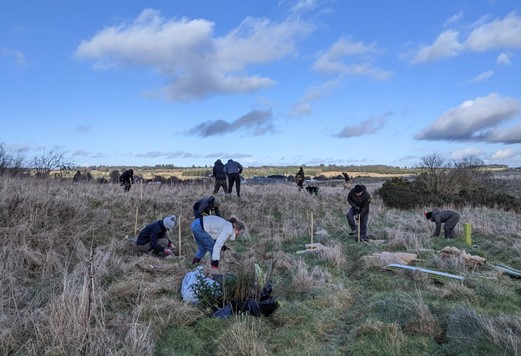
The tree planting along the Danny Burn was mostly carried out by the staff of the Forth Rivers Trust, however corporate volunteers from Highland Spring helped to plant 300 trees in one day. These volunteers were keen to get involved with the project as many of them were local people and because the planting site was right next to the Highland Spring water catchment. The trees were protected from browsing animals using biodegradable paper tree guards. Biodegradable jute weed mats were placed around the bases of the trees to reduce competition from grasses. This combination was used as it was a condition of the funding for this project, which came from the Tree Council, that no plastic tree guards were to be used which we managed to achieve. However we took it one stage further and used no plastic during this whole project. Ideally, we want all of our tree planting projects to be like this but for larger scale tree planting we have struggled to find robust alternatives to plastic tree guards in the quantities we would require.
There are a number of benefits that come with tree planting. On the Danny Burn these will include:
- Creating a corridor that connects existing woodland fragments that were not regenerating because of deer browsing pressure. This will help the species found in these fragments to spread.
- By planted 15 species of tree, the species diversity and long-term resilience of the woodland corridor will increase. As well as this since a mixture of trees and shrubs were planted a more diverse habitat will be created at the site.
- It will provide shade and ensure the burn remains cool in summer which is important for many aquatic species. This ensures these species can cope with the effects of climate change.
- Once the trees have grown, roots and fallen trunks will provide structure in the river. This will increase habitat diversity fish and invertebrates, benefitting them long term.
- Many of the trees and shrubs planted will produce blossom, berries and nuts which will provide a food source for wildlife in area and will benefit species in and alongside the river.
- It will reduce flooding, filter water and clean air, benefitting local communities downstream of the planting site.
- It was planted by locals which will increase the pride they feel in their local landscape and help connect them to their home.
Since the planting finished in the second week of April, just as Spring got underway, it was already possible to see many of the trees opening their first leaves in their guards. Over the next couple of years the trees will become more established and will put out a large root network, after this they will grow rapidly. Within the next 5-10 years we will see a healthy young native woodland benefitting the wildlife and people both in and around the Danny Burn.
Thank you to Network Rail and The Tree Council for funding this project.