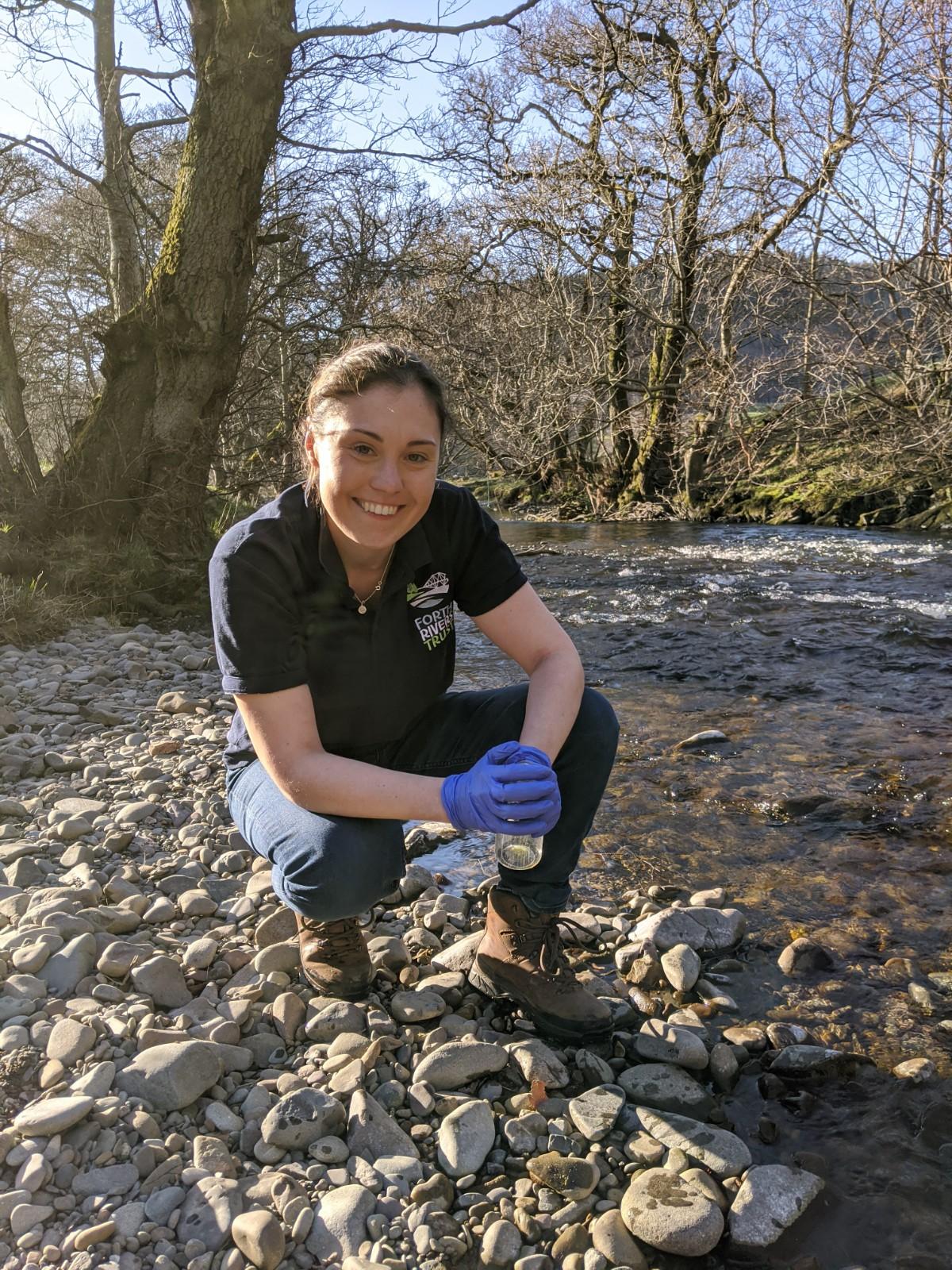
eDNA surveying: a new approach to monitoring biodiversity
Our DNA carries all of our genetic information. Organisms leave traces of their DNA in the environment and aquatic animals, from fish to freshwater pearl mussels, can be identified from water samples using a combination of scientific techniques to identify their environmental DNA. Polymerase Chain Reaction amplifies (or copies) DNA which is then sequenced on a next generation sequencer using a process known as metabarcoding. Thousands of DNA sequences are analysed and compared to a reference database. In this way, multiple species can be identified, even when present in low numbers.
eDNA surveying is widely used to identify populations of great crested newts, a rare protected species, and although eDNA metabarcoding is still a new approach, it has successfully shown that it can identify entire communities of species living in ponds, lochs and even rivers.
In 2018 SEPA, assisted by Forth Rivers Trust, conducted an eDNA survey of several lochs and compared the data to historical gill-netting surveys. Gill-netting gives an accurate account of fish abundance but at great cost since it is fatal for many fish. The study found that the eDNA survey outperformed the gill-netting surveys in detecting fish presence and could even be used to estimate fish abundance.
At the Trust much of our work involves electrofishing to monitor fish populations. Scientific models have been created to allow eDNA sampling of the turbulent and fast-moving water in rivers. When compared to electrofishing, eDNA surveys were shown to identify more fish (an American study showed that electrofishing yielded a total of 12 fish species, while another 4 species were found through eDNA surveying).
eDNA surveys can quickly and easily tell us what species are present in our rivers without causing any disturbance, and we hope it won’t be too long before we can conduct our own research in the Forth District. In the future, this technique may even make traditional surveys such as electrofishing obsolete!