Eel – Farming, policy and protection
By Jack Wootton
Eel, a word that stimulates a range of emotions dependant on your geographical orientation. For some it is income, stability, sustenance, beauty, awe, admiration and for others the less favourable such as slimy, dirty, decay and disgust. I am the former, but more often I encounter the latter in the people I meet.
Luckily there are people that celebrate the eel across the world, but location really does play a huge part in how you come to love… or hate this creature.

Eels packed and ready to be released back into the wild

Dutch fishermen weighing fingerling eels before they are to be released as part of a restocking programme.
Here in Scotland and much of the UK we have cut nearly all our ties with the eel. This species once existed as currency across areas of the UK, influenced the founding of settlements and supported a huge economy. Not to mention a history of monumental contributions to ecosystem services. Yet eel is still met with troubling eyes and unwilling engagement.
But cross that narrow bit of salty water between the UK and Europe, and it’s a very different story. The eel is very much a part of culture and sees attention from conservation and culinary folks alike. Eel is a positive, it’s a sign of health, an indicator of wildlife persevering and it is met with more willingness to engage.
The Sustainable Eel Group invited me to join a group of policy makers, anti-crime officials, conservationists and industry professionals focusing on all things eel, from the preservation to the exploitation, trafficking to tradition. On this trip from Scotland to Belgium and the Netherlands, I witnessed a cultural movement from misplaced revulsion to reverence.
The demand for eel on the continent is high – so high that eel farming is a large and lucrative business, heavily regulated and scrutinised. And it is an eel farm that features as the first stop on this journey of eel appreciation. The Nijvis Group is made up of sites in France, Germany, Netherlands and Morocco and is the largest producer of eel in Europe, making up 30% of the market. Growing on wild eels is the only farming method practiced as the life cycle has not been replicated in captivity. This setup boasted not only a high turnover of eel, but a significant contribution to eel conservation. Modern farming techniques are not normally known for their positive contribution to nature, but the eel is not a normal animal to farm. Tens of millions of eels are restocked to waters by the Nijvis Group. Funding restocking is obviously of benefit to the farms, but also to the eel. The simple formula of more eels surviving means more eels to fish and more eels heading to spawn.
We got to see this first hand as we were off to witness the restocking of 170,000 fingerling eels (see video below) in the waters off Bruinisse (Netherlands). The weather was against us, but that would not dampen our spirits as everyone was fully signed up to Team Eel by this point. The introduction of these young eels, grown on at the farm, would hopefully one day contribute the spawning stock and therefore future generations of eel.
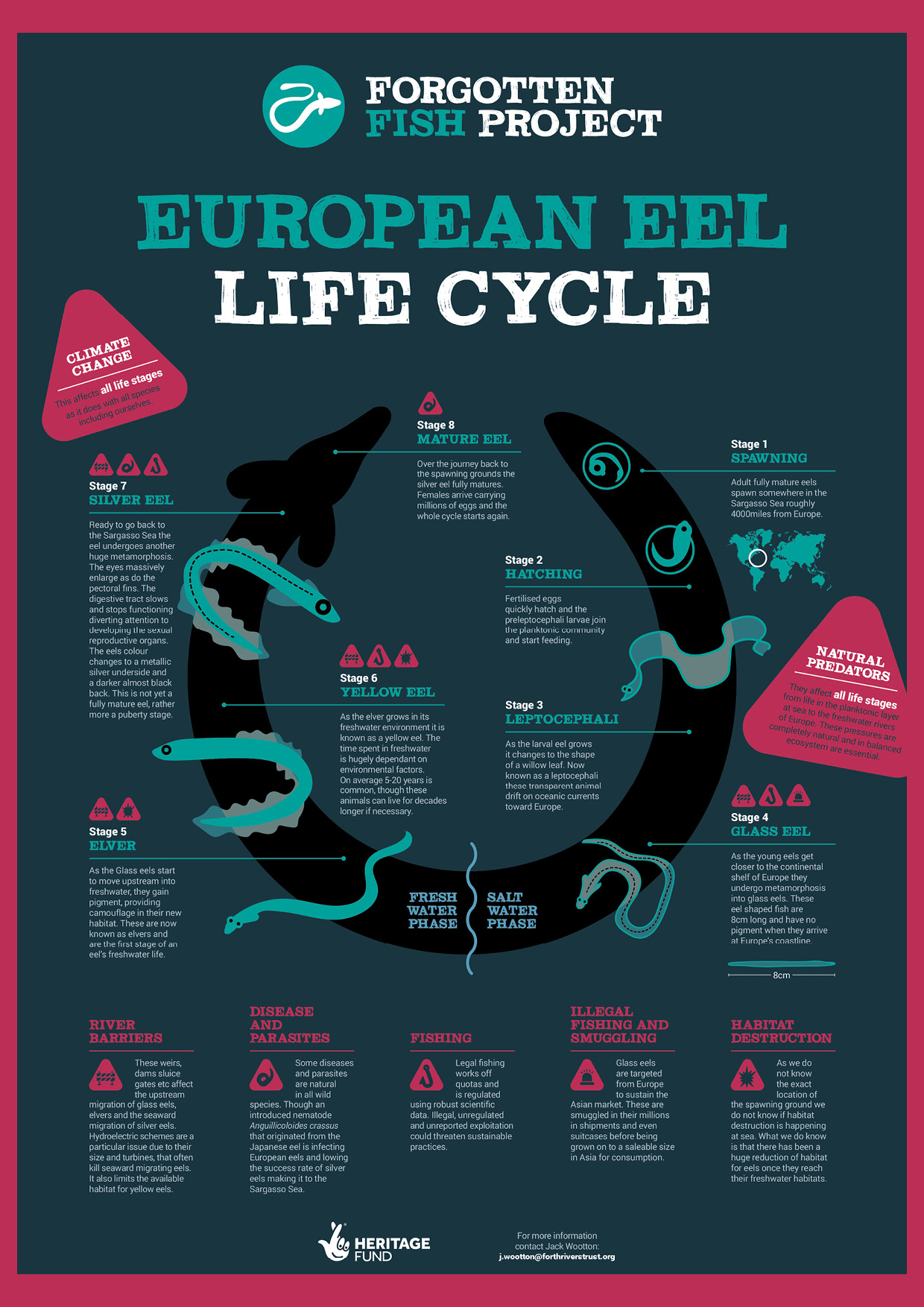
Additionally, profits from eel farming fund research into the species. This primarily, but not exclusively focuses on “closing the gap”. In other words, learning how to spawn eels in captivity. This is an unbelievably complex task due to their intricate life cycle (see life cycle below) and is considered the holy grail of eel science. The advantage of “closing the gap” would be that eel farms would not be dependent on wild stocks. It could also help halt the illegal trade (FFP illegal trade poster) of wild eel by allowing the market to access a dependable stock of captive-bred eel.
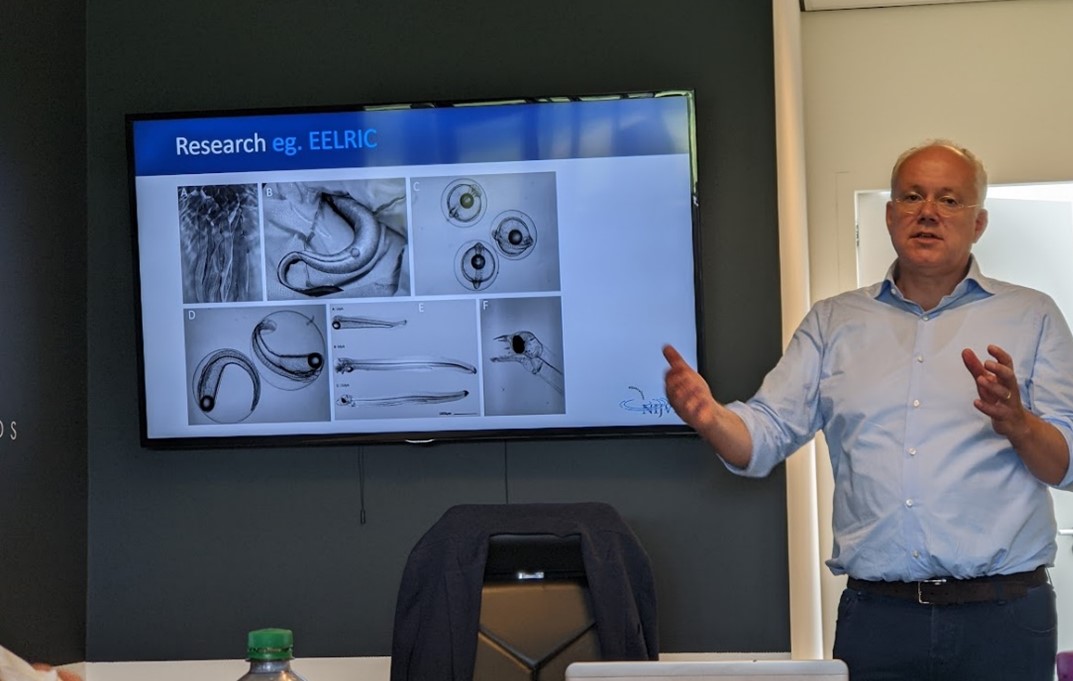
William from the Nijvis group explaining the funding they offer for research
Direct conservation from the fishing community is seen in the Eels over the Dykes (Paling over De Dijk) project, where migrating silver eels are caught using the expertise of eel fishermen and taken below river barriers to continue their onward journey to spawn.
It was easy to see the support for this work in Brussels and the Netherlands. These cultures favour the eel and life alongside this creature will continue, but I could not help thinking that this culture is not always shared. The level of positive work for eel is disproportionate. Eel seems to have lost its connection in some areas, especially the UK. Seeing the level of industry, care and focus given to sustainability on this trip, only strengthened my view that geographical bias exists when we talk about peoples love of the eel.
To wrap up, farming is not the only thing that can benefit the eel – far from it. This is just another tool to be used in the conservation toolbox. The removal of river barriers, cleaning of our rivers and restoration of eel habitat are all other methods of helping our forgotten fish. Currently, eel farming offers the economic incentive to protect a species that is not cute, cuddly or charismatic (in others opinion). For or against this trade, the issues facing the eel are complex to say the least and without another alternative on the horizon who else will foot the bill to protect this species? Large scale efforts are needed to protect this species and cross-country efforts are essential. Is this the future of sustainable conservation? In a world that understands money over all else, it could certainly play a part.
I hope this blog explores some unknown areas of the eel and other methods for its continued protection. Thank you to the Sustainable Eel Group for the opportunity and Nijvis group for their hospitality.
If you would like to learn more about the eel please go to the Forgotten Fish Project at the link below or contact me at j.wootton@forthriverstrust.org
https://forthriverstrust.org/project/the-forgotten-fish-project/