
Eely Good Year for the Eel By Jack Wootton
This year the Trust has taken steps to increase conservation efforts and understanding of the European eel in Scotland. Headed by Jack Wootton two projects and the first eel conference to be held in Scotland are turning 2020 into a great year for the eel.
From the start of 2020 Jack Wootton, Aquatic Ecologist at FRT, has been working on the Trust’s new eel projects. These projects focus on the conservation of this critically endangered species in Scottish waters. The projects are quite different, but both offer brilliant volunteering opportunities. This year’s focus is on the rivers Esk and Leven.
The Forgotten Fish Project
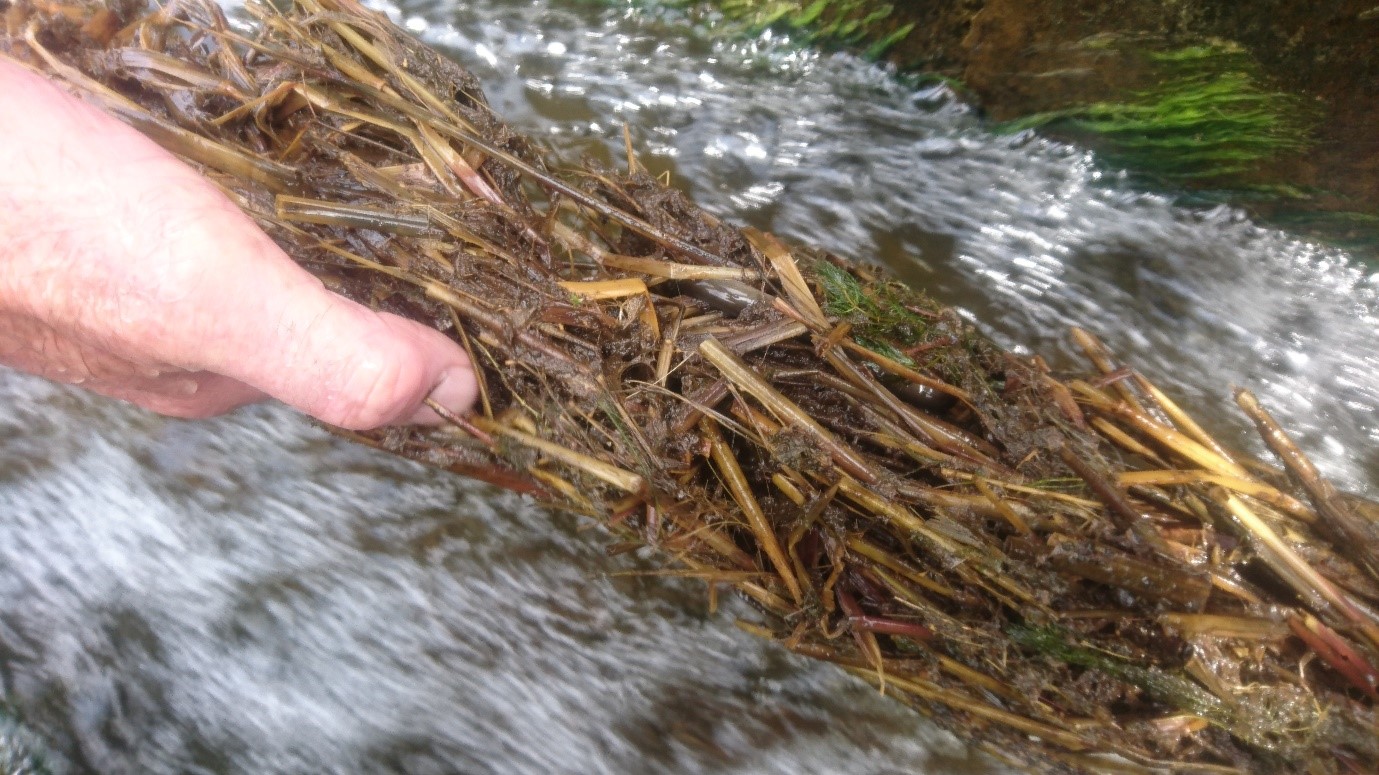
This HLF funded project is a mixture of public engagement, education and direct conservation. Utilising traditional fisheries management techniques, the project aims to aid migration of elver (young eels) upstream using volunteers to help. Volunteers of all ages and abilities are helping to make eel ropes. Traditionally made from straw, these ropes are used as a basic fish pass for eels, helping them over river barriers such as weirs, dams, sluice gates etc. The project also runs river walks that highlight key habitat for eel and indoor workshops and classes to develop knowledge and understanding of this amazing creature. Please get in touch if you or a group would like to get involved.

The Scottish Eel Project
This project is much more science based, but there is still plenty of opportunity to get involved. This project looks to establish the distribution and abundance of eel in the rivers Leven and Esk. As well as the eels within the river, we are interest in the recruitment of these rivers. This means the young eel’s migration upstream from the sea after a 4000 mile journey form the Sargasso. We will be electrofishing and trapping eels throughout the year to establish this data. This work will help us better understand the populations within these rivers and improve management of this species.


Why is it important to protect the eel?
This species is critically endangered after a dramatic decrease in the population from the 1980s. The population fell 90-95% over a short number of years and has never recovered to its pre-1980 stock. The exact cause of this sudden drop in returning young has yet to be explained, but anthropogenic pressures on the species have hindered its recovery. These pressures include habitat reduction, river barriers, introduced diseases, climate change and over exploitation both legal and illegal.
The European eel once made up 50% of the biomass in European rivers. The arrival of young eels on Europe’s coast brought in migratory birds by the thousand and provided food for mammals and aquatic life in marine and freshwater habitats. As well as being a vital link in the food chain, eels also provide nutrient transferal from the sea and lowland rivers areas into the higher nutrient poor streams. This species feeding habits are mainly focused to invertebrates but as the eel grows it becomes more piscivorous. Eels often feed on sick or injured fish, helping to maintain health stocks of the fittest fish species cohabiting their rivers.
Not only do these fish provide us with ecosystem services but they have one of the most impressive migrations and life cycles in the animal kingdom. Eels are a catadromous freshwater fish meaning they live in freshwater and spawn the sea. Spawning takes place in the Sargasso Sea, but the exact location has never been found. Eel arrive en masse somewhere under the dense sargassum weed that floats above them and after this 4000-mile migration from Europe they spawn and die. Fertile eggs float on oceanic current before hatching into leptocephali. These transparent willow shaped larva continue using currents on a long journey back to Europe. This can take up to two years and over this period a transformation takes place to the body of the young eel. The willow shape flattens dorsally, creating a cylindrical body that is known as the glass eel stage. Upon arriving at the coastline, the glass eels use tides to carry themselves upstream. Upon entering fresh/brackish waters the glass eels start to pigment and become elvers. At around 8cm these young eels migrate upstream looking for habitat to grow and thrive in. The freshwater stage of the eel, known as the yellow eel, is the longest period of an eel’s life and ranges from 7-20 years dependent on sex, resources and temperature. Upon reaching adequate size and adequate fat stores the yellow eel transforms once again for the final stage of its life. This final stage is known as the silver eel. This impressive metamorphosis sees the animal change colour, pectoral fins widen, digestive tract shut down, eyes grow up to 10 times their original size and muscle mass increase. All these changes aid the eel on its journey back to the Sargasso Sea to start the cycle again.

The Forgotten Fish and the Scottish Eel projects increase the knowledge and appreciation of this superb species. Getting people involved in the direct conservation and learning more will ensure that more is done to protect the eels in Scotland and further afield.