

2021 saw plenty of focus given to the critically endangered European eel. We carried out monitoring of young eels coming into the Forth Catchment, trialled new monitoring methods, built eel passes and even reviewed existing passes to improve their efficiency.
One point that is important to make with our eel work is that a healthy eel population is good for more than just the eels. Eels provide eco-services for a range of species including ourselves. Conservation projects should be looking at the keystone species in ecosystems when looking to make the largest impact. Our eel populations are still well below what is deemed as healthy and we will continue our work until the eel is back to its former glory.
This year has been difficult for our volunteering programme, but we hope that 2022 will be much better. There are plenty of opportunities for people to get involved across our eel conservation work. Everything from monitoring to hands-on conservation is something that we would like to offer to our volunteers. If you would like to get involved in the Forgotten Fish Project in 2022 then please contact Jack Wootton at j.wootton@forthriverstrust.org
Upcoming eely work
- Eel rope making workshops – get hands-on conservation training with our workshop event. We will be showing members of the public how to make quick, cheap and effective conservation tools to help our eels.
- The Scottish Eel Conference – We will be holding the first ever eel conference in Scotland on the 22nd April 2022. Please come and join us to hear the amazing work people are doing to conserve the eel.
- We will continue to monitor our young eel populations coming into the Forth Estuary.
- We are in the early stages of creating the largest eel conservation project to have been carried out in Scotland. Keep an eye on the Forgotten Fish Project page and the Forth River Trust Page for announcements in 2022.

A mixture of glass eels and elvers; both are names for young stages of the European eel. This lovely bunch was caught this year in April
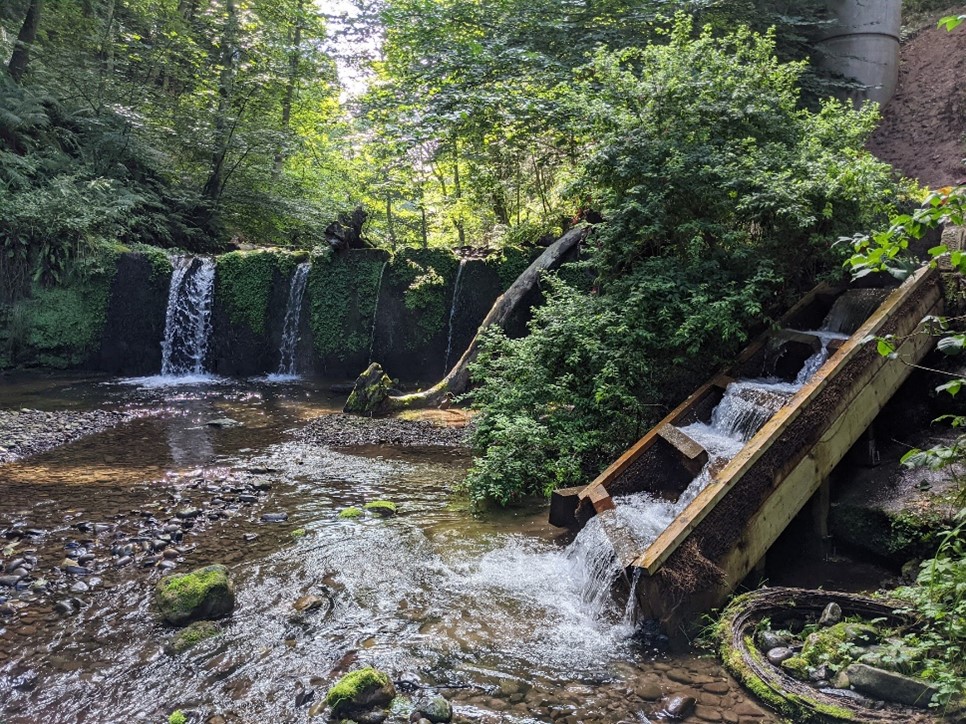
On the right hand side is a new style of affordable fish pass that contains no plastic or concrete. It is specially adapted for all species, not just salmonids, which is often the case in Scotland.
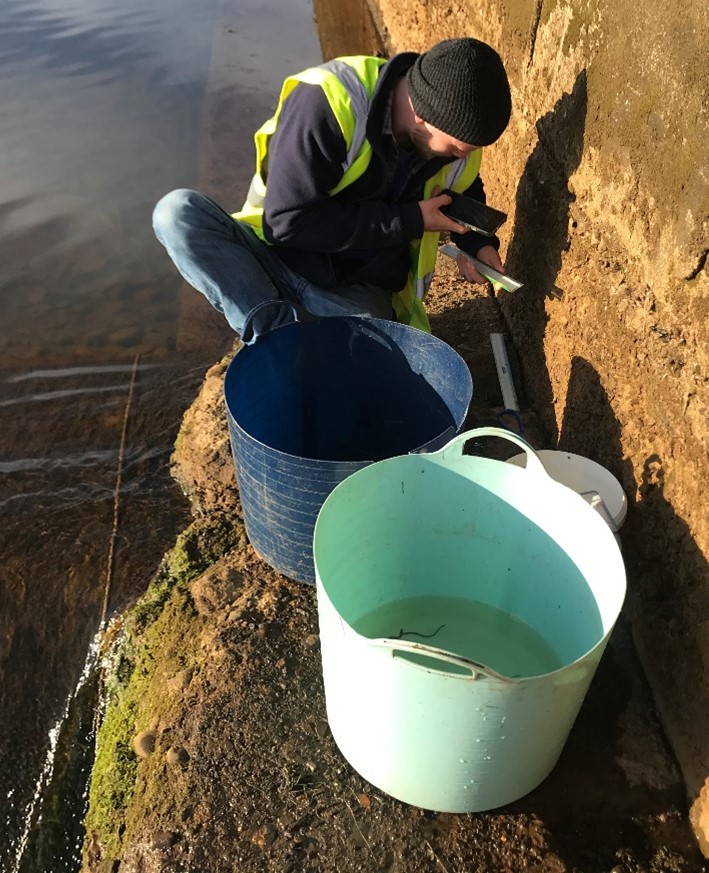
Jack carrying out monitoring of young eels (glass eels and elvers) that are migrating into the Forth Catchment