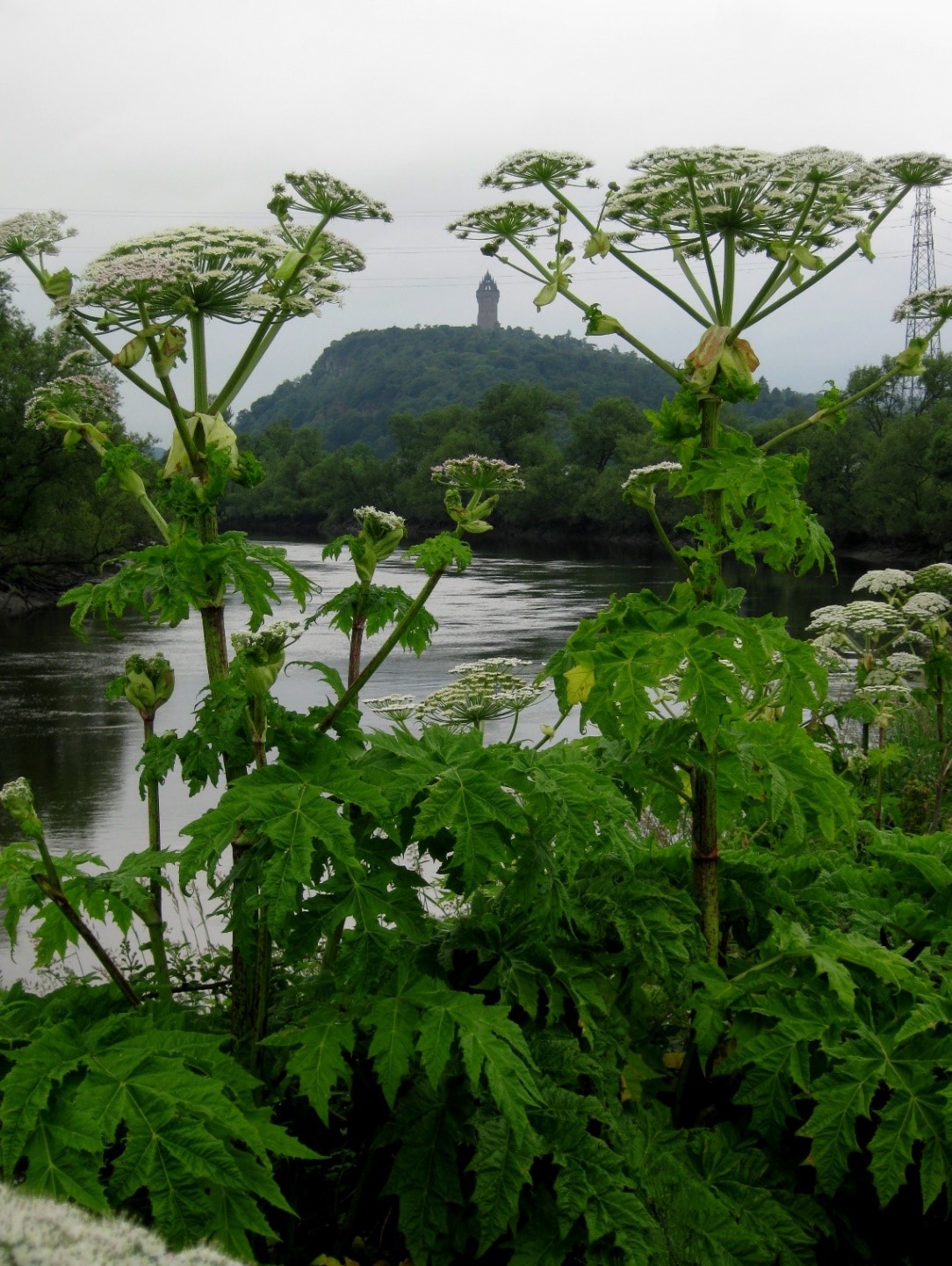
Giant hogweed was introduced to Scotland as an ornamental plant and was first recorded in the UK in the late 19th century. The plant spreads by seed mainly via wind dispersal and water courses. Giant hogweed is widespread throughout the UK and as a result can be easily moved about through activities such as soil being imported for building projects or on machinery moving from site to site. Due to it spreading so rapidly through water courses, riparian habitats are at the most risk from infestation. The plant produces large amounts of vegetation which out competes native species for sunlight, space and resource. Other negative impacts include riverbank erosion and an increase in flood risk because of the lack of native vegetation on the river banks through the winter. It also poses a threat to human health as sap from giant hogweed can cause human skin to blister and burn under direct sunlight.
Together with local volunteers the Forth Rivers Trust is tackling giant hogweed from Greenloaning to Dunblane where concentrations of the plants seem to be at their highest along the Allan Water. The most effective method of control for non-native invasive species that spread via water courses is a top down approach. If plants at the top of a river catchment are controlled first, it is less likely that new plants will fill the gap created when the treated plants disappear.
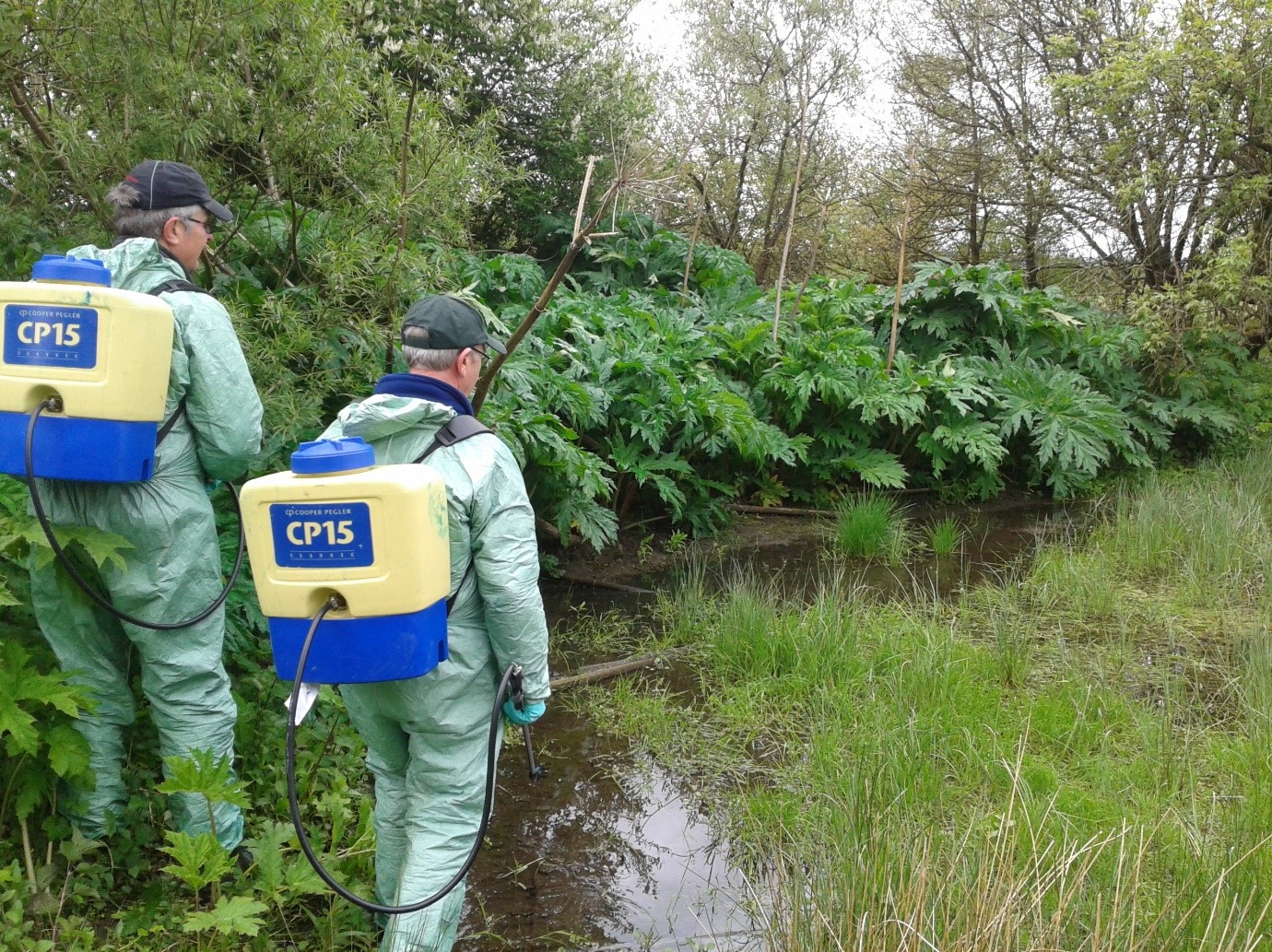
Treatment is carried out using a diluted herbicide mix which enters the plant through the leaves stopping specific enzyme pathways, eventually killing the plant. This method destroys giant hogweed within three to four weeks. Giant hogweed is also controlled by cutting off flower heads when they appear. This stops the plant from producing seeds and spreading. One giant hogweed flower head can produce around 50,000 seeds and those seeds can reside in the soil dormant for up to 17 years making the plant very difficult to control once it has managed to set seed.
On the Allan Water the giant hogweed treatment started at Feddal Estate near Greenloaning. The Feddal burn runs directly into the Allan Water from where the giant hogweed infestation of the river starts. The Forth Rivers Trust with the help of volunteers have treated plants from this area down to Ashfield this year (2019). The Forth River Trust prioritize plants beside the riverbanks but also areas that are a cause for concern and might spread into rivers. Volunteers from the local community council and Scottish Wildlife Trust groups treated from Ashfield down through Dunblane and Bridge of Allan.
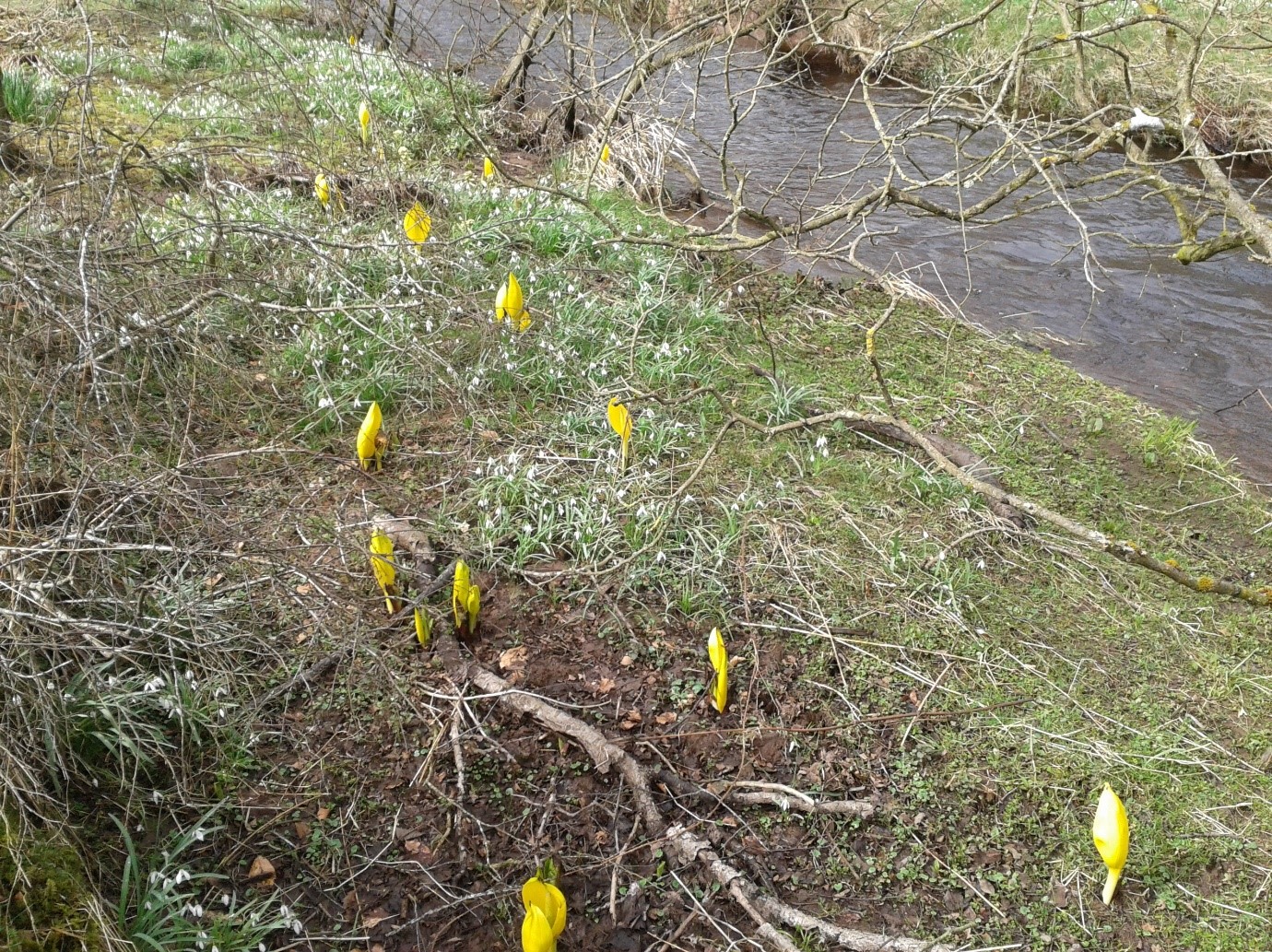
A few other non-native invasive species can be found on the Allan Water. These were also ornamental plants in the past and pose a threat to natural habitats. American skunk cabbage can be found in a few areas alongside the Allan water. On the Allan Water, skunk cabbage is currently not a significant problem but left to get out of control it can spread through wetland areas. Knotweed is another invasive plant that can cause problems within the environment. On the Allan water it is mainly found around Bridge of Allan. Knotweed can spread vegetally and a nail size piece of plant can create a new plant meaning it can spread very quickly from the slightest fragment. This plant also out competes native plants and can cause structural damage making it a concern for homeowners. The priority for the Forth Rivers Trust along the Allan Water is Giant Hogweed but these other plants are Treated where they are found alongside the target plant.
On the Allan water we have seen some success regarding treatment particularly where year on year treatment has been administered. For example, in Dunblane where one of our dedicated volunteers sprays every year, we have seen vast improvements in the reduction of giant hogweed coming back every year. The control of giant hogweed and other Invasive plants can be achieved if persistence is maintained and with the support of local communities and landowners. A long term strategy is key to successful control of this non native plant.
A special thanks must go out to Forth Rivers Trust volunteers Terrance and Roy as without the dedication and time put in by these volunteers’, control of giant hogweed on the Allan Water would not be achievable.
If you would like more information on our work with INNS please contact Kyle on k.hind@forthriverstrust.org