
Here Be Monsters
by Dr Iain Reid
They may be small but lurking in the still waters of our ponds and canals around the Forth are some truly weird and wonderful creatures. At the top of the food chain are a number of organisms sporting a range of adaptations to help them capture and devour their prey – from huge compound eyes, to lightning fast jaws, to saliva that paralyses and digests their prey at the same time!
The top predator of the freshwater invertebrate world surely must be the dragonfly. Dragonfly larvae live in freshwaters for up to five years before hatching into adults. They are voracious predators, feeding on fish, amphibians and even each other. The larvae are ambush predators, using their extendable jaws, or ‘mask’, to grab unsuspecting prey. They are also able to jet-propel themselves toward their victims by shooting water out of their rectum through special valves at the end of their abdomen!
Daintier, but every bit as deadly are their close relatives the damselflies. The nymphs can be distinguished from dragonflies by their slimmer bodies and the presence of three leaf-like ‘tails’ which are actually gills. Like their larger cousins, damselflies prey on smaller invertebrates with extendable mouthparts reminiscent of the xenomorph from the film ‘Alien’.
While nowhere near as large as dragonflies or damselflies, members of the Notonectidae (from the Greek notos (back) and nektos (to swim)) family are every bit as terrifying. More commonly known as water boatmen or backswimmers, they swim upside down using their elongated hind legs to ‘row’ through the water in search of prey. When they do snatch an invertebrate, tadpole, or fish they stab it with their piercing mouthparts, immobilising it with their toxic saliva, before sucking the contents out while the animal is still alive! Watch out when handling these critters as they can also give humans a nasty nip too!
Dragonfly larvae are the top predators of the freshwater invertebrate world. They ambush prey with their formidable extendable jaws and are capable of jet-propulsion by squeezing water out of their bottoms!

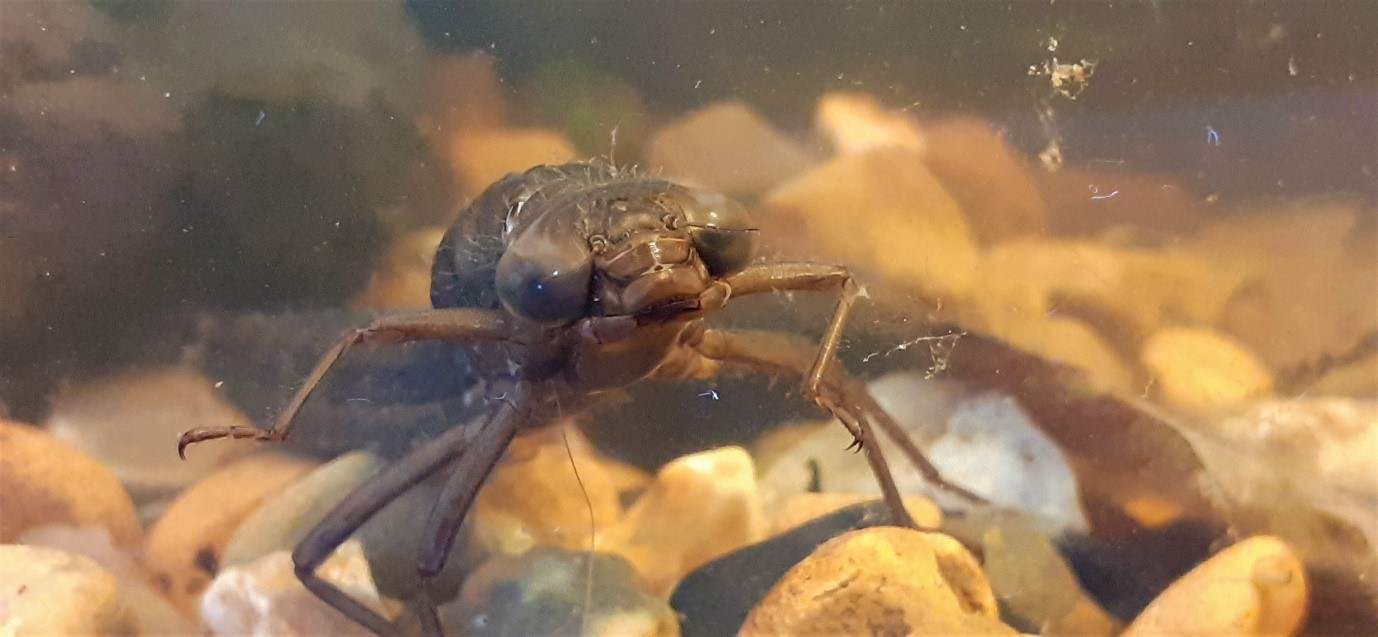
Dragonfly nymphs also have huge compound eyes to allow them to locate prey and respond with lightning reflexes.
Damselflies are smaller and slimmer than dragonflies but equally deadly. They have three leaf-like gills at the end of their abdomen and catch their prey in a similar manner to dragonflies with their extendable jaws.

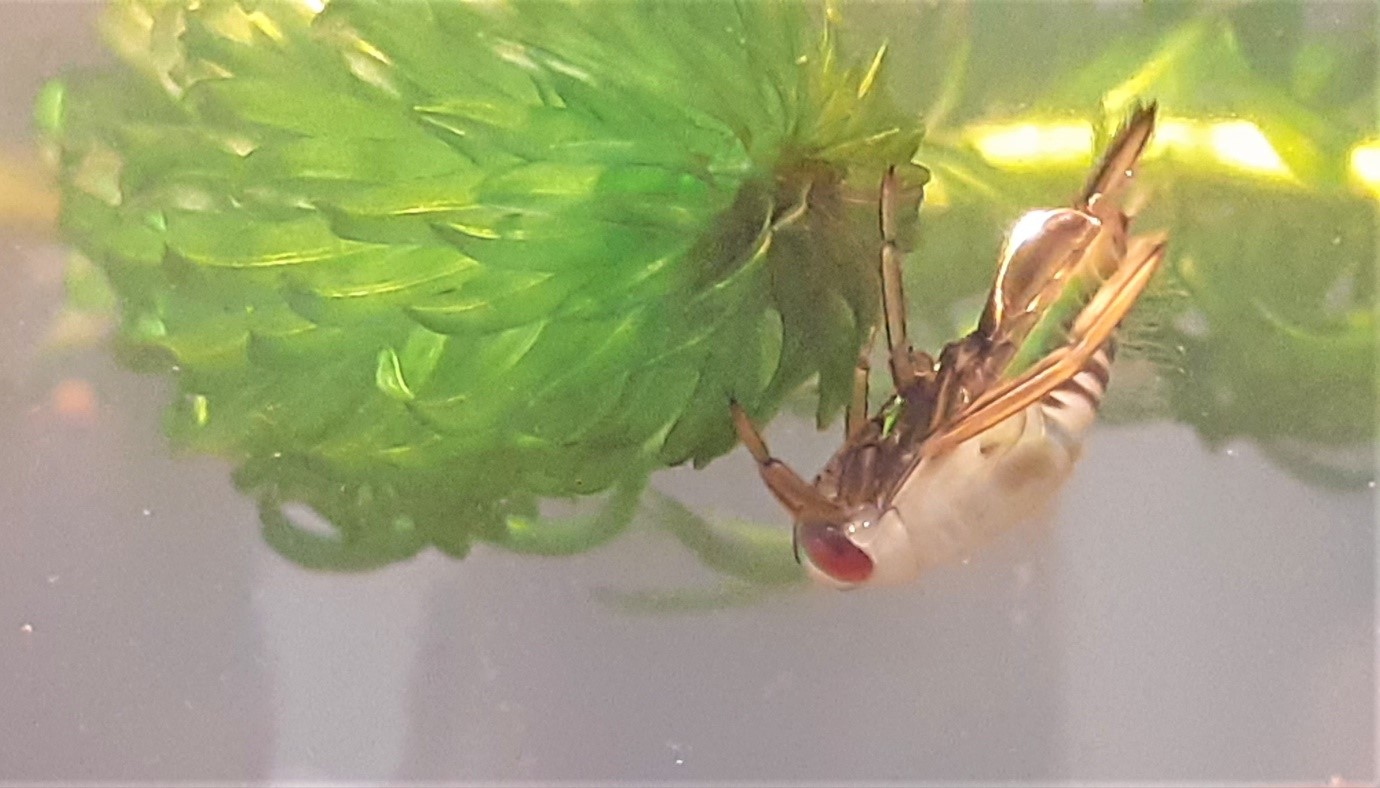
Water boatmen have huge, red, compound eyes that enable them to find prey which they inject with their piercing mouthparts before paralysing and sucking the juices out of them!