Improving Rivers with Nature Based Solutions

As we near the end of the week we are going to look at nature based solutions for river restoration. This is a process where natural processes are mimicked and have multiple benefits.

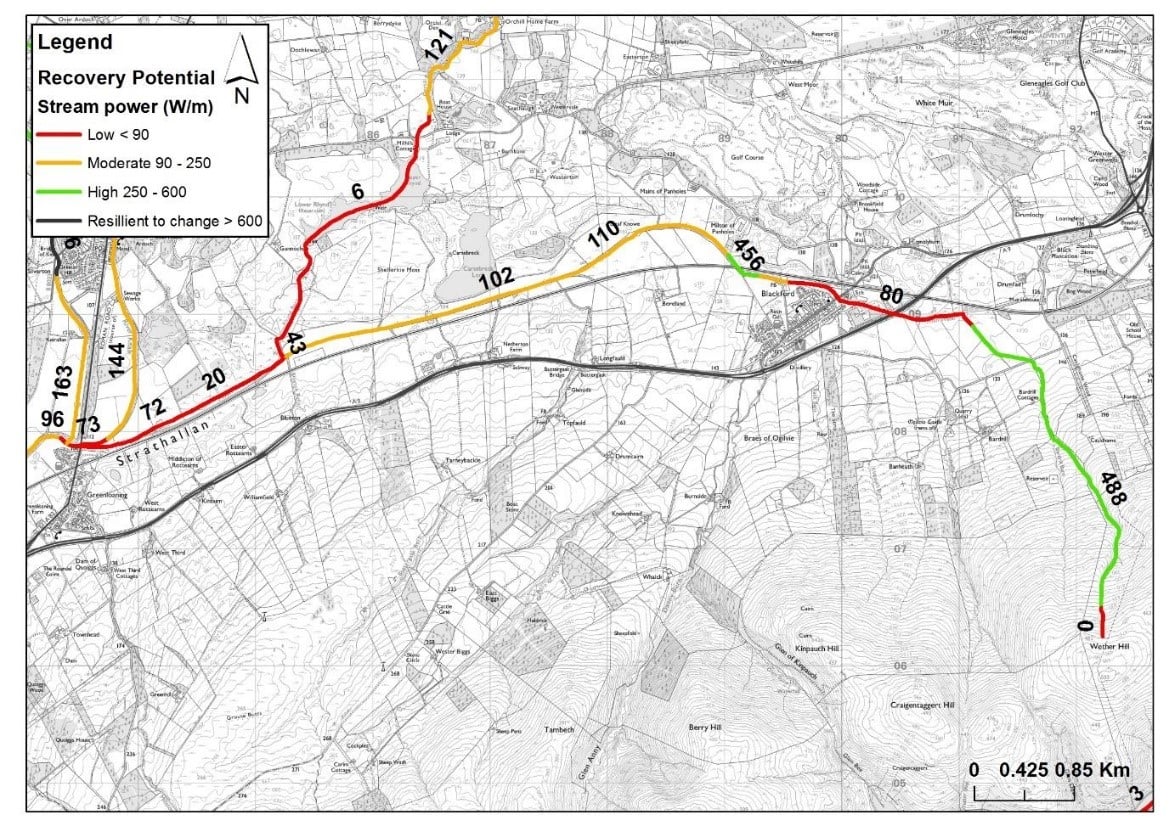
We have spoken before about this project about how straight the river is any why they engineered the river this way. The section between the source of the river and Greenloaning has been classified by SEPA as ecologically ‘bad’ due to its physical condition. After surveying the river with SEPA in 2019, we concluded that the river has low to moderate restoration potential without intervention.

To overcome this, we have set plans in motion to help kickstart processes of natural recover. The first stage is to install large woody debris into the river which will reduce the flow of water, making it easier for adult fish to move upstream and for juveniles to rear. This in turn helps them expend less of their limited and valuable energy fighting strong currents. In restoration projects, large woody debris is also often spread across the floodplain to help slow water and reduce erosion during high water events.

Large woody debris can help decrease water temperature by providing shaded areas along streams and creating pockets of cooler water which also act as a refuge for these species to escape predators. Woody debris helps trap organic material like leaves and twigs that provide nutrients for insects and invertebrates (critters without spines), which in turn provide food for fish.

During peak flows and flooding, it has been seen that sediments have smothered salmonid eggs and killed many nests present in this section of the river. So after we install the large woody debris into the river, the banksides will be reprofiled to help reduce the amount of erosion. We will also plant trees in these sections to help stabilise the banks overall.

To work alongside the instream habitat creation, we are also creating a serious of vernal pools (wetland seasonal pools) to create more habitat for invertebrates, birds and amphibians while also acting as offline flood storage during peak flood events. The benefits of these pools will be the slow release of water instead of having a massive surge head towards towns such as Greenloaning and Kinbuck. We hope that by creating vernal pools, it will help mitigate the flooding in these areas.
Share This