Please note this blog was originally published in 2019; updated in 2026 to remove outdated contact details.
Invasive control in the Loch Lomond and Trossachs National Park
Within the Loch Lomond and The Trossachs National Park there are two main rivers that flow into the Firth of Forth, these are the River Forth and the River Teith. Along these rivers and throughout the National Park non-native invasive plants species have spread.
The main invasive species that have established on the River Teith and River Forth including some of their tributaries are skunk cabbage, Japanese knotweed, giant hogweed and Himalayan balsam. From the month of June until august, particular focus is being directed towards skunk cabbage.
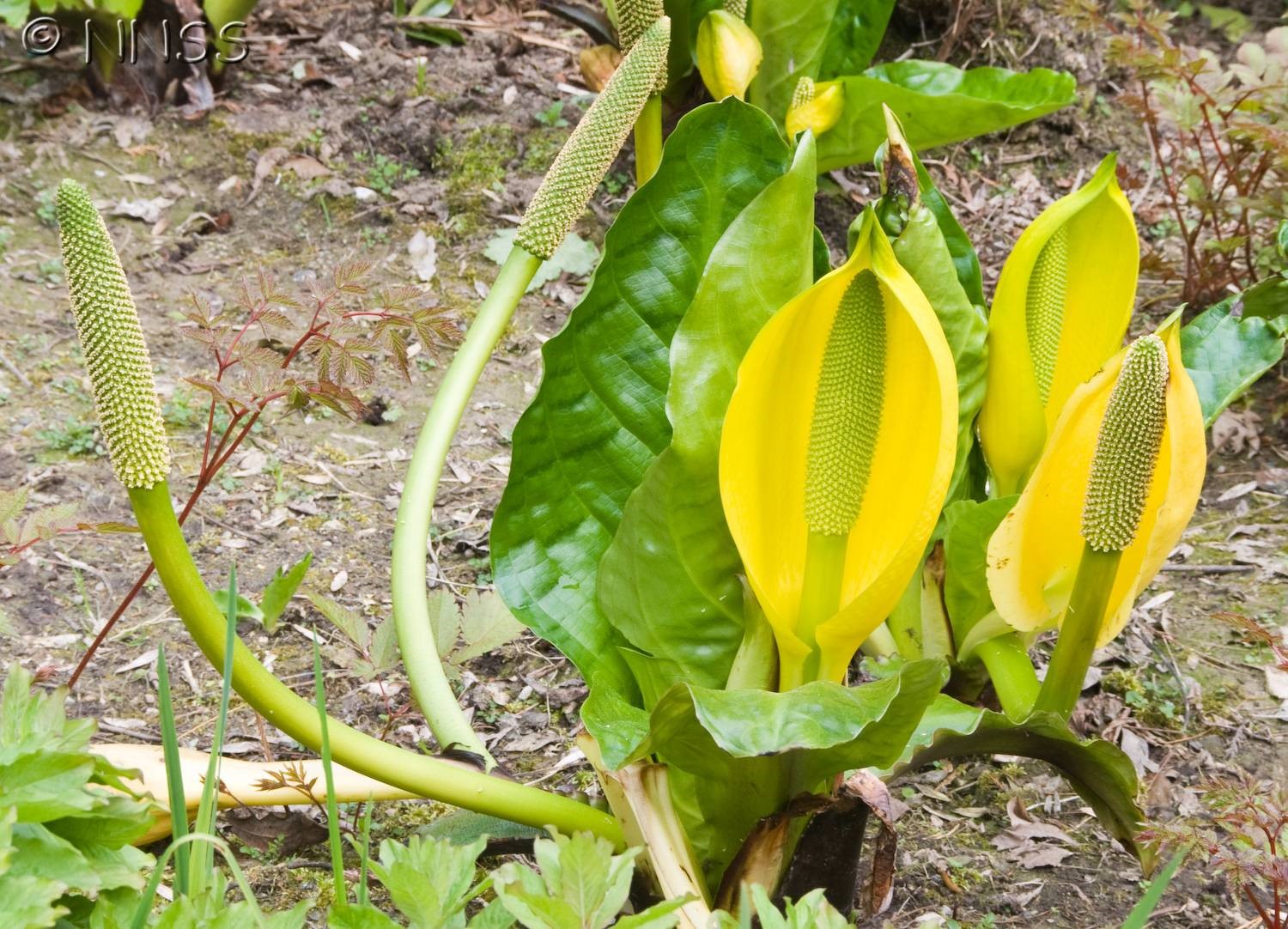
Skunk cabbage is commonly found around garden ponds and it is believed that most plants in the wild are either a result of garden waste being dumped or seeds dispersing from nearby gardens. It is clear to see why the plants are ornamental specimens in a garden with its bright yellow flower and large cabbage like leaves, the plant is completely unique.
Unfortunately, when skunk cabbage establishes in native habitats it quickly colonises wetland areas creating a dense canopy through which no sunlight can reach the understory. This can result in damage to native wetland areas and in particular low-lying plant species.
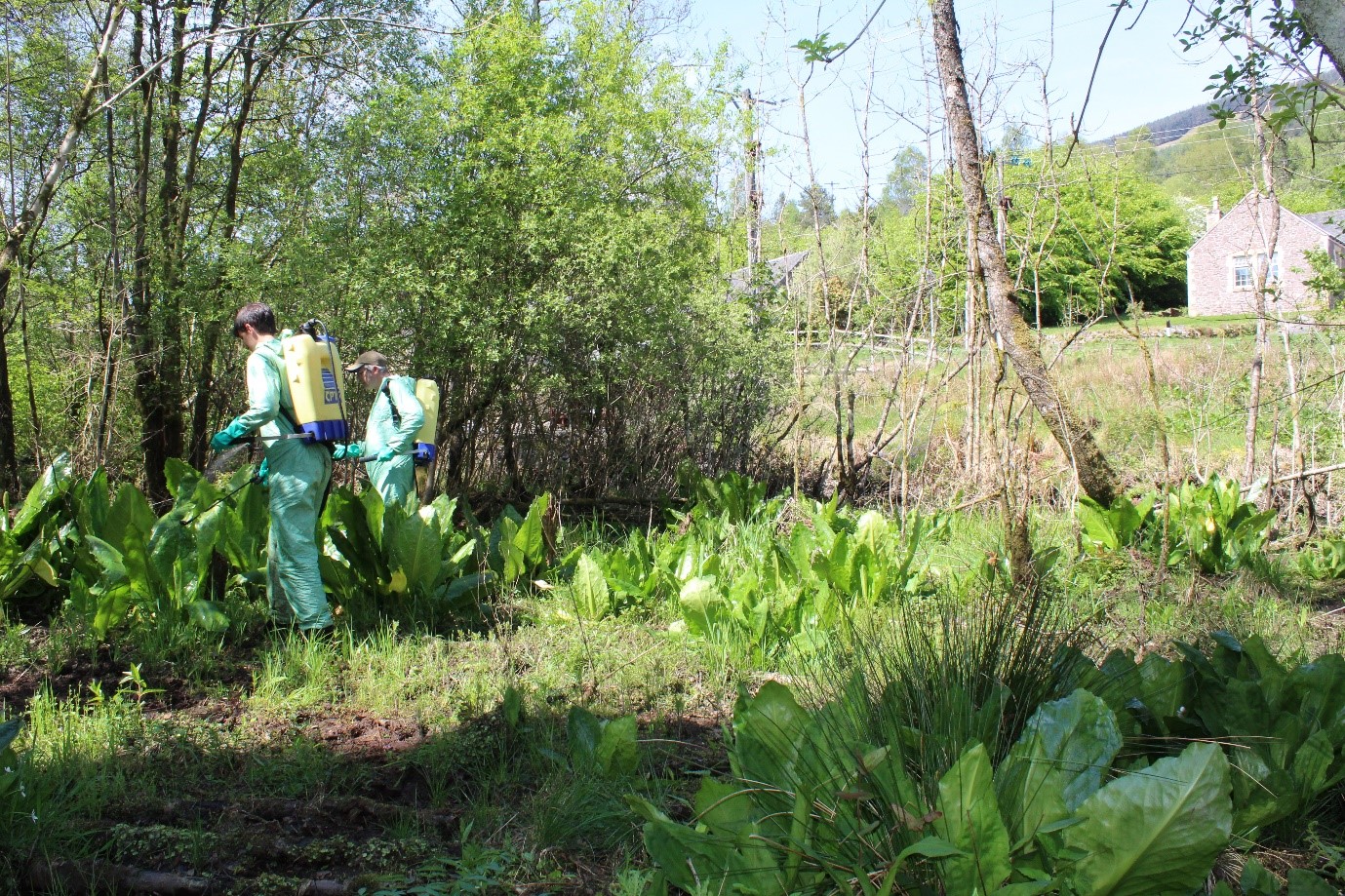
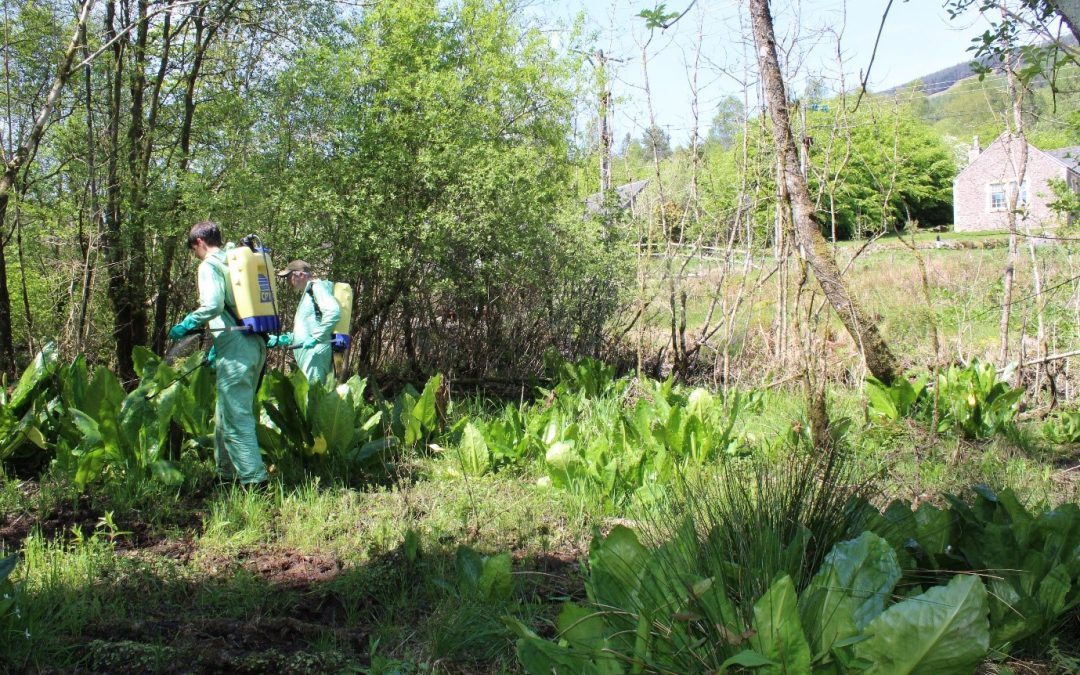
In collaboration with the Loch Lomond & The Trossachs National Park, the Forth Rivers Trust has been treating skunk cabbage along both the Rivers Teith and Forth. Over the years, both organisations have seen vast improvements in the reduction of invasive plants along rivers in the park.
The success that we have been seeing would not be possible without the help from trained volunteers from the National Park and continued support in the form of grant funding for coordination time, also provided by the Park. With more volunteers being trained this year and with some hard work and dedication, there will hopefully be a marked improvement on the number of invasive non-native species within the National Park in the Forth and Teith catchments next year.
The Loch Lomond & Trossachs National Park have invasive non-native species as one of their five priority actions in their Wild Park 2020 plan. This highlights that INNS are a key priority for the park and see them a threat to nature.
Looking for Non-native invasive plants also takes large amounts of time and manpower: time that should be dedicated to treatment. People can help Forth Rivers Trust by reporting invasive species that are found via our online reporting tool. Each sighting helps us build up a picture of where INNS are in our catchment and can also help keep track of any potential re-infestation in previously controlled areas. Thank you for taking the time to report any INNS sightings to the Trust!