

On an overcast Friday afternoon I drove West, on winding roads, toward the hills of Loch Lomond. The roiling grey clouds stumbling over the hills as I trundled down a narrow driveway to be welcome by the team at the RSPB Loch Lomond reserve.
Having followed the career of artist and researcher Hannah Imlach since we graduated from the University of Dundee in 2011 I had eagerly anticipated the culmination of her 4 year PhD placement on the RSPB reserve. Her strong architectural eye and environmentally informed structures have a playful interaction with the landscape, ecology and viewer, facilitating environmental engagement to a broad audience, be it insect enthusiasts being drawn to her Moth Kota or children climbing her newly installed Skein Dial.
She assures us that that sturdy looking dial is expertly engineered, sunk deep into the ground, and impervious to the inevitable weight that young visitors might throw at it.
Beautiful, tactile and practical, the Skein Dial is perfectly calibrated using the ancient art of sun dial making, to track the yearly migration of the Greenland White Fronted Geese. Having spent years on the Loch Lomond site observing and researching geese and working alongside wardens, she developed the idea for the innovative artwork. Collaborating with experts on sun dial technology she designed the sculpture which utilises the shadow in reverse to a traditional sun dial, to track the geese as drops of light on the ground. The differing strips of paving indicating the periods in which they should arrive and depart. On the day the flat light refused to budge, as echos of geese in flight remained veiled.


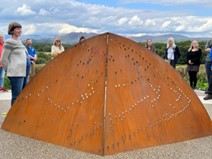
The sculpture is accessible to the public visiting the reserve, with more information on the RSPB website and interpretation signs due to be installed in the coming months.