Natural Flood Management and Climate Change
As the climate changes, this will bring an increase in unpredictable and intense weather. This can range from prolonged hot and dry spells to an increase in rainfall. Focusing on the later, this could lead to an increase in flooding which will affect communities. Normally, every year there will be some form of flooding. Whether this is the river bursting it’s banks in low lying areas or something more extreme where large swathes of land with housing and communities present on it become inundated by water, causing property damage or damage to industry and infrastructure.
It is estimated that flooding costs the UK economy more than £1 Billion annually which rises to £5 Billion in a bad year. As climate change takes hold and becomes worse, this figure is set to rise and damaging floods could become more frequent.
Government and local authorities are all racing to try and protect communities from devastating floods, but sadly this tends to be hard engineered solutions which are damaging to rivers and wildlife. Increasingly however, local authorities are looking at catchment scale initiatives to tackle flooding with flood risk management science continuously developing to become more accurate as new technologies or information is developed.
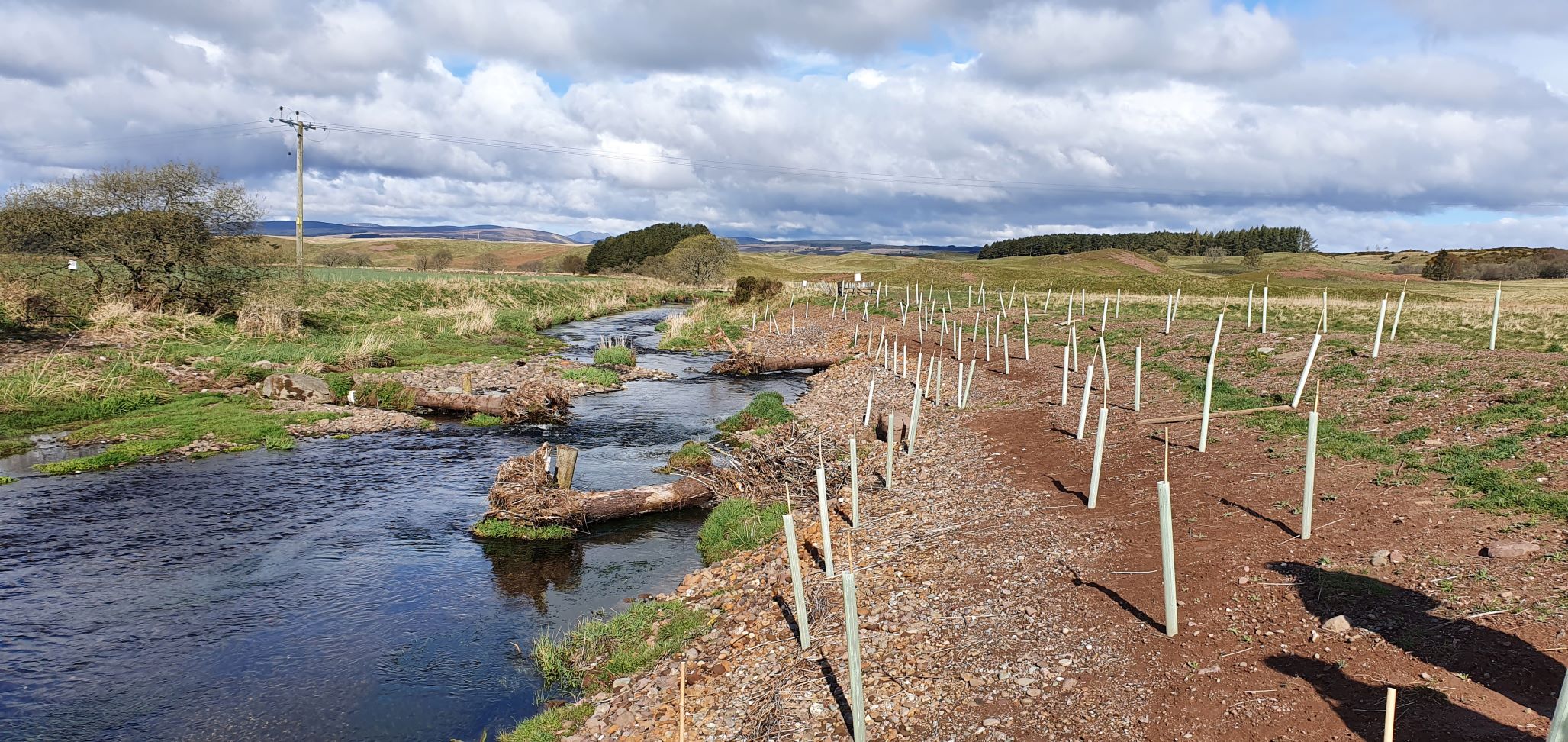
In the Forth, Scottish Government funds our Allan Water Improvement Project which has a main goal of working with landowners in the Allan Water catchment to improve the water environment whilst slowing the flow of water through the catchment to protect communities downstream. The project has been highly successful, working with a range of landowners to undertake a variety of projects such as peatland restoration, installing leaky dams, tree planting, river restoration, embankment removal, wetland creation and more.
All of these activities provide natural flood management benefits by storing the water on land for longer so that water is released gradually instead in one large flush. Land that is targeted for work is generally areas of unproductive land or land which is used by the likes of farmers but after some simple changes, farm practices can still take place but in an efficient way which means flooding wont harm their rural business.
Many of the natural flood management projects have minimal and small effects on flooding but it is hoped that lots of these small interventions will eventually lead to a big benefit not just for the communities downstream, but the wildlife using the catchments also.
You can help the Trust deliver more climate change mitigation such as Natural Flood Management by donating today! Donate | Forth Rivers Trust