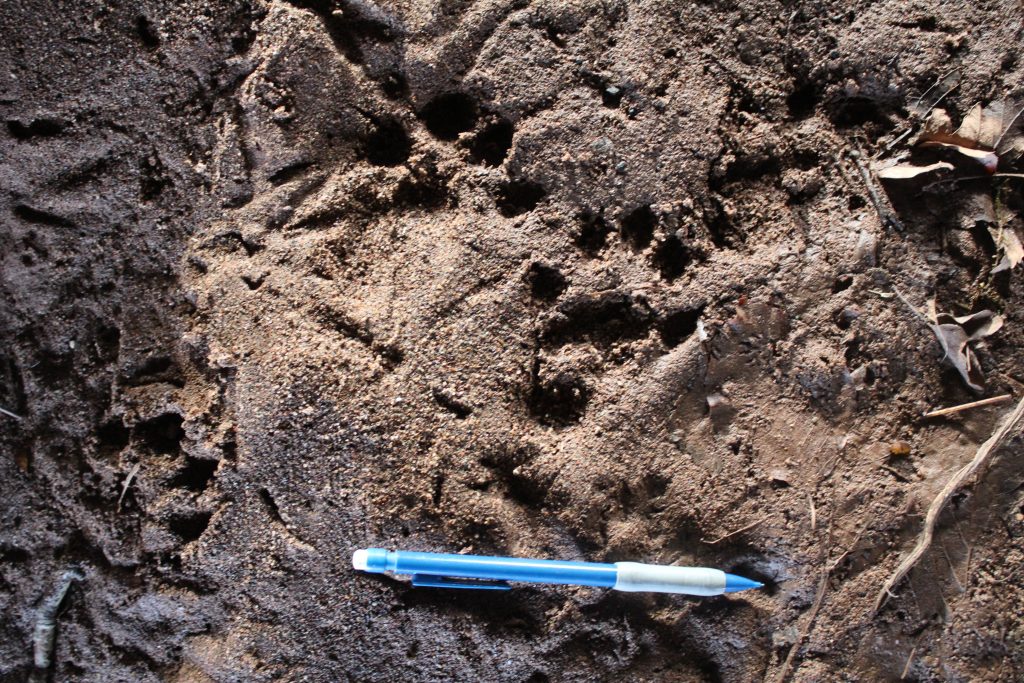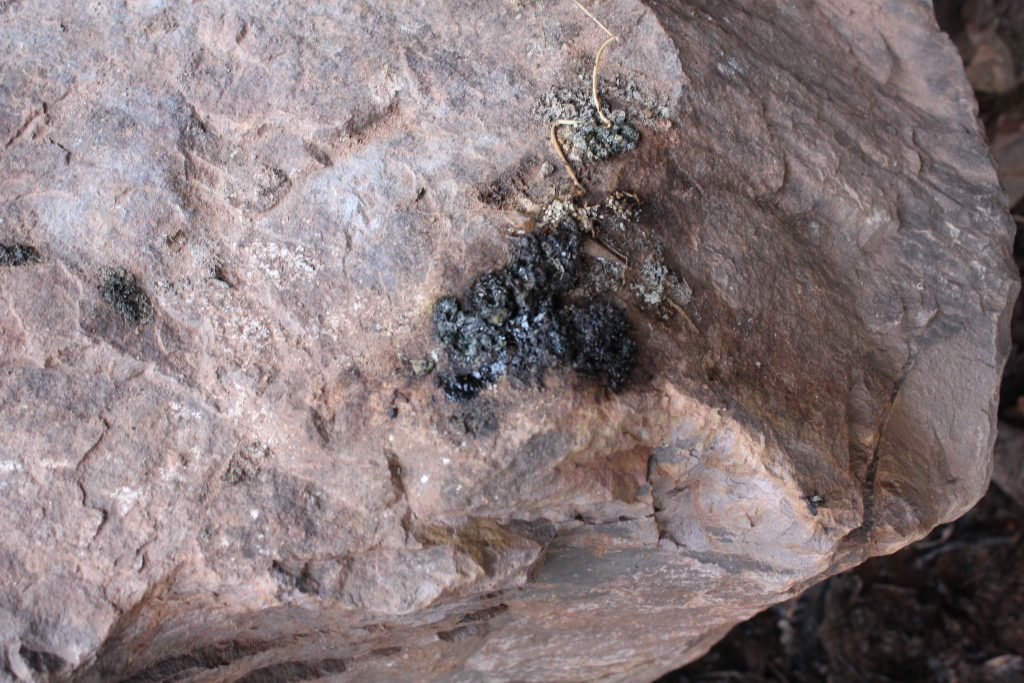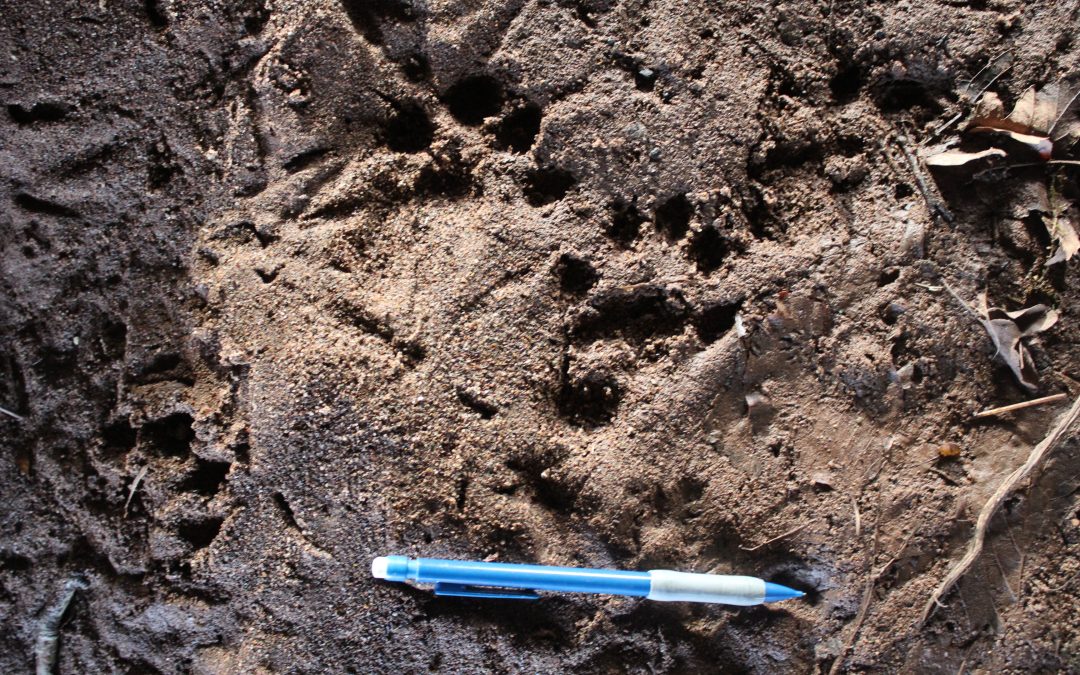
We have always known that otters are present on the River Almond. Since recovering from their country-wide decline of the 1960s to 1980s, it is a relatively safe assumption that anywhere there are fish to eat and crevices to hide in, you will find otters. When we are out and about on the Almond and its tributaries, we often see the tell tale signs that otters live in the area. Most often this will be an otter spraint (dropping) on a prominent rock or tree stump, but if there is soft sand or mud at the margins, we sometimes see footprints as well.
Our latest River Almond fish pass works are currently under way near Howden Bridge at the downstream edge of Livingston. Knowing that otters live and breed in the vicinity, everyone involved was concerned with keeping any disturbance of otters to a minimum. Ecologists were dispatched to assess otter activity in the area, and to find the locations most important to the otters. Scottish Natural Heritage were contacted to discuss how disturbance could be minimised. The works were arranged to take place first on the southern side of the river and then on the north side so that water was diverted from only half the river at any one time, keeping the otter corridor open. Machinery approached the river bank gradually over the course of days and weeks. Although these otter precautions had been taken, we were not prepared for just how brazen and unconcerned the local otter family would turn out to be.
Once the machinery reached the south bank, the otters developed an intense interest in the site and started sprainting really heavily at spots only lightly used before. We can only guess what caused this attraction – was it coincidence, simple curiosity or perhaps they were feeling particularly territorial and trying to warn the JCBs away. Eventually, the otters were encouraged away from the immediate area and no more spraints appeared. They didn’t go too far though as the workmen often reported seeing the family in the early morning up at Howden Bridge. When the works resumed after the Christmas holidays, we found that the otters were back in the works area. There were spraints everywhere along with a large, well chewed brown trout. Typical of otters, the head had been eaten and the remainder discarded. In the space of only two weeks, the otters had well and truly moved back in to the site, which is a very reassuring sign.
The family must often be disturbed by what goes on around them in the hustle and bustle of Livingston but we wouldn’t normally know. This type of project allows us to monitor them and get a better understanding on how the urban otter interacts with day to day life in an urban context. And why therefore it’s important to undertake the necessary surveys and gain the appropriate permissions.
Sara, the ecologist at AECOM, has surveyed the area and has seen the otter family a good few times. She thought the pups were around 4 months old when she saw them last April, making them 12 months old at the time of writing. They have recently been seen out together without mum, chasing ducks and practising their hunting skills. Perhaps they are getting ready to leave home now they are old enough.
The otters live very successfully in a busy, urban area, with quieter places nearby for the more private otter moments. They must therefore be used to some noise and disturbance. Even still, it seems remarkable just how little they appear to have been inconvenienced by these works. Of course, the rock ramp will ultimately provide them with benefit as it will create a lot of good fish habitat. This includes pools for large trout to lie in, rock crevices for eels to hide in plus numerous tiny niches for bullhead – a favourite food of this otter family and very commonly found in their spraints. Perhaps, the family might just be happy that salmon may soon be back on their menu too!