

The staff team at Forth Rivers Trust regularly undertake training to further their knowledge and skills, and Elijah, having seen the impact of several different Invasive Non-Native Species (INNS) around the Forth Catchment, wanted to find out more and complete some training to allow him to treat INNS and support other Trust staff in our efforts to manage INNS around the Forth. In August 2024, he undertook training for his PA1 and PA6AW LANTRA certificates which provide safety training and skills to allow the appropriate treatment of Invasive Non-Native plant species. Read more about his experience below.
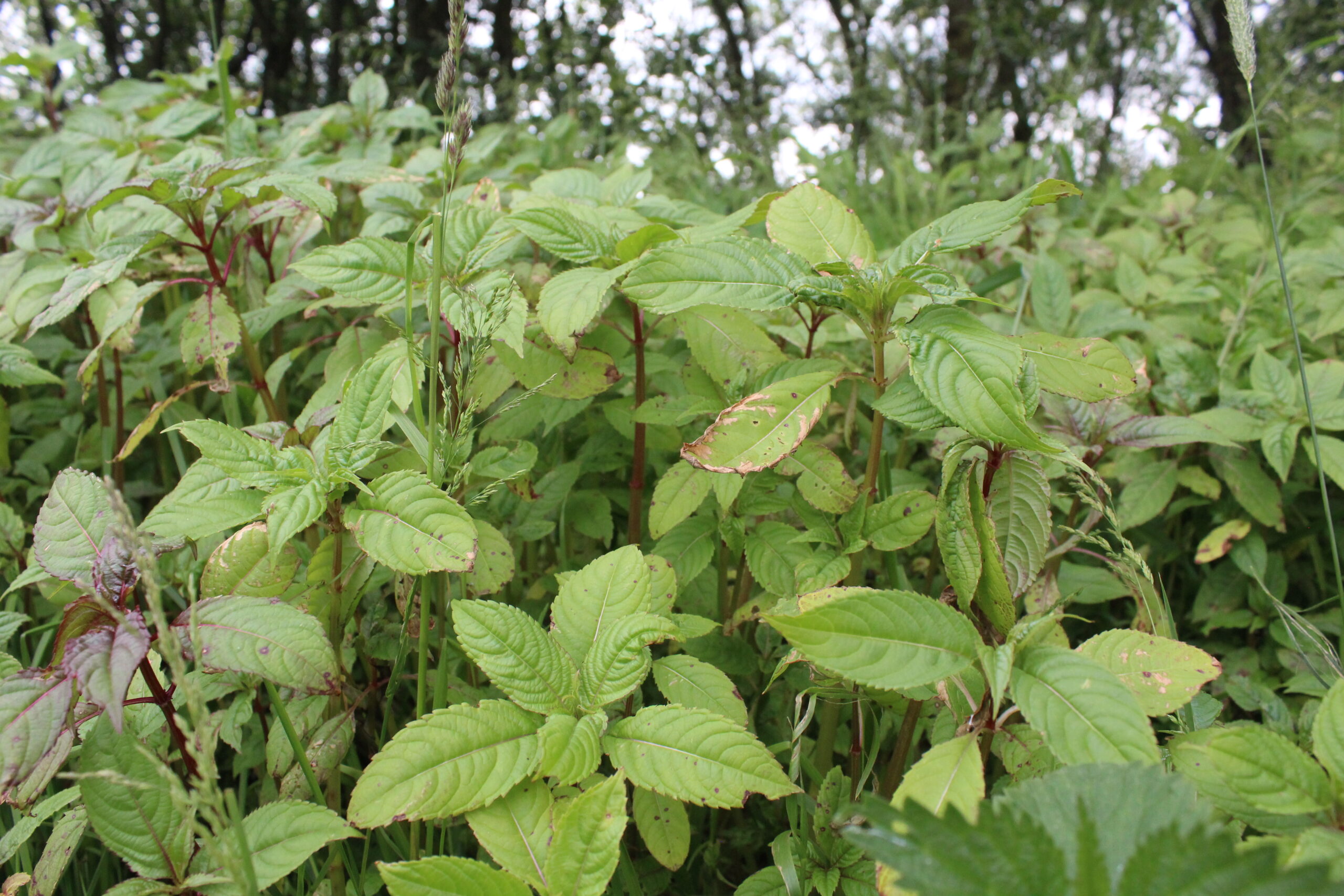
Above: Himalayan Balsam near the river Forth. This plant outcompetes and shades out other plants beneath it.
While I have come across a range of unique methods for tackling the ever-pervasive issue of Invasive Non-Native Species (hereafter called INNS) in our catchment, I think that sometimes, the use of pesticides is necessary in the effective treatment of INNS, particularly where these plants are dominant and having multiple negative impacts on the surrounding environment. Alternative methods of treatment currently include rust fungus usage, sheep grazing of Giant Hogweed, and hand-digging of plants, but these methods are not always practical – they are very labour intensive, and not always suitable, especially when INNS have ‘taken over’ a vast area.
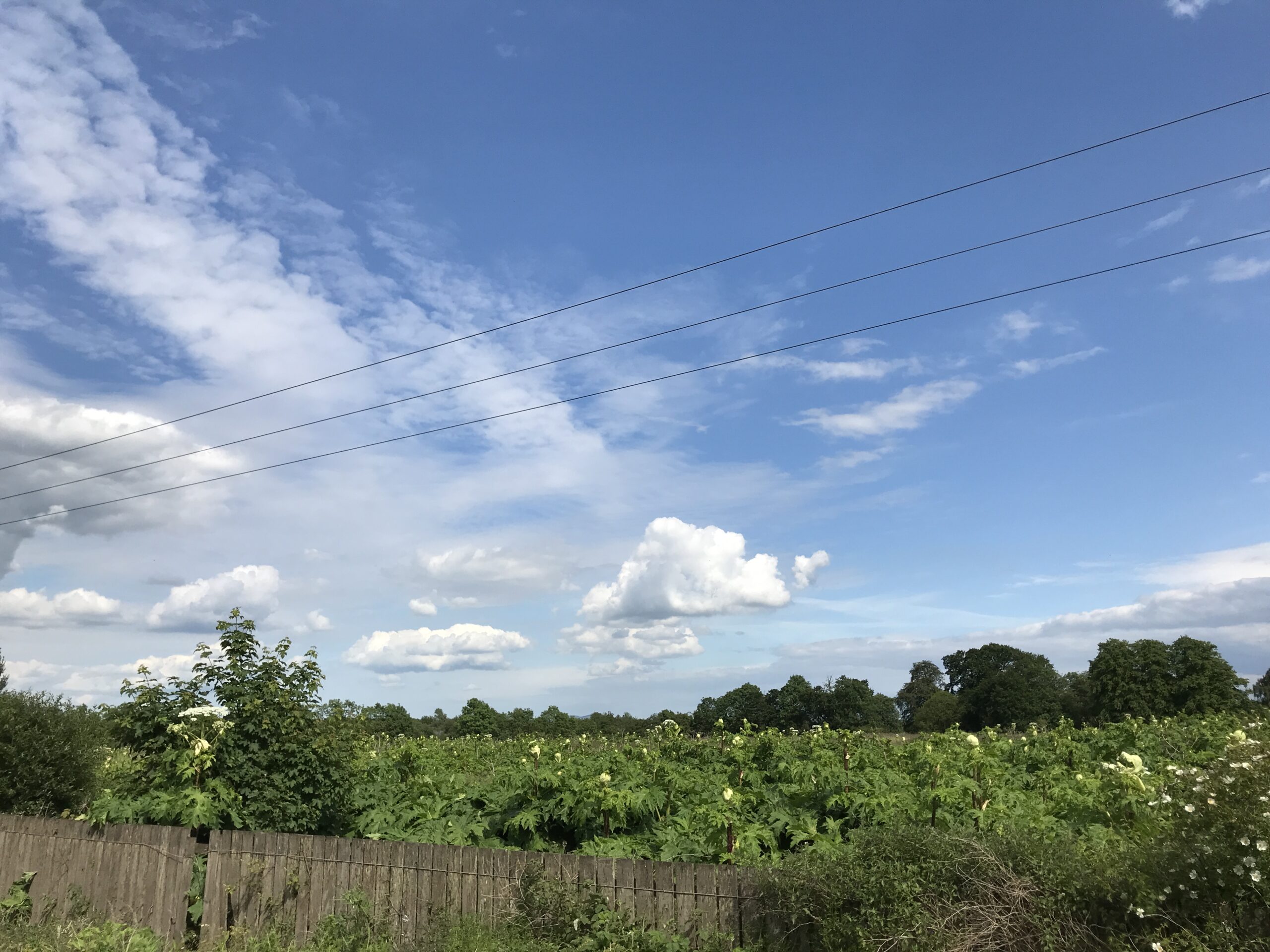
Above: A rather intimidating field of Giant Hogweed in Stirling. Giant Hogweed is 1 of the 3 plant-based INNS we see extensively throughout the Forth catchment and the plant’s sap is considered a human health risk due to its phytotoxic effects.
Something that I learned from undertaking my training was that the aim of pesticide treatment is to use as little as possible as is effective to control the plant’s spread, and managing the surrounding environment carefully is key. Once INNS are effectively under control in an area, and their negative impacts on the surrounding environment controlled, then other, more holistic treatment methods such as hand-digging could be considered. The approach required for INNS is site-dependent, and having various methods available to us allows us to best adapt what is needed when looking at managing the spread of invasives.
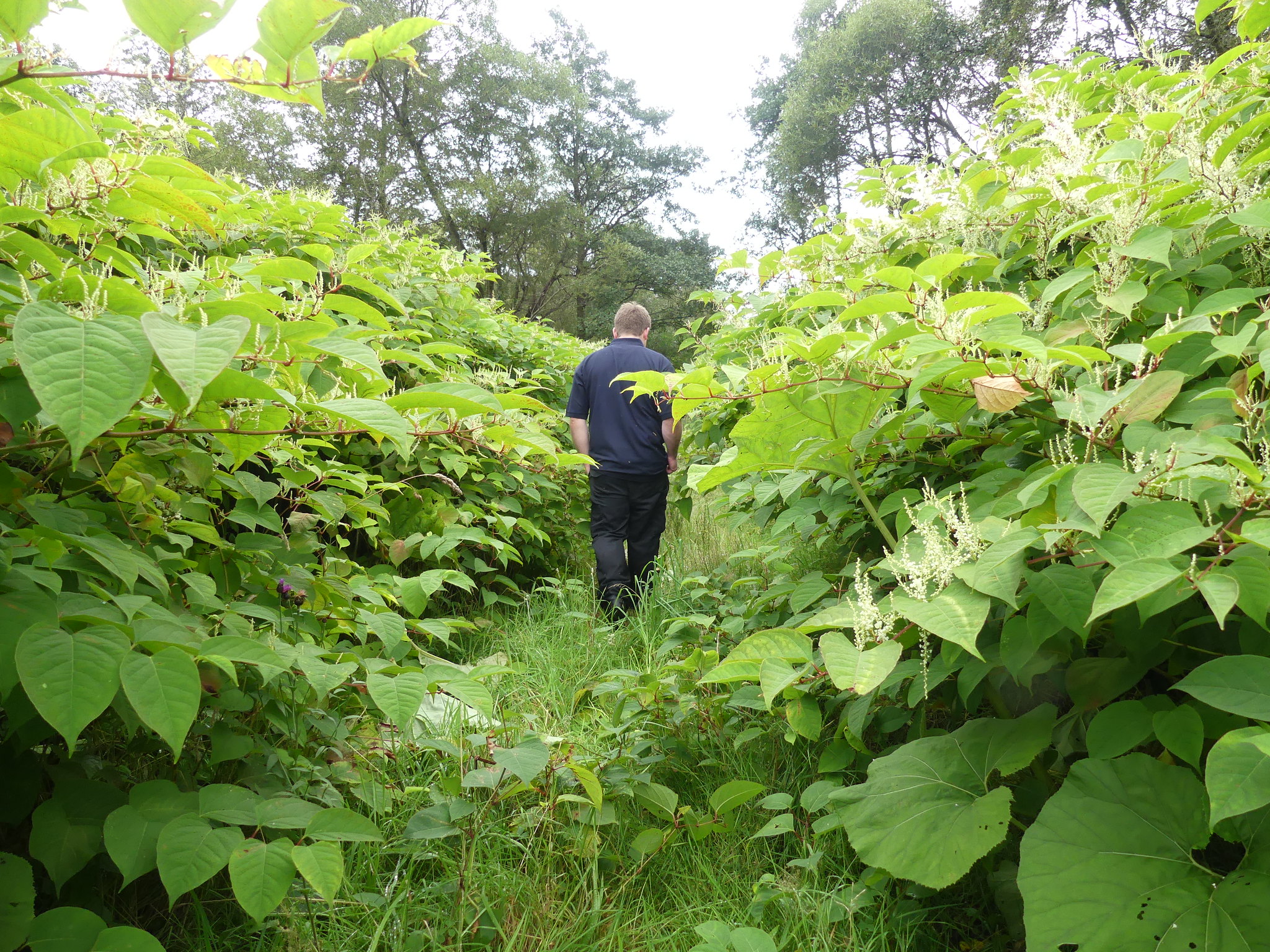
Above: A Japanese Knotweed infestation – photo courtesy of SISI (Scottish Invasive Species Initiative).
There was a real mix of people attending the training course, with a very knowledgeable trainer who had plenty of his own experience managing his land and safely and responsibly mixing chemicals. As someone who has dyscalculia, to say I’m a little maths-averse is an understatement, but I found the formula and the calculations straightforward after a bit of practice using them. The calculation method is the same each time, and each step can be sense-checked to ensure that the number coming out at the end is accurate and correct. After some indoor learning and interesting discussion around pesticide usage, responsibilities, and record keeping, we all suited up in Personal Protective Equipment to begin practicing the procedure for accurate preparation of pesticide mix for INNS treatment.

Above: Elijah all suited up and ready to practice mixing (with water!). Face shield, required during use of sprayers, not pictured.
We were using water for our practice runs, but otherwise running through the necessary careful calculations, method and execution as though we were in the field. Another key part of the process is working out pacing, a measure that is individual for everyone as it depends on someone’s walking speed, conditions underfoot and even how much you may be carrying. However we all soon got into the swing of things with us walking lines up and down and spraying the ground with water, which I’m sure the plants bordering the path enjoyed!
Overall, this training was an engaging and interesting 2 days, and I am pleased to have now obtained my spraying certificate having passed my assessment on the 3rd day. My skills are already being utilized, having done some stem-injecting of Japanese Knotweed with colleagues in the Devon catchment, and with more invasives work to come soon as the new season begins!

Above: Ross, Eli and Mario’s Japanese Knotweed stem injecting complete, just in time for the sun to appear!
I have also joined the Trust’s efforts to comprehensively map the extent of INNS in the Forth catchment, with myself and other colleagues having walked tens of kilometres in recent months to allow us to build up a bigger picture of the INNS problem in the Forth – the first step towards creating a comprehensive plan for their treatment.
To any individuals and community groups who are struggling with INNS in the Forth, please know that you can report INNS to the Trust using our reporting tool. There may be various community-skills focused funding that is available to allow you to upskill and become a licenced operator who can safely treat INNS, which I would encourage you to get involved with. Finally, you can find out more about INNS using the information available at Home » NNSS.
Thanks for reading!