
Freshwater Pearl Mussels Project
Overview
Formerly widespread and abundant in UK waters, the Freshwater Pearl Mussel (FWPM) has suffered significant decline in numbers and is now classed as ‘endangered’ by the IUCN Red List of Threatened Species. This decline is for several reasons, including but not limited to: overexploitation for pearls, water pollution, siltation, acidification and river engineering. The Freshwater Pearl Mussel can live for over 100 years, with a complex lifecycle which involves reproducing through attaching to salmonid gills, so declining salmonid numbers have also impacted FWPM numbers.
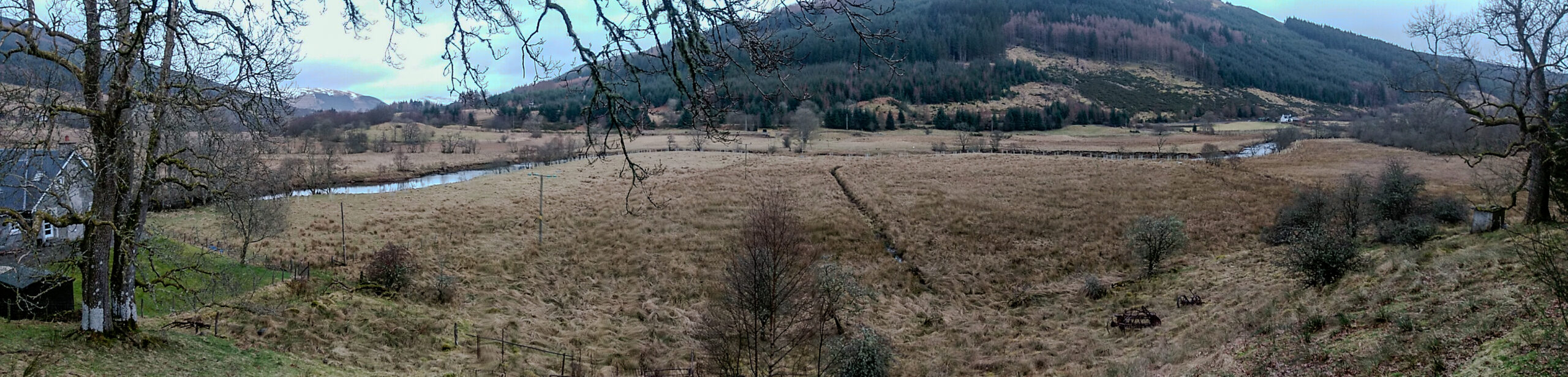
This project will target river restoration measures around supporting the recovery of the species in the Teith catchment. Since the species demands pristine water quality, project works will include riparian tree planting and drainage ditch blocking to prevent soil erosion and sediment runoff into the river. Wetland habitat will be established through creation of wetland scrapes which will filter out sediment and improve instream habitat for FWPM. The scrapes will also provide key habitat for vulnerable wading bird species. Research will be carried out to examine the preferred host of the FWPM with the aim of identifying recruitment of new mussels to secure the species’ survival.
All these project works will support not only the Freshwater Pearl Mussel, which demands pristine water quality, but will also deliver habitat improvement and biodiversity improvements for many other freshwater species within the catchment.
Objectives
– Tree planting: 1,000 riparian trees will be planted to prevent soil erosion and minimise sediment runoff into the river.
– Scrape creation: wetland scrapes will be created, capturing water on the floodplain and filtering out sediment, offering improved instream habitat for FWPM.
– Scientific research: species research on the Freshwater Pearl Mussel (Margaritifera margaritifera) will be conducted to determine its preferred host and encourage recruitment, supporting species survival.
– Habitat creation: wetland habitat will be created through blocking of drainage ditches, planting plugs and sewing wetland seed, offering benefits to biodiversity for several species alongside FWPM.
Landowner
Our thanks goes out to the landowners, Witsend Farm, whom this work would not be possible without.
Funders
This project is funded by the Scottish Government’s Nature Restoration Fund, managed by NatureScot. This project has also been funded by The Loch Lomond and the Trossachs National Park.







News

New regenerative agriculture programme set to strengthen farm resilience and climate outcomes in Scotland
Landscape Enterprise Networks (LENs), in collaboration with the Forth Rivers Trust, Diageo, SSEN and Perth & Kinross Council, today announced the launch of the LENs initiative in Scotland’s Leven catchment region, a project supported by FIRNS and NatureScot. The announcement was made at the Royal Highland Show in Edinburgh.
The initiative aims to build resilience across farming communities and the agricultural supply chain in the catchment, to enhance the livelihoods of local farmers and mitigate the impacts of climate change. The scoping work for this LENs programme has been supported by SRUC, who have provided academic and advisory support.
For its inaugural trade in 2025, LENs Leven has the support of three key partners – Diageo, Scottish and Southern Electricity Networks (SSEN) Distribution and Perth & Kinross Council, who are set to invest in 10-15 farms in the region. All see significant potential for growth in LENs and are calling for further organisations to join, so that the drive towards collaboration can scale quickly in coming years in Scotland.