Kirkton Weir Fish Pass
Originally built in the mid-19th century, the weir provided water to Livingston Mill, now Almond Valley Heritage Centre, to process corn and wheat via a long lade which still exists to this day.
The two-metre-high structure slowed water flowing East along the River Almond, from the Almond Pools, and directed a small proportion along the thin lade to fill mill ponds 400 meters downstream. From here a series of sluices were used to control the speed of a 4.9 metre high wheel which powered the mill.
Unfortunately, many fish species found it difficult if not impossible to pass this barrier, meaning much of the breeding habitat upstream remained unavailable. Salmon, sea trout, brown trout, eel and lamprey all rely on a clear path up the river to mate and lay their eggs and barriers such as weirs stop that from happening. Allowing fish easier access to these parts of the river has not only benefitted those species but has also benefitted those larger predators which rely on them as a food source, such as heron, kingfishers and otters.
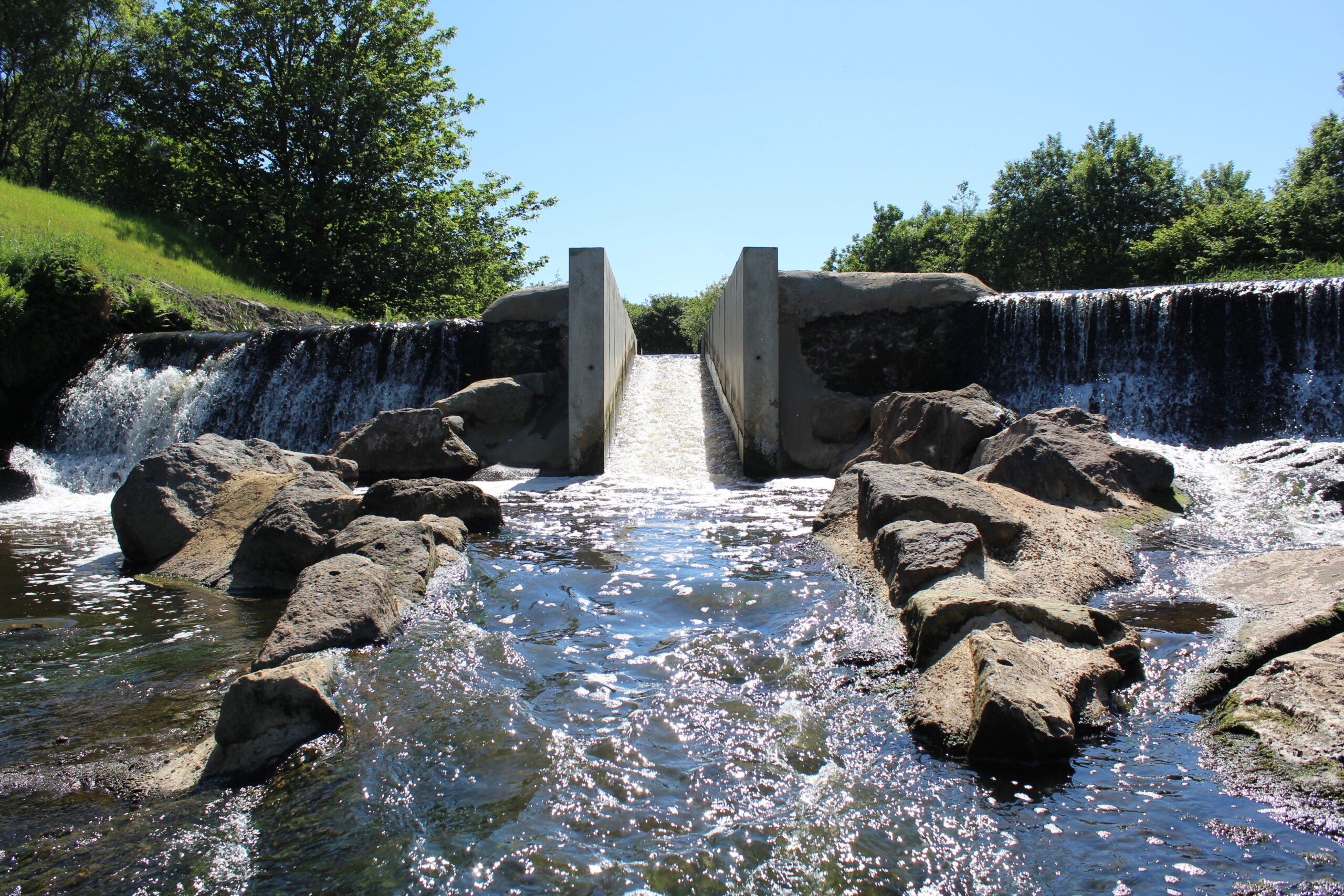
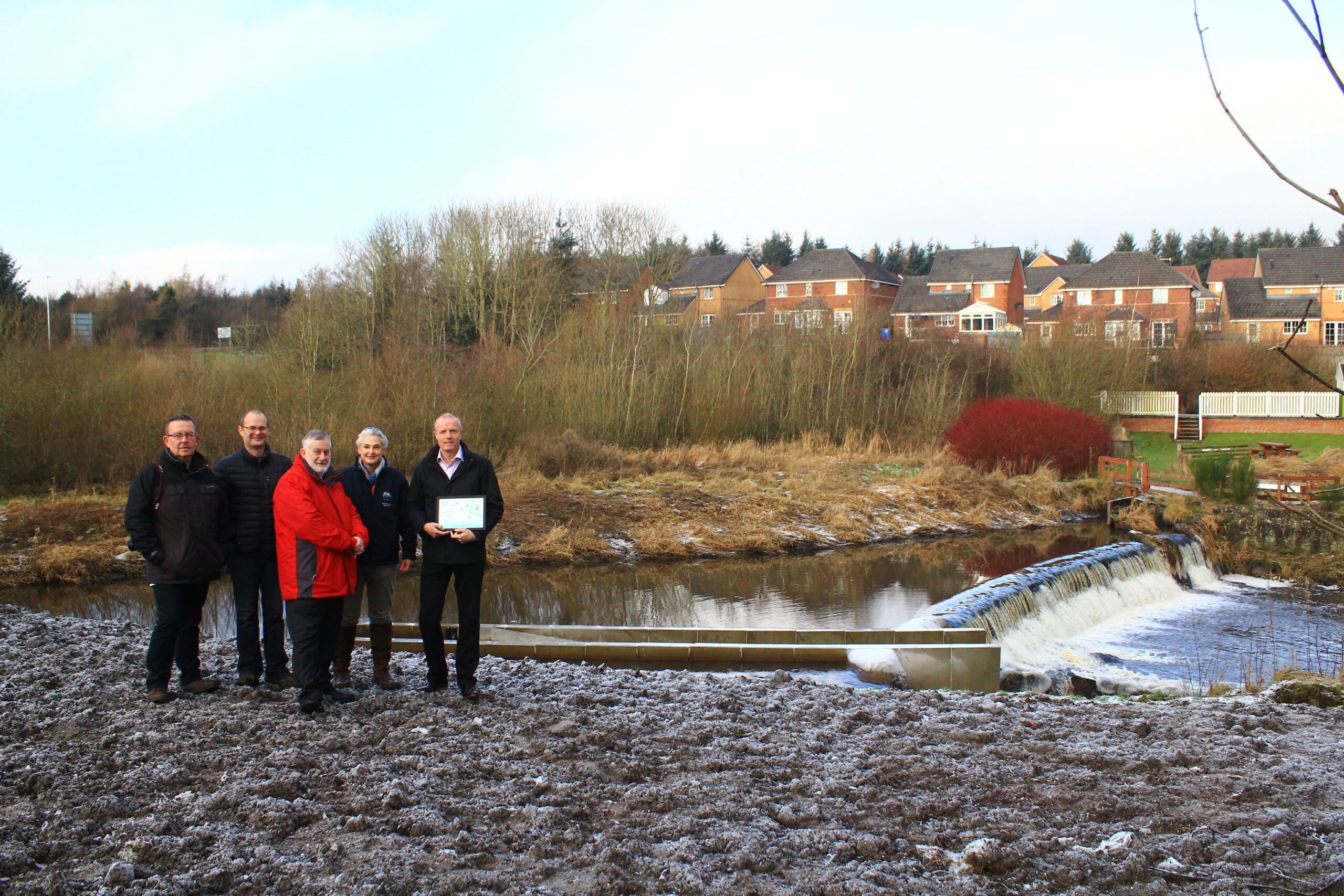
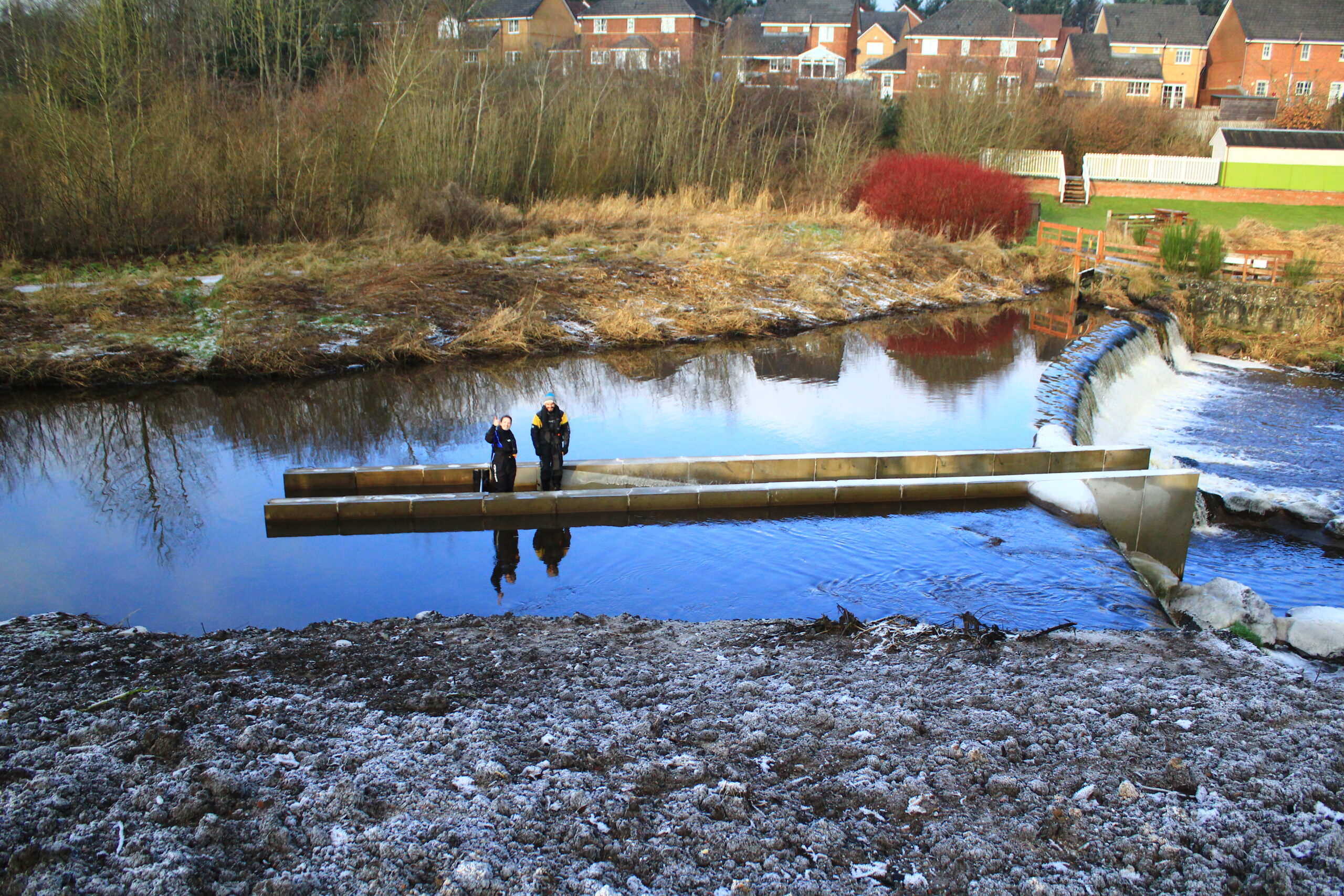
The construction of the new fish pass took place in 2017, and was recorded using fixed point photography and time-lapse footage. A larinier fish pass was built to help trout and salmon, while a separate eel and lamprey pass will allow those species to move upstream.
Project Partners
West Lothian Council, AECOM, Memsstar, Almond Valley Heritage Centre
Funders
This project was funded by the Heritage
Lottery Fund, Scottish Government and
SEPA’s Water Environment Fund.