Limefield Falls Fish Pass
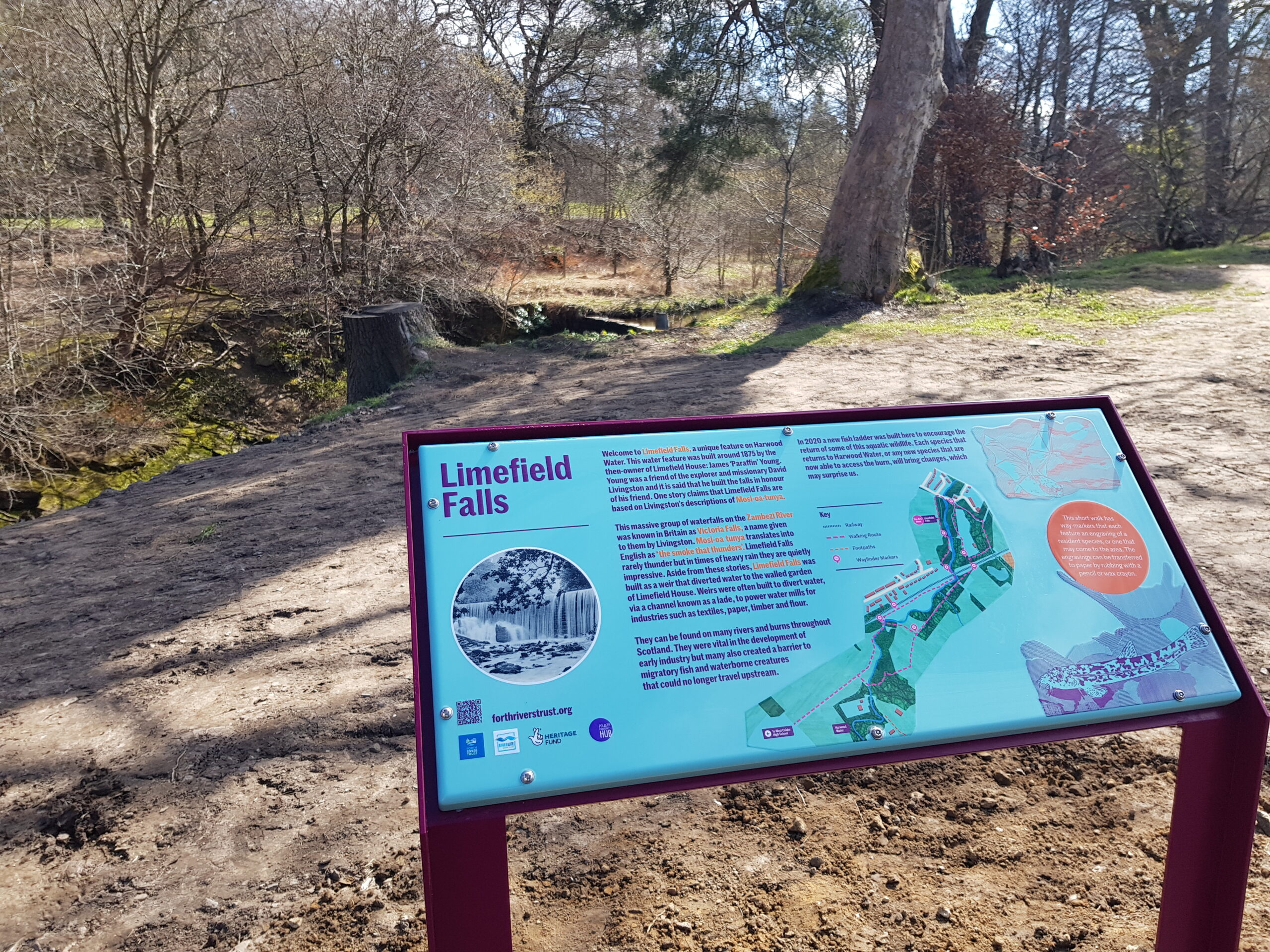
The weir was built by James Young, the pioneer of the oil shale industry working across West Lothian. It is unique in that the weir (which creates the falls) was not intended to generate power from the falling water, rather it was built to honour David Livingstone and his explorations across the African continent. It was designed to be a mini Victoria Falls, on the border of Zambia and Zimbabwe.
Later a lade (the channel that directs water to a different location, usually for power) was added, and this can be seen on the north side of the river. Looking at old maps you can see that the laid was used to supply water to the formal gardens, vegetable garden and orchards of Limefield House which was owned by the Young family.
The site is part of a popular walking route in Polbeth, there is a board walk, bridge and formalised paths along the Harwood Water.
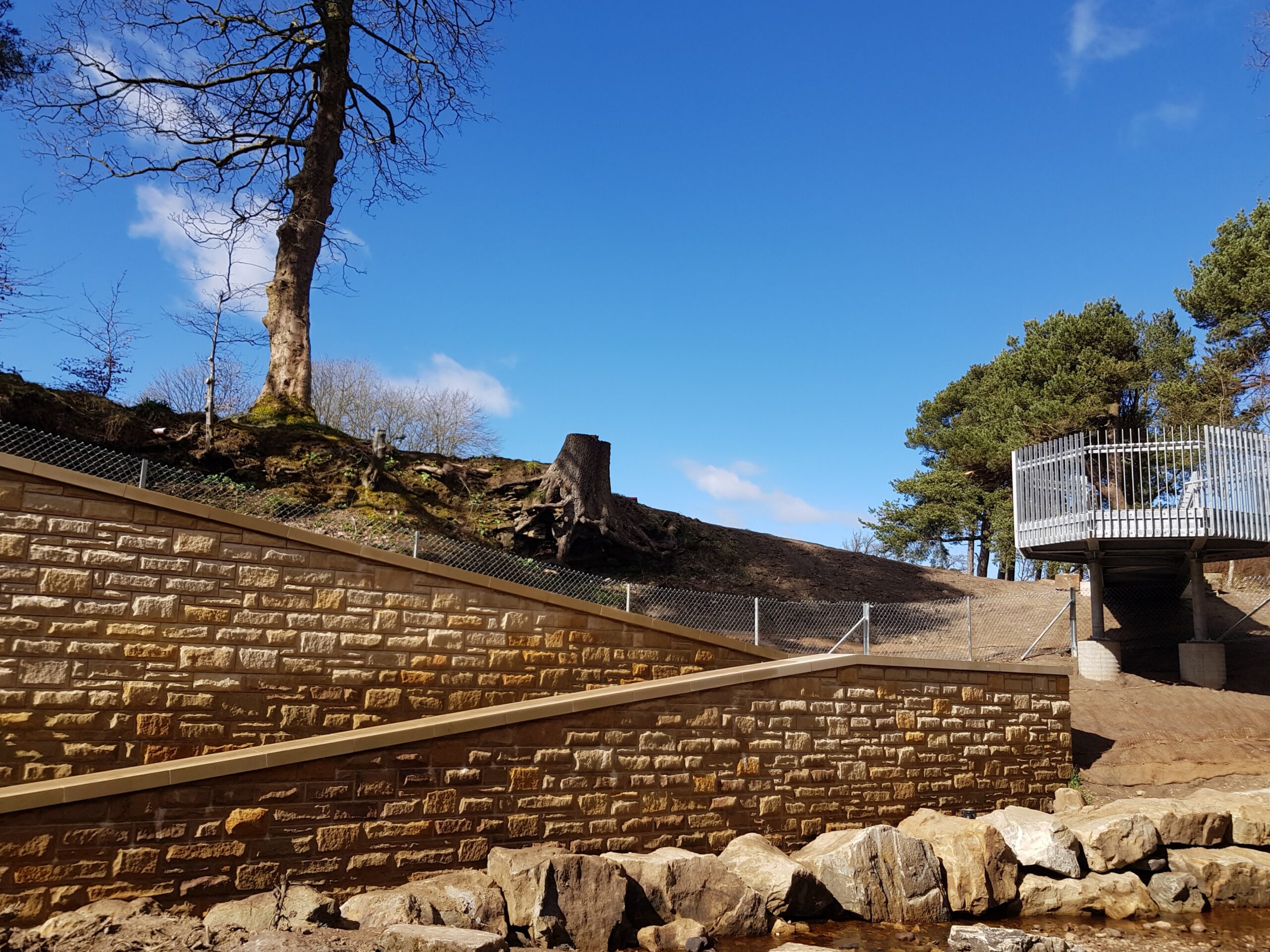
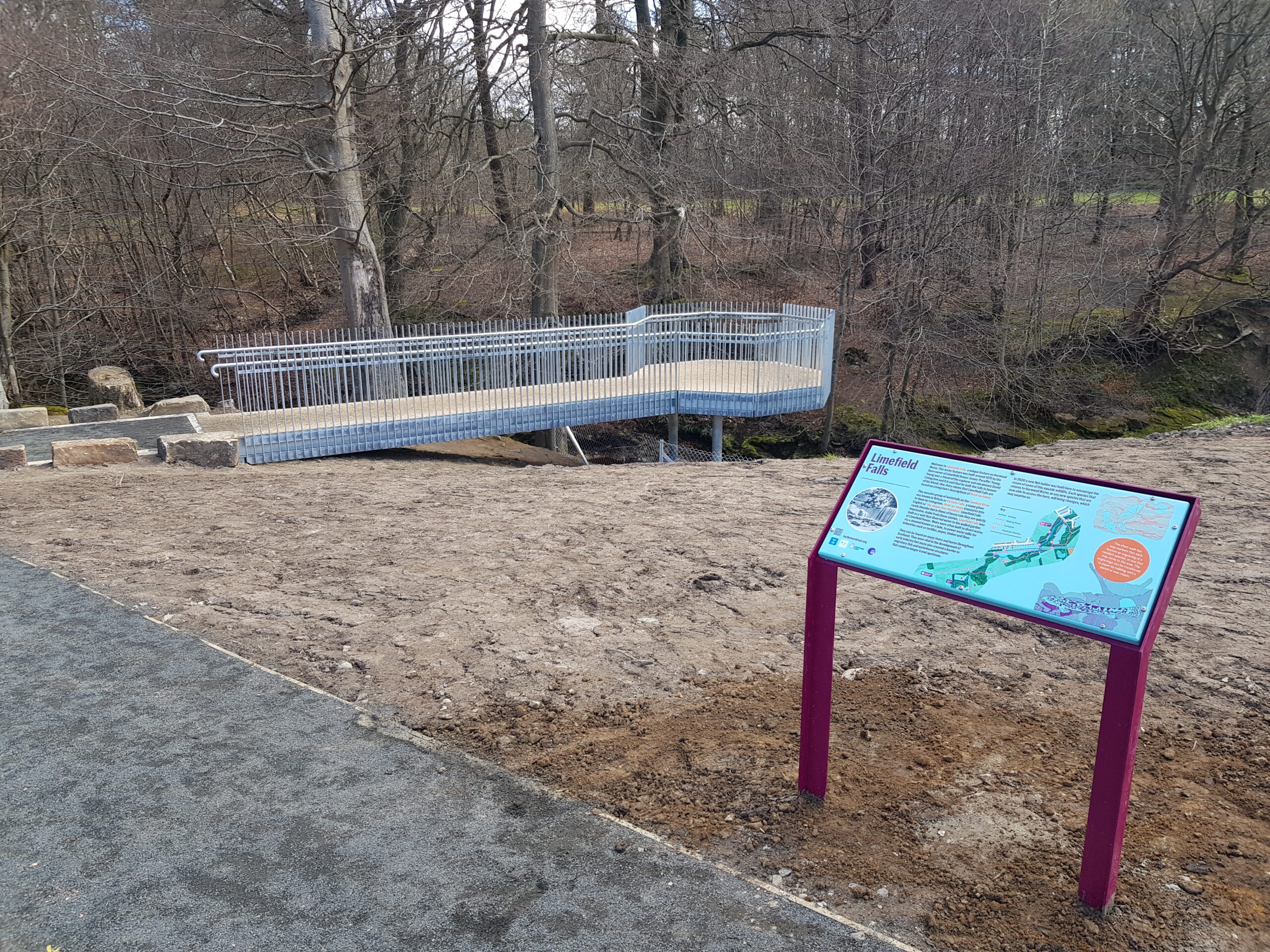
Working with our partners, a fish pass using the old lade to form a ramp for fish was developed. This type of fish pass is called a ‘larinier’ and will allow fish to travel up the Harwood Water once again. A viewing platform was also built on top of the fish pass so locals and visitors can have a focal point of the river and falls once again.
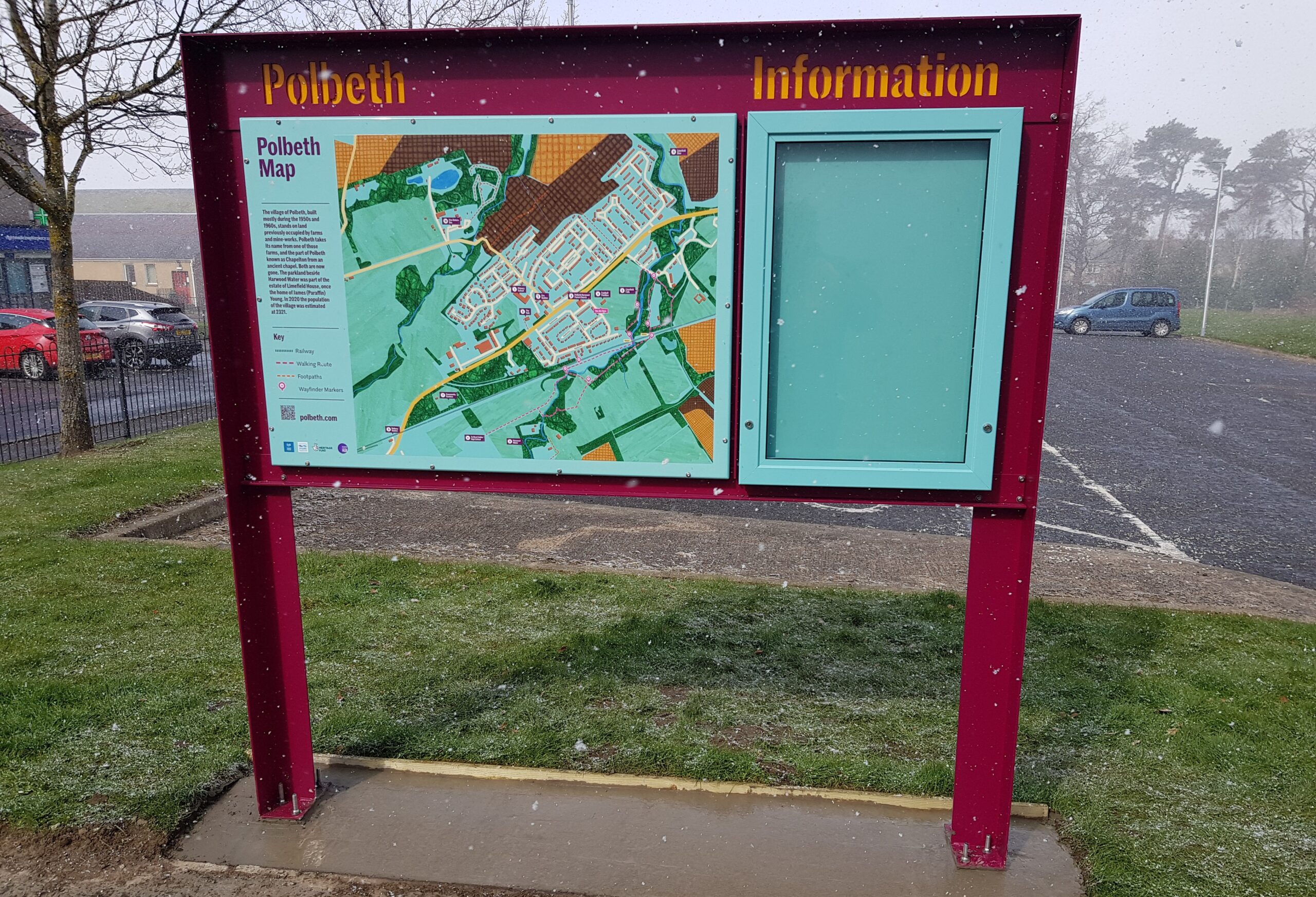
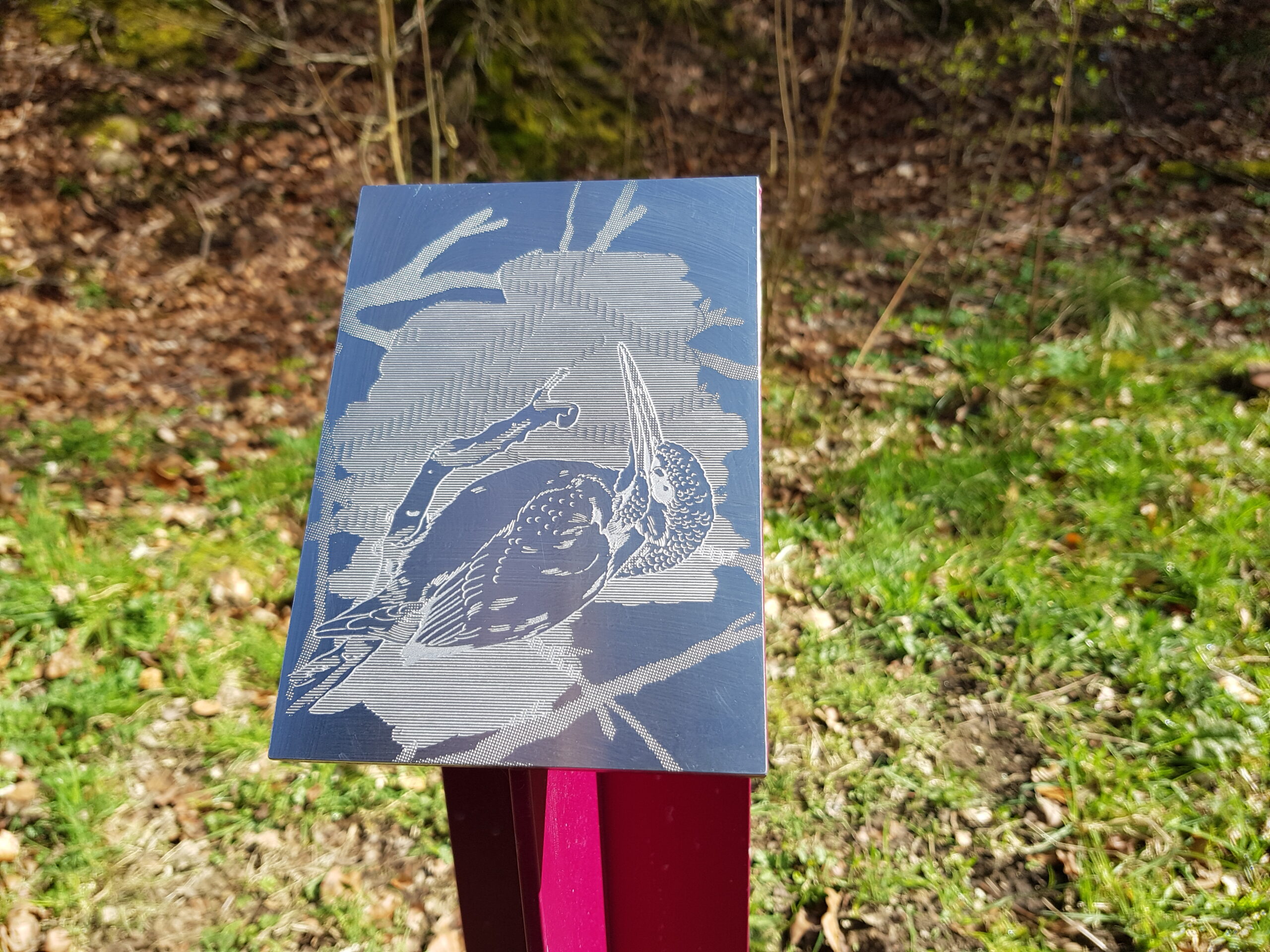
Working with Polbeth Community Hub, map and information boards were installed in the park by the falls, and a waymarked nature trail around the woods with brass rubbing posts has been installed.
Project Partners
West Lothian Council, CSGNT, AECOM, Cubby Construction, Polbeth Community Hub
Funders
This project was funded by the Heritage
Lottery Fund, Scottish Government and
SEPA’s Water Environment Fund.