
Osprey
Species Information
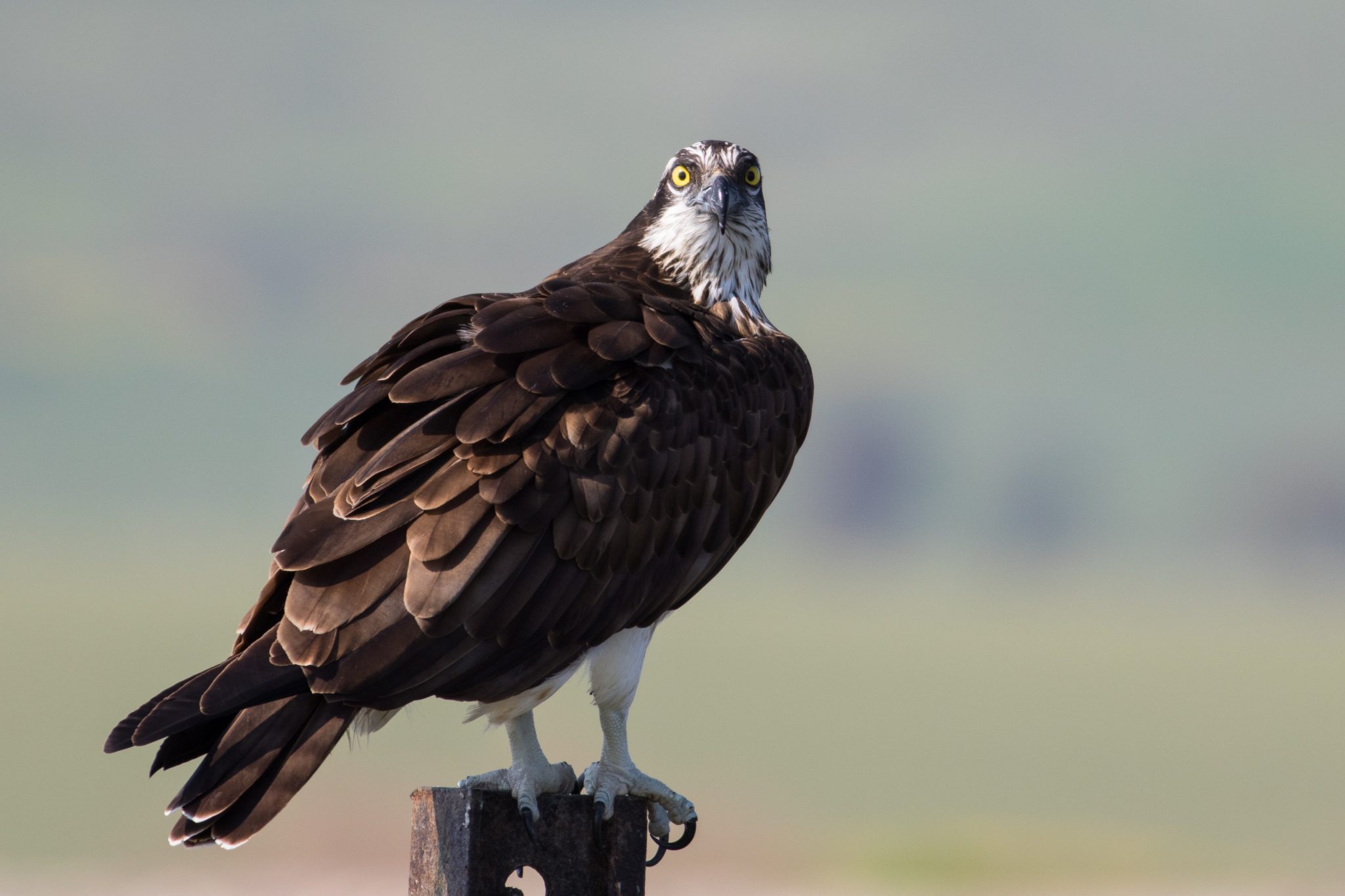
מינוזיג [CC BY-SA 4.0 (https://creativecommons.org/licenses/by-sa/4.0)], from Wikimedia Commons
Statistics
Scientific name: Pandion haliaetus
Length: 56cm
Wingspan: 1.6m
Weight: 1.5kg
Average lifespan: 9 years
Conservation status
Classified in the UK as Amber under the Birds of Conservation Concern 4: the Red List for Birds (2015). Protected in the UK under the Wildlife and Countryside Act, 1981.
When to see
March to September
About
The osprey is no stranger to fame and attention – its pursuits have been followed closely by nestcams in the locations where it breeds: Speyside and Perth in Scotland, Kielder, Cumbria and East Midlands in England, and the Dyfi Valley in Wales. A migratory bird, it is present in the UK in summer. Ospreys eat fish, catching them in spectacular fashion as they dive towards lakes and lochs, stretch out their talons and scooping them out of the water with ease.
How to identify
The osprey is a black-and-white bird which could possibly be mistaken for a seagull at a distance. The osprey is a large bird of prey with dark brown upperparts and contrasting white underparts that can appear mottled in females. Their heads are white with a dark brown through their eyes. Their wings during flight show strong barring and distinctively dark brown, angled ‘wrists’.
Did you know ?
Ospreys migrate to West Africa during winter; satellite tracking has shown them flying up to 430 km in just one day. It takes them about 20 flying days to complete the journey, but, in autumn, birds stop off to refuel at lakes and reservoirs.
How you can help?
Did you know you can help wildlife in your local river ? You can do this in many ways from reporting pollution to SEPA, by not flushing wet wipes down the toilet and even at one of our many conservation volunteer days. Check out our Get Involved page for more information on how you can get involved with your local river.