
Shelduck
Statistics
Scientific name: Tadorna tadorna
Length: 58-64cm
Wingspan: 1.1m
Weight: 1-1.2kg
Average lifespan: 10 years
Conservation status
Classified in the UK as Amber under the Birds of Conservation Concern 4: the Red List for Birds (2015).
When to see
January to December
About
The shelduck is one of our largest ducks, growing as big as some geese. It is mainly coastal, feeding on small invertebrates that it finds in the mud of estuaries and sandy beaches. It has spread inland, however, as flooded gravel pits with sandy shores and gravel banks provide a perfect feeding ground.
How to identify
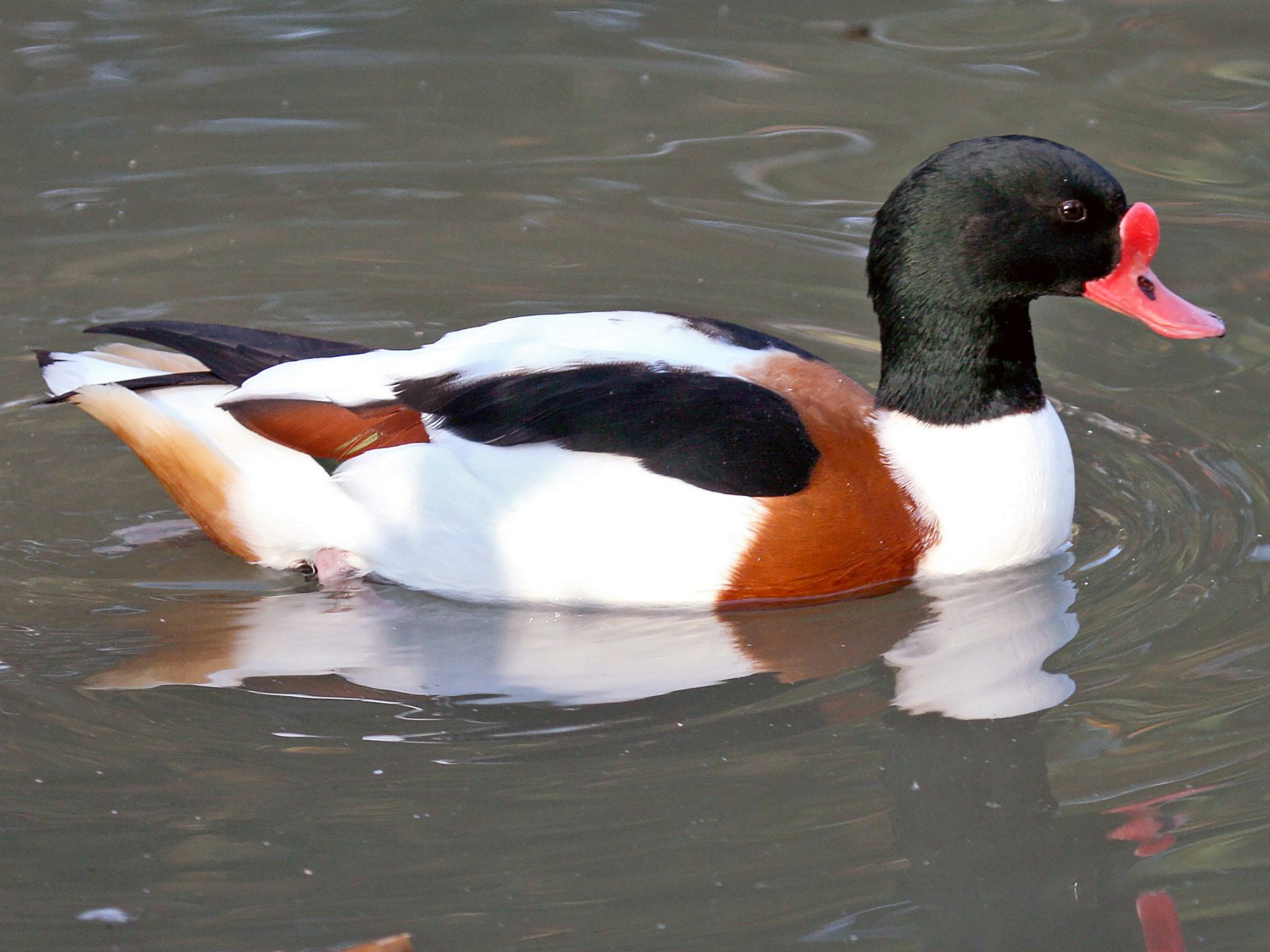
The shelduck is a large, white duck, with a dark green head, bright red bill, orangey-brown band around the breast, and black patches on the back and wings.
Did you know ?
The shelduck nests underground in old rabbit burrows, in tree holes or in haystacks. During the 19th century, it was persecuted for this habit in certain areas as it competed with rabbits which were food for many people.
How you can help?
Did you know you can help wildlife in your local river ? You can do this in many ways from reporting pollution to SEPA, by not flushing wet wipes down the toilet and even at one of our many conservation volunteer days. Check out our Get Involved page for more information on how you can get involved with your local river.