Salmon productivity in the Forth District by Dr Jo Girvan
One of the things we are interested in here at the Trust, is how well salmon populations are reproducing themselves. We want to know if salmon are producing young and where are the best and worst places for this to happen.
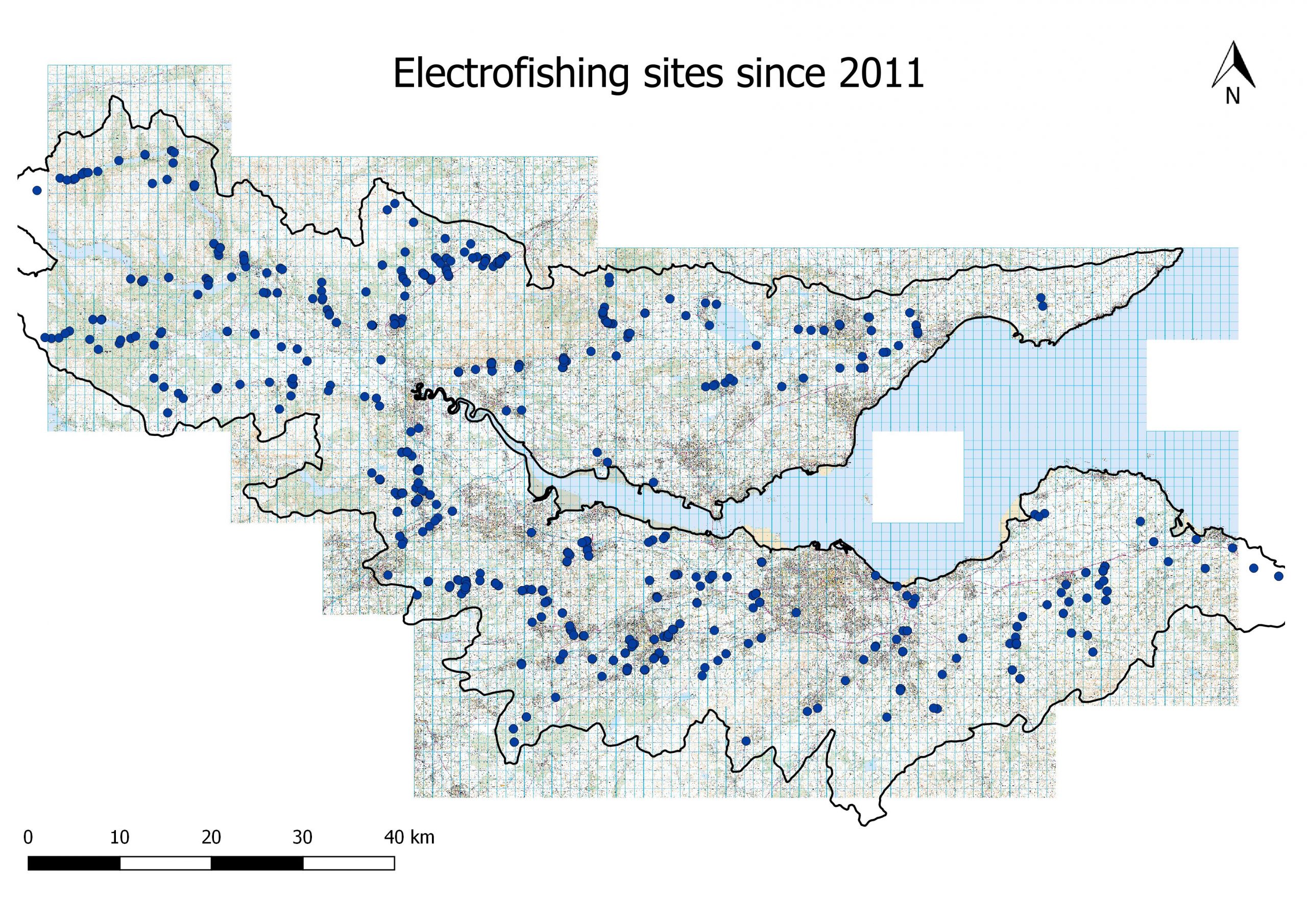
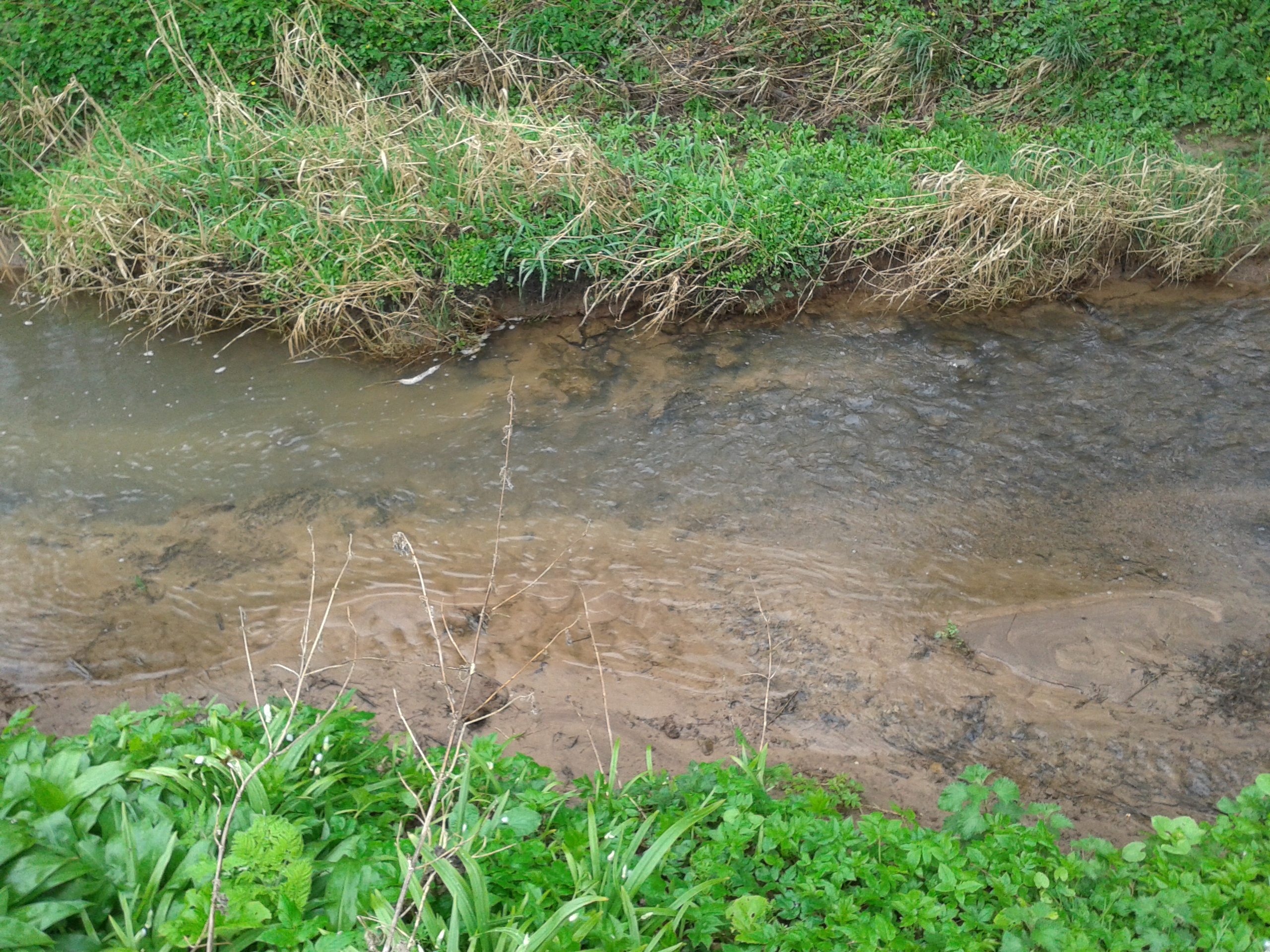
There is a general trend, moving from East to West across the Forth District, to see an improvement in salmon numbers, for both the adult and juvenile life stages. There can be no doubt that this is tied to levels of industry, urban development and intensive agriculture – all of which become much less prevalent as you move from Edinburgh, Livingston and Falkirk towards the more pastoral areas of Stirlingshire and Callander. A similar trend is observed on the north shore of the Forth. Habitat quality, water quality and man-made barriers to migration are the primary factors keeping salmon down. An example of bad habitat quality is a river that has had a load of soil and fine sediment washed into it as a result of agricultural disturbance. The stones get covered in soft mud, killing the young salmon trying to hide underneath. Poor water quality is common around urban areas as sewage effluents have to be disposed of somewhere and ironically, the large industrial weirs in many of our rivers prevent salmon from reaching the less impacted upper parts of catchments where they might actually stand a chance of reproducing successfully!
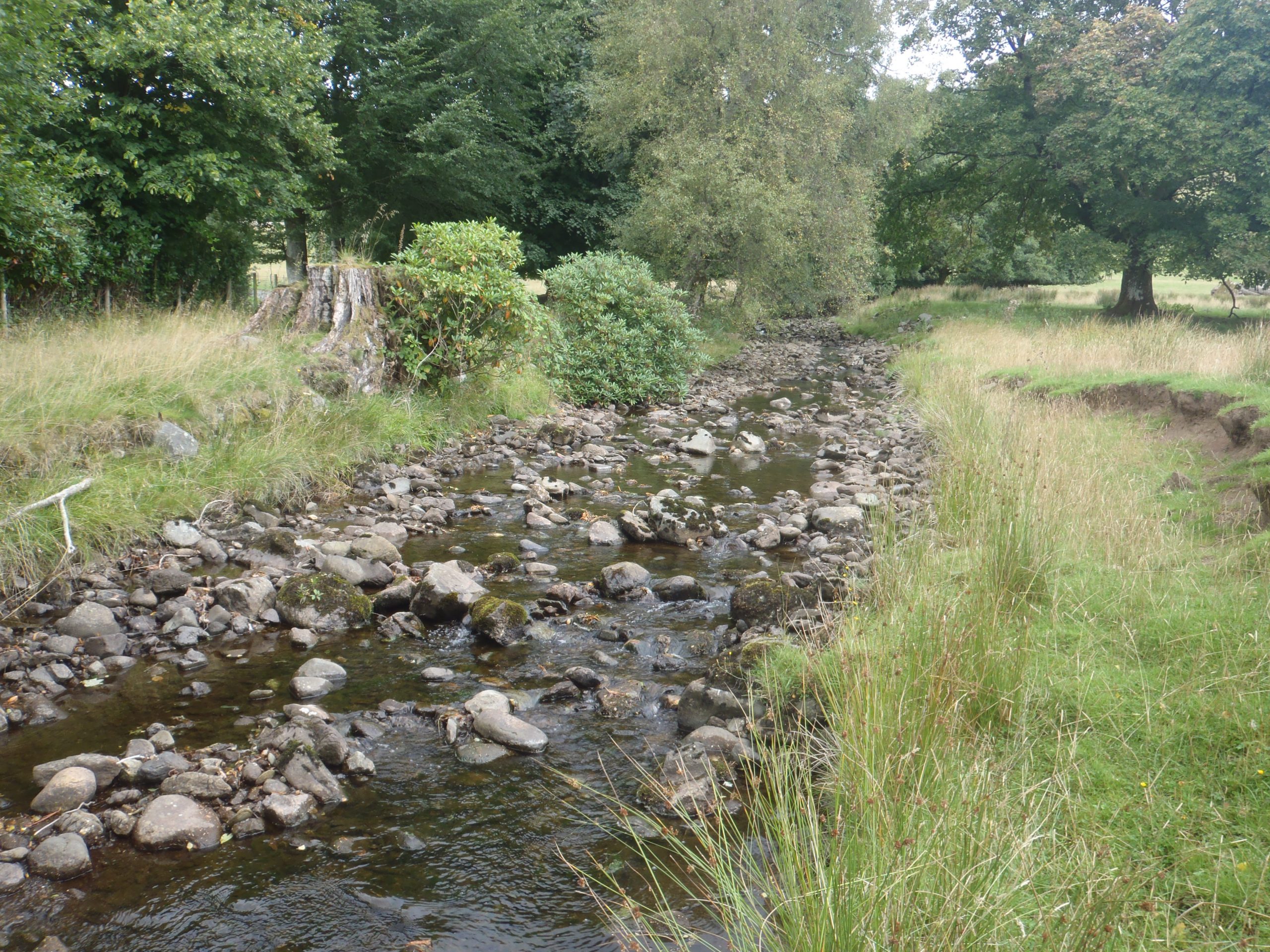
As a result, much of the best quality spawning habitat of the Forth lies in the West, particularly in the tributaries of the River Teith. The Annet, Ardoch, Keltie, Leny and Larig have long stretches of accessible and good quality habitat, away from urban centres and intensive agriculture, and this is where we find some of the highest densities of juvenile salmon in the District. We monitor juveniles using electrofishing surveys in order to quantify the amount of production that takes place, assess the quality of the habitat and track changes over time which can alert us to problems.
The main Teith tributaries have clean water coming off higher ground, plenty of vegetation and relatively low levels of agriculture. Typical average juvenile salmon densities for each river, expressed in numbers of fish per 100m2 are as follows: Ardoch 81, Annet 32, Kelty 35, Leny 108 and Larig 32. These densities are high compared to the majority of Eastern Forth District rivers that are heavily impacted, for example, where salmon are present at all, it is not uncommon to find densities of between 1 and 5 fish per 100m2. Whilst the Teith tributaries have some of the highest densities found in the Forth District, and they form the basis for an excellent adult fishery, they still compare poorly to the best known salmon rivers such as the Tweed and Tay which have been known to surpass several hundred juveniles per 100m2 in places!
Juvenile densities will naturally fluctuate over the years, for example, at one Ardoch site, 2011 densities were recorded at 121 fish per 100m2, but only 30 during the 2015 survey. They were back up to 94 during the 2016 survey. Most Teith sites have dipped at some point over the last ten years, but most have rebounded as well, and the overall picture is one of long term stability in juvenile production.
It is reassuring to see relatively stable juvenile densities, but this does not tell us everything about the returning adult spawners. One pair of salmon could produce enough young to fill a section of river, or alternatively, six pairs could have been involved and the young have competed to fill the available space, following a high mortality rate. It is desirable to have more spawners as this will provide more genetic variability which is better for local adaptation. The number of breeders involved in producing a sample of fry can be determined using genetic analysis, and this would tell us much more about productivity. It is hoped to carry out this type of analysis in the near future, but in the meantime, we know where salmon productivity is concentrated and we need to protect these areas from growing threats such as warming and diffuse pollution. We have been taking part in a Marine Scotland project to log water temperatures in various parts of the Teith and identify where riparian tree planting will be most effective in protecting spawning burns from warming, and we have been carrying out morphological walkover surveys in the catchment so we can identify where diffuse pollution can best be mitigated with actions such as bank stabilisation and fencing.