Walking on the wild side: remembering Kenn and the salmon by Iain Reid
A walk by the river can teach you a lot about the present state of the environment, reveal the trials of history, and even teach you a wee bit about yourself.
The novel Highland River by Neil M. Gunn opens with a young boy, Kenn, catching a huge salmon (almost the same size as him) with his bare hands from a Caithness river. There is a titanic struggle between Kenn and the massive fish, which he finally wins, dragging the fish out of the water and hoisting it on his back, before taking it to be shared with family and friends. The scene is beautifully and evocatively written and when I first read it at school over 25 years ago it lit my imagination and inspired me to explore rivers near me in search of similar monsters.
Later in the book, the adult Kenn, now traumatised from experiences in the First World War and remembering his childhood searches for the source of his river to bring back meaning to his life. Paralleling the journey of the salmon to complete their lifecycle, Kenn longs to ‘get back to the source of… life, the source of the river and the source of himself’.
Having spent the last few months conducting river habitat surveys on several tributaries of the rivers Almond and Avon, Gunn’s metaphor of rivers as a source of personal discovery certainly rings true.
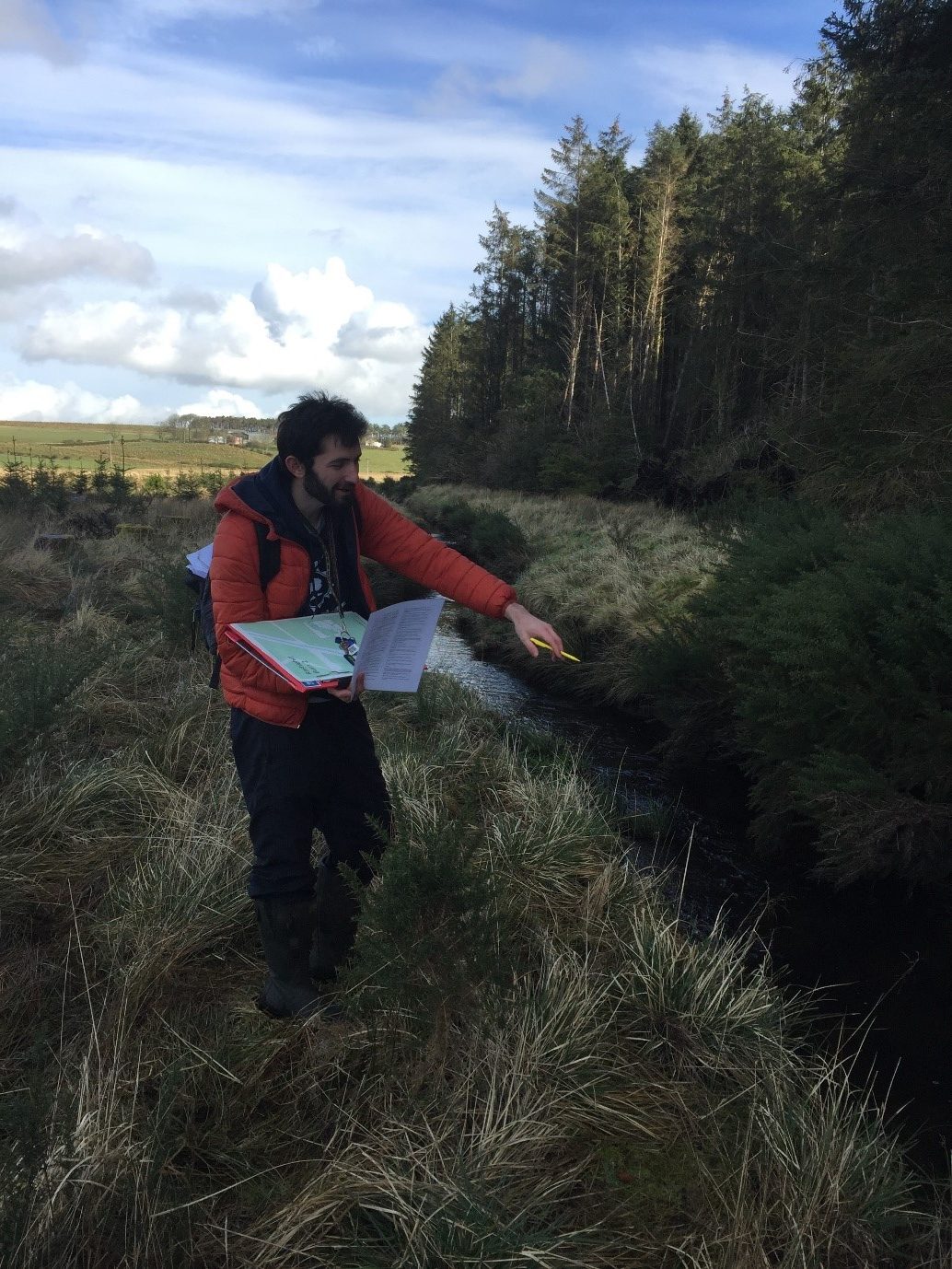
Over the past two months, the RiverLife volunteers and I covered about 25 miles of different tributaries, recording a range of different characteristics that we can use to inform our understanding of our rivers. For example, we record the different flow types which increase in energy from slow flowing pools and glides, to runs and babbling riffles, before the highest energy flows are delivered in rapids and waterfalls. The presence of overhanging vegetation, bank erosion, undercut banks and any barriers to fish movement are also recorded. Why do we record this information? Any angler will tell you that the different river habitats support different types, sizes and numbers of fish. Supporting these are a variety of distinctive invertebrate communities that are shaped by the habitat they occupy.
Like Kenn’s journey back to find the root of his existence, the walkovers have taught me much about the individual histories of the different rivers. The industrial past of West Lothian is etched into the hard and soft bank modifications (such as the creation of embankments or bank reinforcement with gabions, stone or concrete) that can be found on the Breich (Fig 1) and Killandean waters. In the upper Avon catchment, many moorland rivers such as the Rashiehill, Culloch, and Garbethill burns show signs of being historically dredged to resection (a deepening of the channel intended to speed drainage from the land) and straighten the rivers (Fig 2). These modifications of course change the flow type and ultimately change the biological communities we find there, potentially degrading or entirely removing fish spawning habitat.
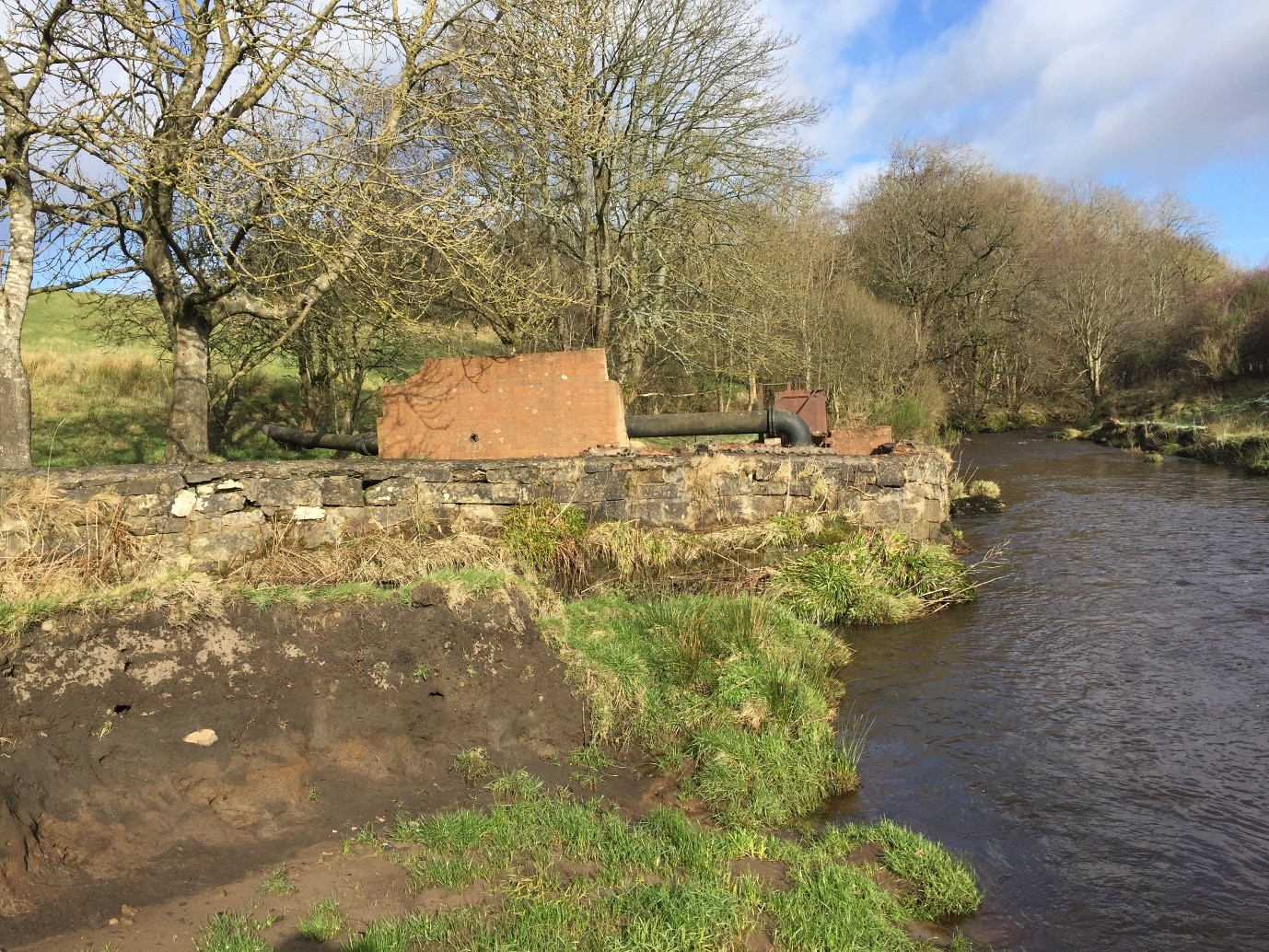
Standing as a clear exception is the Linhouse water, which remains relatively untouched. The Linhouse is the absolute jewel of the Almond tributaries, sporting unspoilt and diverse habitats from where it meets the River Almond at East Calder to its upper reaches in the southwest. Where modifications have been carried out (such as the creation of a weir to supply a historic (and now defunct) hydro scheme above the beautiful Linn Jaw waterfall (Fig 3), they seem to fit synchronously with the natural flow of the river. There is even modification to the Linn Jaw waterfall, where a lade running from the upstream weir carries water to create an aesthetically appealing cascade to the right of the natural falls.
The walkovers are nearly completed and will be digitised in the coming months. This information will then be used by the RiverLife team to audit the available habitats within the Almond and Avon catchments and inform future management decisions. Personally, for me it has been a privilege to see the diverse array of river habitats within the Almond and Avon catchments. Our journeys have highlighted that no two rivers are the same, having their own individual characters (which are so often formed by scars inflicted in the past), and that by visiting them we can learn a lot about the present impacts they face and also about our own position in the wider environment.