
World Fish Migratory Day (WFMD): a day celebrated with the aim of raising global attention about the need for restoring river connections for migrating fish to achieve healthier fish stocks and more productive rivers.
In the Forth District, 5 of our 10 major river systems have a series of man-made barriers built across their widths (such as weirs). Though many of the weirs have lost their original purpose, they still act as a barrier, preventing migratory fish like salmon, sea trout, eels and lamprey from getting up the rivers and making the most of breeding or feeding habitat upstream. We have started on the long and difficult road of getting these barriers removed or adapted so that fish can go past them.
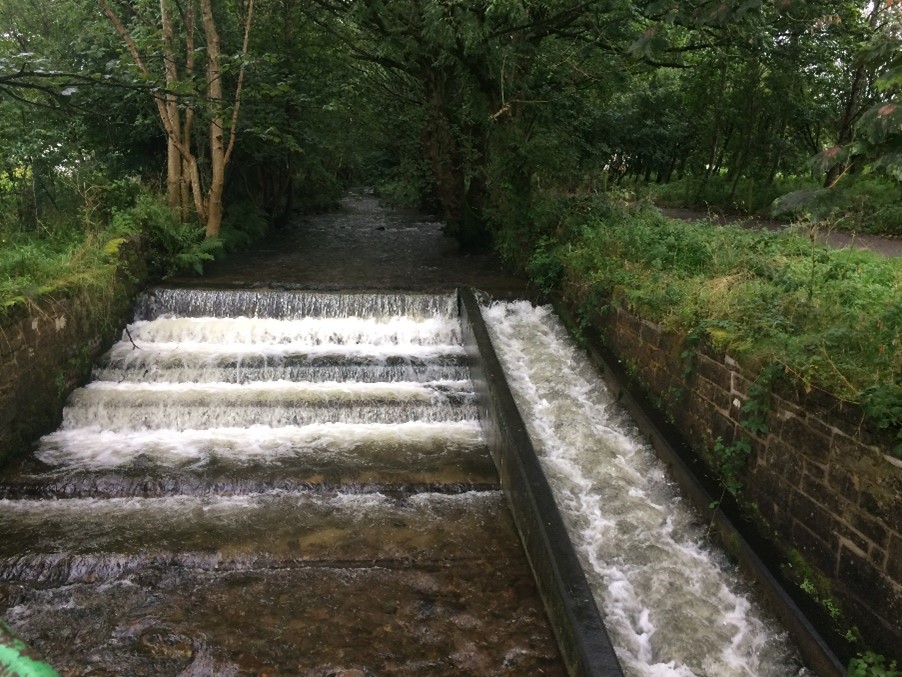
Above, a technical fish pass (on the right hand side).
Even rock ramps, which are a more natural solution, may not be completely passable 100% of the time. Rock ramps involve building up the bed with rocks downstream of the weir so that fish can swim up a lower gradient river. The rock have to be embedded in the substrate to prevent them washing away.
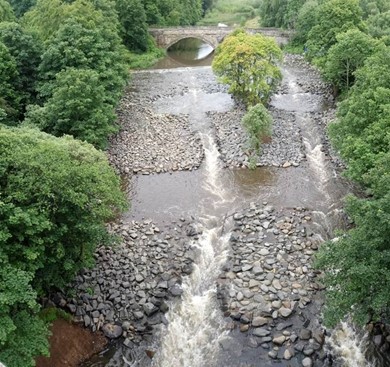
Above: A semi-natural rock ramp.
With few exceptions, complete removal of the obstruction provides the most benefit in terms of returning the river to its natural function. This also benefits habitats supporting biodiversity. With the advancement of climate change and further decreases in overall biodiversity, these are the types of processes that provide rivers with their natural resilience to weather change and provide the best homes they can for wildlife. Use the slider on the images below to see the visual difference in a river before weir removal and what one looks like following weir removal.

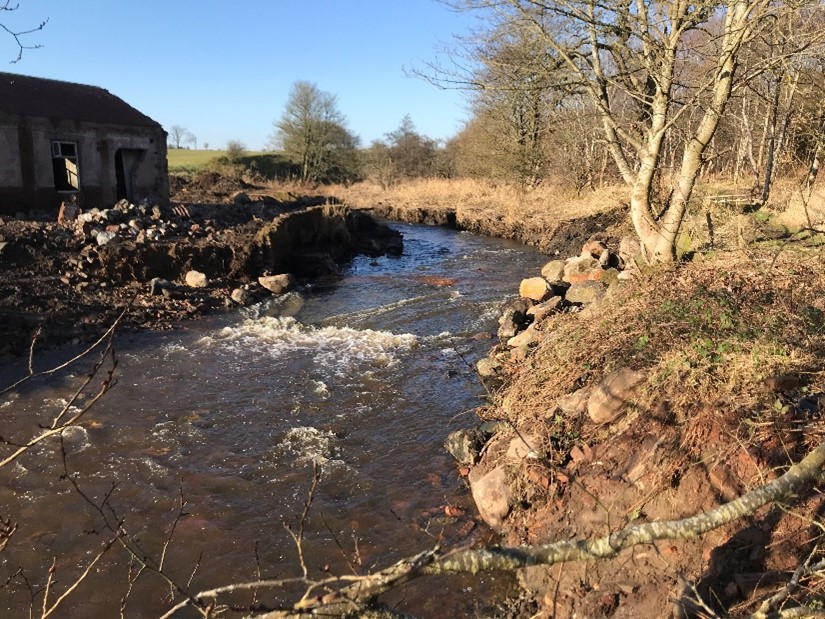
Above: A slider gallery showing a river before weir removal, and a river after weir removal. The second picture shows a much more natural river, with excellent habitat for fish and a ‘wiggly’, more natural shape seen after infrastructure removal.