
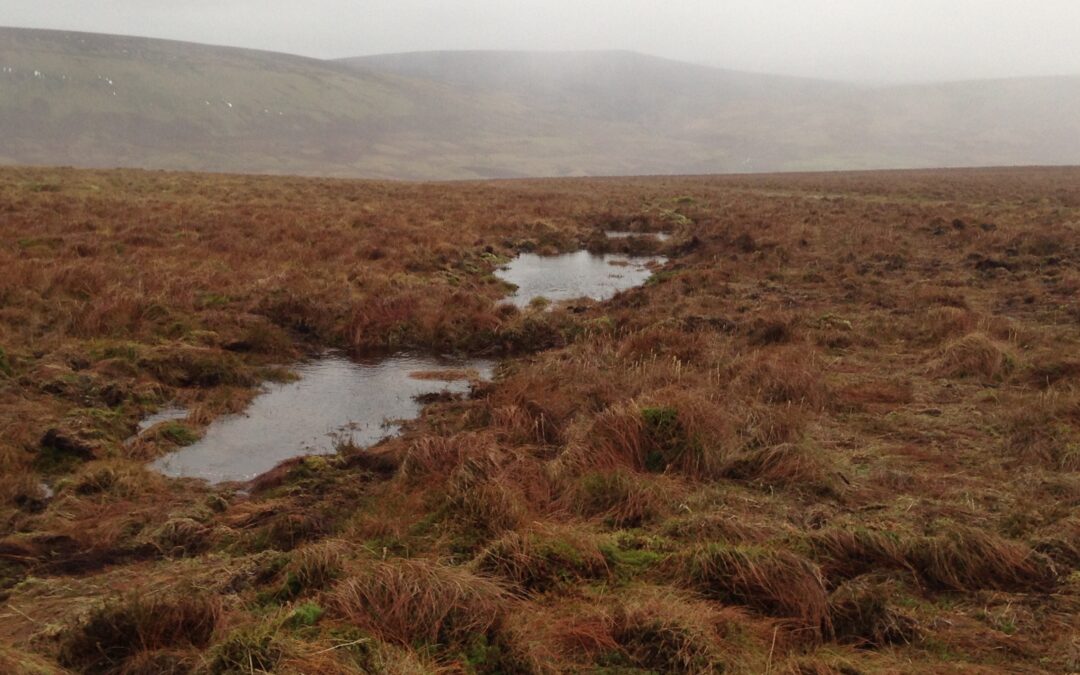
Today, day 2 of our 30 Days Wild ‘Wild Takeover’, also coincides with International Peatland Day so we’ll be focusing on all things peatland! Much of the valley of the Forth used to be covered in peatlands, and though most of this has since been lost, there are still pockets of this important habitat across the Forth catchment.
Peat, bog, fen, marsh, mire, hag, moor, moss – all names you might hear when it comes to peat – but what is peatland exactly? Well, peat is formed from decomposing plant material which builds up slowly over time. Healthy peat is about 90% water, and peatlands are usually classified by ‘type’ eg. bog, fen, mire depending on their water source.
The UK Centre for Ecology and Hydrology describes peatlands as ‘carbon-rich wetlands which occupy 3% of the global land surface and 12% of UK land area’ . While this number may seem small in comparison to the land cover of some of our other habitats, peatlands are vitally important for their carbon capture potential, alongside the waterlogged habitat they provide that many forms of wildlife (particularly ground-nesting birds and waders) thrive on. In Scotland, most of our water is filtered through peat, and so peatland is important for our drinking water too as it produces clean water, requiring fewer chemicals to treat. However, around 80% of UK peatland is thought to have been affected through human activity.
Peatlands under pressure
Historical drainage of peatland by farmers and foresters resulted in losses of this important habitat as land management shifted towards making the land productive for food and fibre crops. Draining peatland releases carbon into the air and results in soil shrinkage, often reducing the land surface on average by 1-2cm per year from peat oxidation. Given it takes 1,000 years for 1 metre of peat to build up, we can quickly see why our peatlands have suffered losses over time.
Damage to peatland also impacts its biodiversity, impacting the growth of important plants like sphagnum (peat) moss, which play a key natural role in protecting peatland. To see a visual demonstration of how sphagnum helps stop heavy rain events eroding peat and releasing carbon, see this interesting video tweeted by @beadamoss. This plant was also important during the first and second World Wars, and was used rather widely for its medical properties.
Above: Episode 1 of our ‘Peatland’ series, part of the Allan Water Improvement Project. Sandra discusses the importance of peatland restoration undertaken on the Upper Knaik with the land manager, Peter Carnegie.
At Forth Rivers Trust, our project work now more than ever considers peatland management. When water crosses peatland, this often causes erosion, exposing bare peat and resulting in carbon release over time. Historical human activity has also resulted in exposed areas of degraded peatland, impacts which are now being combatted through ‘Peatland ACTION’ funding from the Scottish Government. See how the Trust utilised some of this funding by watching our mini-series on Peatland restoration via the video links above and below. Grab a hot (or cold) drink of your choosing, and enjoy an educational 15 minutes as part of your 30 Days Wild challenge!
Above: Episode 2 of our Forth Rivers Trust ‘Peatland’ series shows the restoration works being undertaken at Red Moss in the Allan Water catchment by Peter and Daniel Carnegie – these will ‘slow the flow’ of water, and help restore the peat bog.
Where are the Forth’s peatlands located?
You can see peatland at Flanders Moss NNR (National Nature Reserve), Carse of Forth, West Stirlingshire, which hosts a lowland-raised bog undergoing restoration following years of historical drainage in the early 1800s. Spanning 860 hectares, restoration at Flanders Moss has resulted in a water table rise of at least 40cm, re-wetting previously dried and barren areas of peat and allowing the establishment of vitally important sphagnum (peat) moss which prevents further erosion on exposed peat. You can read an article about ongoing restoration efforts at Flanders Moss at The Guardian, here.
Other areas in the Forth catchment containing peatland includes the Wester Moss nature reserve near Fallin. A designated SSSI (Site of Special Scientific Interest), Wester Moss supports a range of plants and animals native to healthy bog habitats, such as sundews, cotton grass, large heath butterflies and argent and sable moths – you can read more on these species at this link.
Blawhorn Moss near Blackridge, West Lothian, contains some great examples of raised and blanket bogs that once covered most of central Scotland, and it is the largest and least disturbed lowland raised mire/bog in the Lothians. Multiply protected as a result, the NNR also falls within a Special Area of Conservation and an SSSI.
These are just a selection of some of the areas of peatland you may come across, so go and research where you can visit and see for yourself this vital habitat. Remember and always stick to designated paths to do your part in protecting fragile peat and preventing carbon release (plus no one wants a boot full of bog!).
Above: The final episode of our ‘Peatland’ series in which Sandra and Peter discuss the types of dams used to restore Red Moss bog, alongside the potential for further peatland restoration at Tigh-na-Blair Farm in areas of upland blanket bog.
For information on visiting peatland nature reserves in the Forth Catchment, head to NatureScot’s website for details about the reserve – Flanders Moss, Blawhorn Moss. Many of these areas will have boardwalks so the walk is largely flat, more accessible than bare ground – with the exception of Wester Moss.
We’d encourage you to get out and see some peatland yourself as part of 30 Days Wild. It’s a characteristically ‘Scottish’ habitat that often goes underappreciated as it can be a bit barren and blustery, compared to for example, some species-rich wildflower-filled grassland…but peatland is just as important, and hosts more life than you might expect at first glance!
Don’t forget to stay tuned for more 30 Days Wild content from the Trust this month. And if you’re fascinated by your newfound peat knowledge, see some more links and additional content below to delve into.
Additional links
In Argentina’s ‘Land of Fire,’ photos reveal the beauty of bogs | National Geographic – peatlands from another perspective, in Argentina, and the work being done to preserve them.
The promise and danger of Scotland’s bog – BBC Future – a BBC piece on peatland restoration work in the Flow Country, Northern Scotland.
For peat’s sake: How saving Scotland’s peatlands could be the key to saving the planet (pressandjournal.co.uk) – an article around the importance of peat restoration, again focusing on the Flow Country in Scotland.
Ep.3 – Restoring Europe’s peatlands and wetlands by The Freshwater Blog (soundcloud.com) – MERLIN, our EU-based project partners, have released their podcast episode all about peatland and wetlands in honour of World Peatlands Day today, be sure to check it out for more information all about the work they do!