
Invasive Non-Native Species (INNS) – What You Need to Know
Spot It? Report It!
Recognising and recording sightings of INNS is a crucial first step in tackling them. If you’re out and about in the Forth catchment and spot something suspicious, please use our INNS reporting form to record:
- The location of your sighting
- A description or photo of the plant
- The species, if known
We also have dedicated ID guides below to help you identify the most common invasive species in the area. If you’re a regular walker, angler or paddler, we recommend bookmarking our INNS reporting form for easy access.
Knowing where INNS are found helps us plan control efforts more effectively. One of the key principles in managing these species is identifying the highest infestation point in a river catchment – this allows us to start control efforts upstream and best prevent reinfestation downstream.

Japanese Knotweed
Latin name:
Fallopia Japonica
Description
Japanese knotweed grows in large stands which consist of a number of individual stems originating from the same rhizome. The plant normally grows around 2m tall and has bamboo like stems which are green with purple speckles. The leaves of the plant are about 10-15cm and are a tear drop shape with a flat base. Japanese knotweed grows in many areas but prefers disturbed soil, river banks and loose ground. In its native range it grows in harsh environments and can be found growing in volcanic landscapes, and it has unfortunately adapted well to Scottish climates and conditions with the ability to establish well once the rhizome is rooted.
Giant Hogweed
Latin name:
Heracleum mantegazzianum
Description
Giant hogweed grows in a range of places but can mostly be found along rivers or railway tracks due to the plant spreading by seed and these corridors helping distribute it. The plant normally grows between 2 – 3 metres tall with its leaves growing up to 1.5m long but when conditions are right, plants have been known to grow up to 5m tall. Each plant can produce anywhere between 20,000 and 30,000 seeds through producing large white “umbrella like” flowers. The seeds can lay dormant in the soil for 10+ years. Giant hogweed is a hazard and can cause harm to people due to its phytotoxic sap which causes blisters on skin when it comes into contact with sunlight.

Himalayan Balsam
Latin name:
Impatiens glandulifera
Description
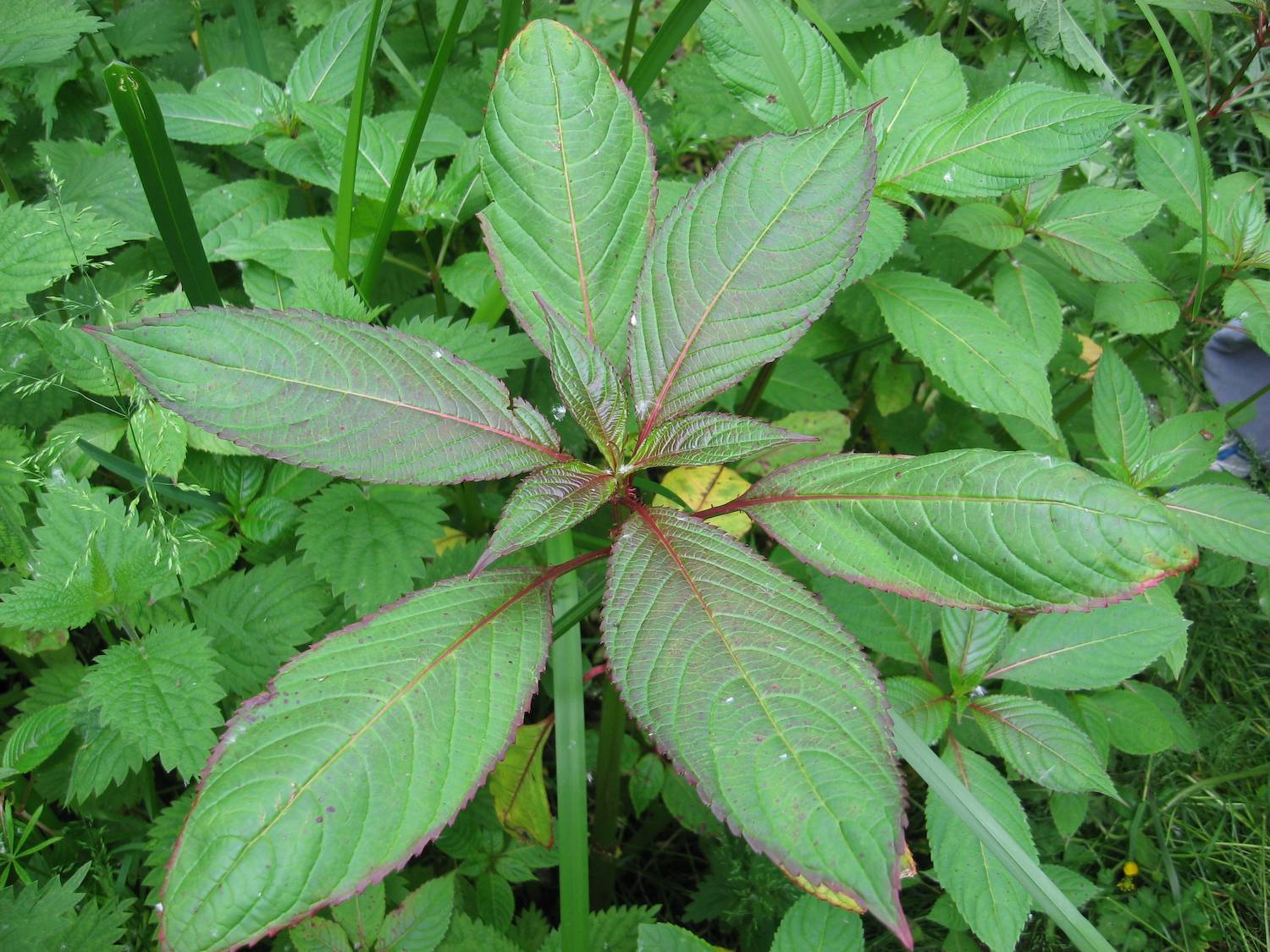
Himalayan balsam is a sweet smelling plant which grows along waterways and marshy areas. The plant can grow up to 2 metres tall and has a fleshy stem. Leaves on the plant are spear like and green in colour, the veins on the leaf are red in colour and the edges of the leaves are serrated. By mid summer, the plant has a number of small pink and white flowers which emit a strong sweet smell. Near the end of summer, seed pods develop on the plant which have a unique dispersal method. When ripe, the seed pods explode launching the seeds up to 7 metres from the plant.
American Skunk Cabbage
Latin name:
Lysichiton americanus
Description
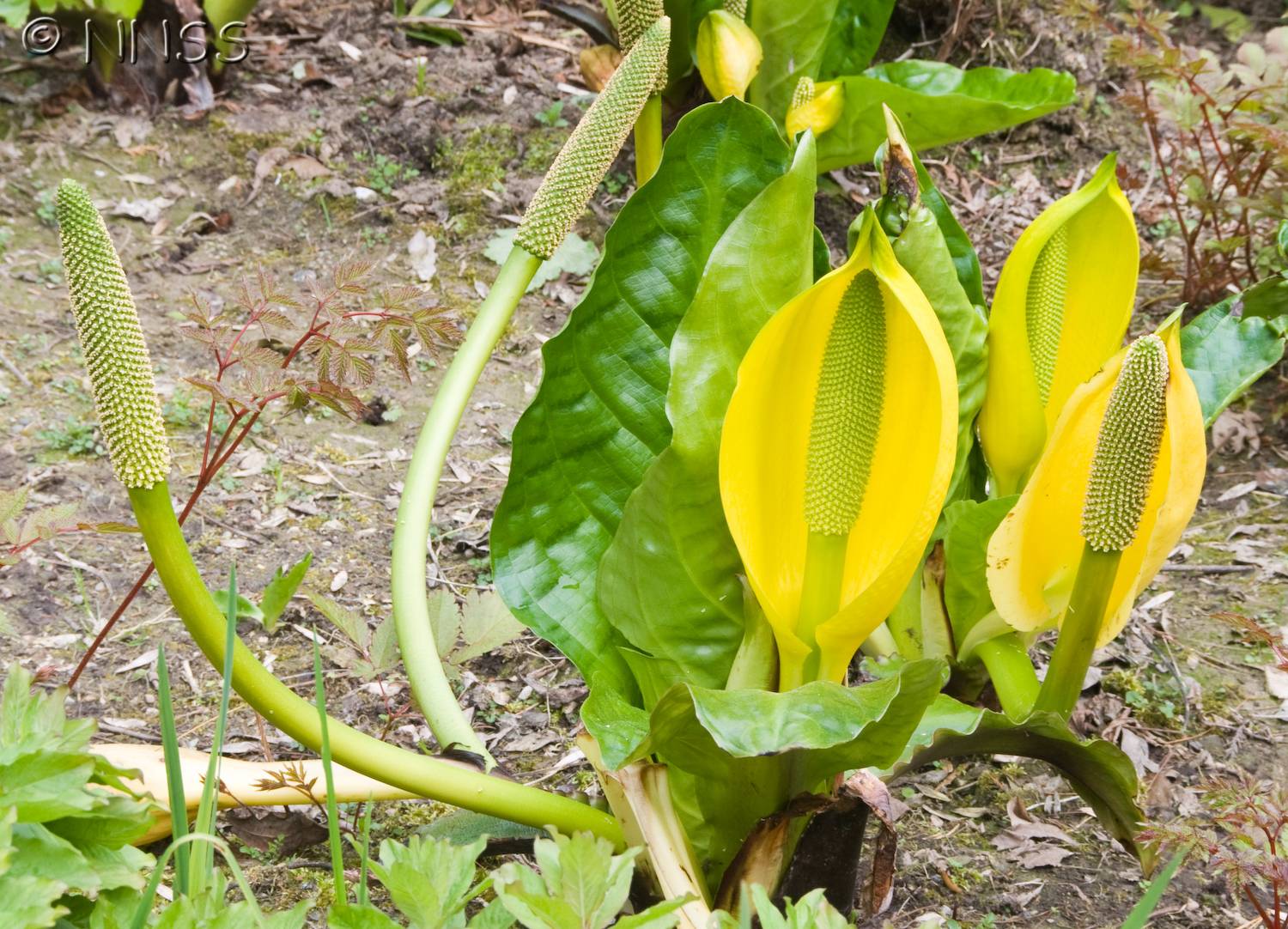
American Skunk Cabbage can grow up to 1.5 metres tall and can be identified through its large waxy leaves and a large yellow flower. The flower appears first in spring followed by the growth of its leaves. The plant thrives in slow moving water, lochs and marshy areas. Planted in the UK as a pond ornimental plant, this has now escaped and causes major issues for wetland plants. The plant spreads through the dispersal of seeds from a central seed pod.
How We Control INNS
The primary and often only effective method for controlling species like Giant Hogweed, Japanese Knotweed, and American Skunk Cabbage is herbicide treatment. This involves careful application by trained and licensed professionals, using only the minimum amount needed to suppress the plant’s growth and prevent spread.
For smaller or less dense infestations – or where chemical use isn’t suitable – a range of alternative methods may be used, depending on the species and the site:
- Hand-digging – effective for early-stage Giant Hogweed if done with full protective gear.
- Pulling or strimming Himalayan Balsam – this shallow-rooted plant is easily removed by hand before it sets seed (typically July to late August). Strimming is effective on dense stands, but timing is key to prevent seeding.
- Grazing – targeted livestock grazing can help reduce some INNS in suitable environments.
- Smothering or excavation – appropriate in certain habitat types or development contexts.
Whichever method is used, long-term monitoring and follow-up are essential. Many INNS, especially those with persistent seed banks, require several years of management to fully control.
Want to Take Action?
If you’re a landowner, community group or individual who wants to tackle INNS in your local area, we can:
- Offer advice and guidance
- Signpost to training opportunities
- Help you understand what’s involved in herbicide certification – check out Elijah’s blog about his own experience gaining qualifications for safe chemical control.
Together, we can limit the spread of invasive species and protect the Forth’s rivers and wildlife.