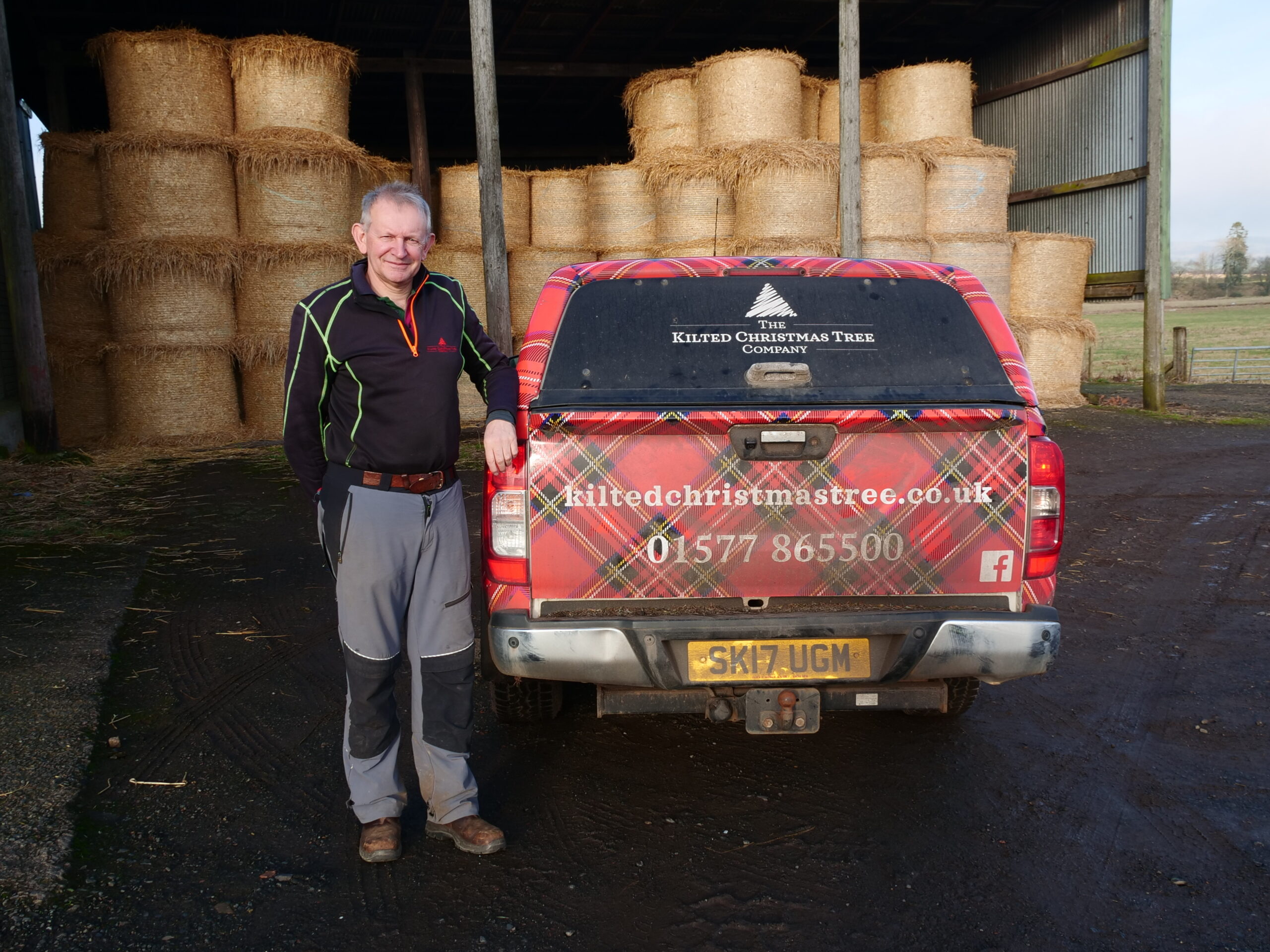
Jimmy Smith beside his pickup truck at the Tillyochie Farm offices
Meet Jimmy Smith, a self-proclaimed “non-farmer” who grows Christmas trees and produces eggs alongside his son, Cameron Smith. While Cameron manages the farming side of the business, Jimmy focuses on the broader business operations.
Jimmy moved to Kinross-shire in the 1980s without a farming background. A series of unexpected events led him into the farming way of life: When a friend faced misfortune, Jimmy stepped in to help his Christmas tree business, and really liked it.
Seizing an opportunity when land became available, Jimmy purchased it, marking the beginning of his journey into farming. He started out by growing Christmas trees and gradually expanded to grain production and later, egg farming. Today, Jimmy and Cameron manage 405 hectares of land scattered across the catchment—a reflection of their journey as new entrants, acquiring and renting land when opportunities arose.

One of the fields near Hattonburn
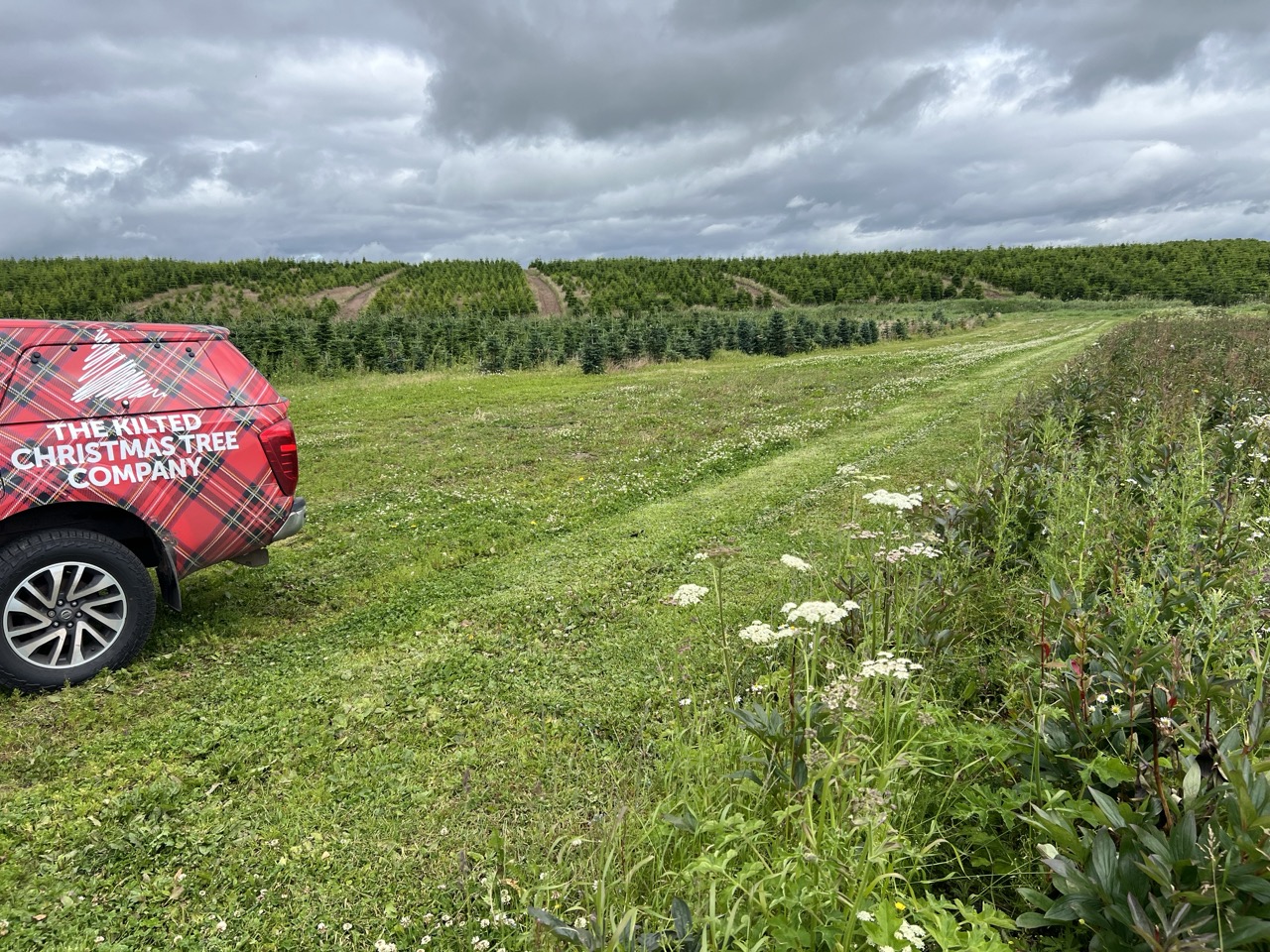
A Chrismtas Tree Growing Field
To be Green, You Need to Be in The Black
A recurring theme in my chat with Jimmy, as we sat by the crackling fire in the Tillyochie offices, was the importance of having the bottom line “in the black to go green”. Jimmy emphasized that sustainability in farming, entails both being economically viable as well as environmentally friendly. Profitability allows farmers to reinvest in essential infrastructure, manage unpredictable costs and adapt to new challenges.
This point reminded me of discussions I have come across before in sustainable farming. At Groundswell, the UK’s leading regenerative farming festival, it was a recurring topic. One of my key takeaways—which I reflected on in a previous blog – was the need to consider the financial realities of farming when promoting sustainable practices. As a sector, farming carries unique risks and vulnerabilities. A poor harvest due to extreme weather, for instance, can have severe financial consequences.
Jimmy’s own experience illustrates this reality. He recently planted new fields with Christmas trees, a crop that will take up to seven years before it generates any return. Market fluctuations, growing conditions, and unforeseen challenges will all determine whether this investment ultimately pays off.
For sustainable farming to take root, it must also make financial sense. Understanding how different practices fit within existing farm systems—and ensuring they are economically viable—is key.
As Jimmy says: “We are trying to look at the profitability, and then that allows us to look at the social and green part”.
This mindset is reflected in the changes he has made on his farm, where improvements in environmental sustainability have gone hand in hand with maintaining financial stability.
Green & Black Going Hand in Hand

As we drove to Jimmy’s favourite spot—the hilltop fields at Hattonburn—with sweeping views over the shire and its distinctive bowl-shaped landscape, he reflected on how their farming practices have evolved. The “green and social” changes to the business have gone hand in hand with strategic financial considerations.
When Jimmy and Cameron first started farming, their primary focus was growing grains for malting. To supply the necessary nutrients for the grain, they purchased hen manure. The decision to start their own egg production business stemmed, amongst others, from a simple yet strategic idea—why buy manure when they could produce it themselves? Today, most of their arable production is used to feed their hens, creating a more integrated and self-sustaining system.
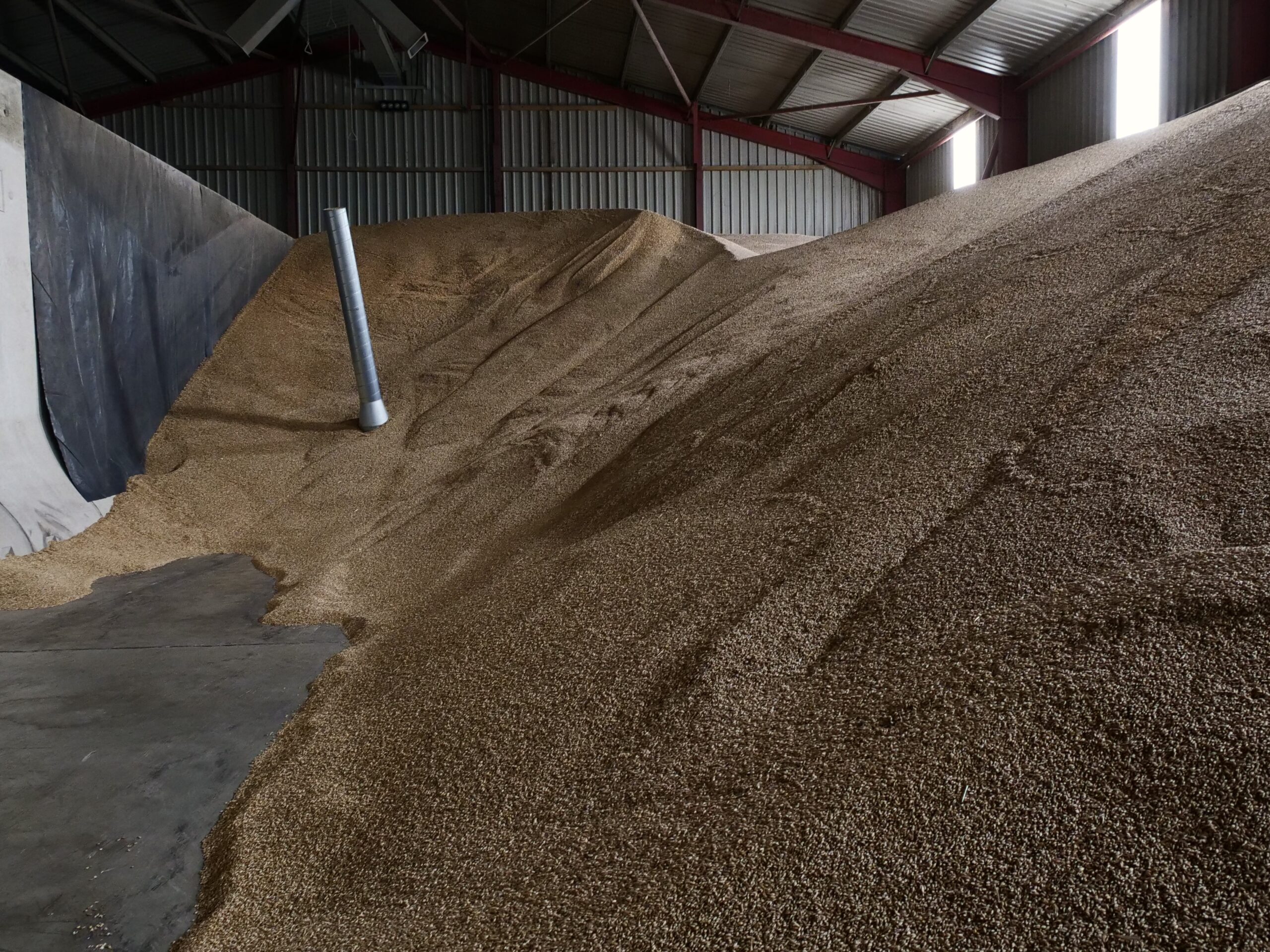
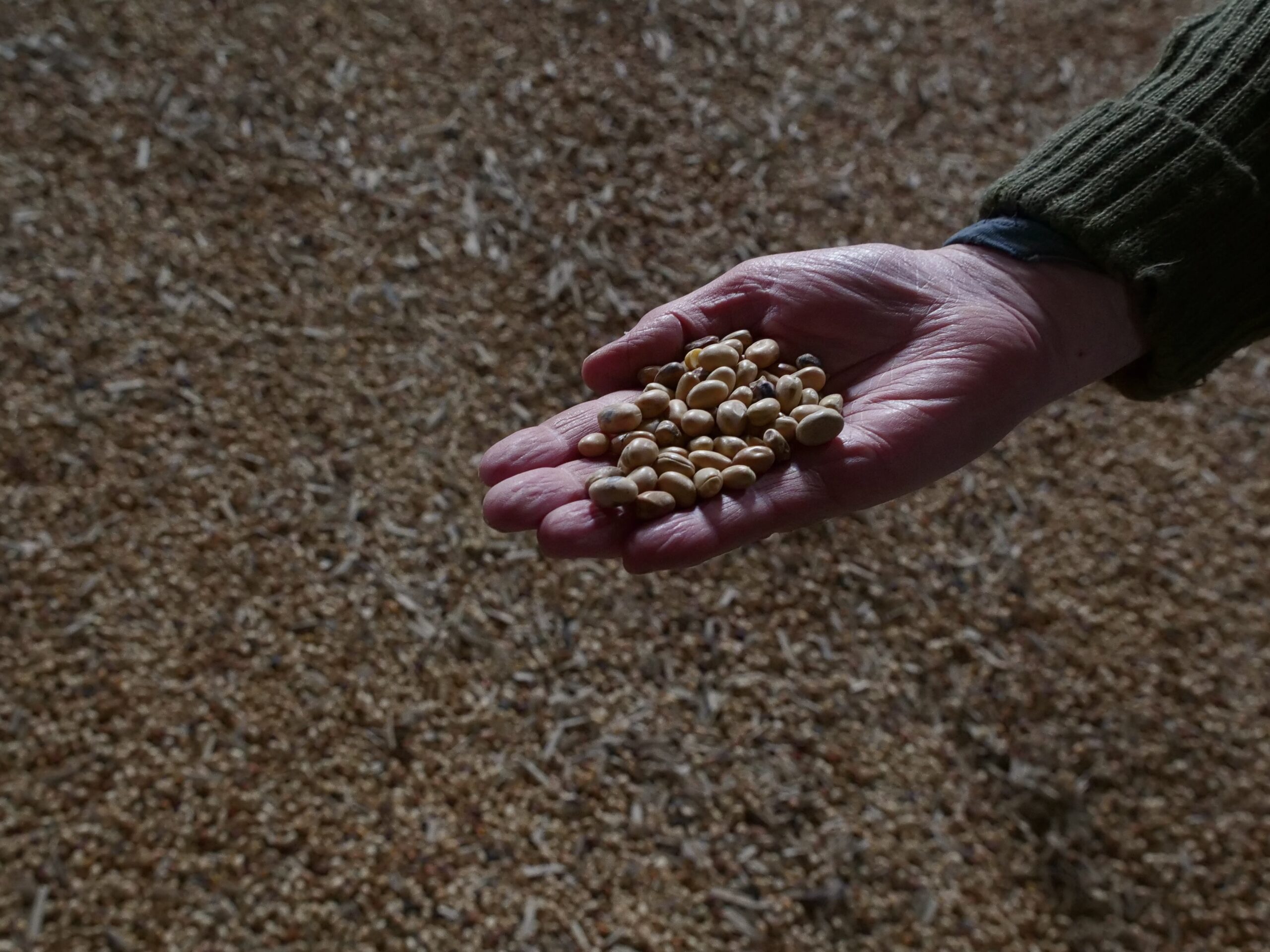
Jimmy holding beans grown on the farm
Since then, they have made further changes to their nutrient management practices. They have incorporated peas and beans into their crop rotation—plants that naturally fix nitrogen from the atmosphere – they have reduced their need for synthetic fertilisers, another costly input. These legumes also serve as a valuable protein source for their hens, helping to cut down on importing other protein sources.
Their generous application of organic material—essential for maintaining soil health—has led to visible improvements in the land:
“We see that our soils can hold moisture for longer and at the same time they are able to absorb excess water better. They are more porous.” – Jimmy
The Importance of Community
Entering the farming world as a ‘non-farmer’ has not only meant acquiring new knowledge and skills but also becoming part of Kinross-shire’s farming community. For Jimmy, shifting from his previous career to farming has brought a new appreciation for working within a close-knit local network.
One of the aspects that has stood out to him most is the strong sense of solidarity among farmers. It is common to help thy neighbour. I asked him how he experiences that, and he said that one of the ways is that:
“You see it when people experience misfortunes or accidents. Others will step in to help because the work needs to get done when it needs doing. Neighbours are very neighbourly in farming.” – Jimmy
Beyond farming, the wider community spirit in Kinross-shire is one of the reasons Jimmy enjoys living in the area. Inspired by a recent trip to New Jersey, USA—where he came across small, street-side book libraries where people could leave and take books—he hopes to introduce a similar initiative locally.
Final Thoughts
Jimmy generously took the time to show me around the farm and share his experiences, and this blog only scratches the surface of our conversation.
It was particularly inspiring to hear about his journey into farming, how he has adapted along the way, and how he has supported his son Cameron’s ambition to farm.
Further Resources
🌲 Jimmy’s Christmas tree company: Kilted Christmas Trees
🌱 More about nitrogen-fixing bacteria: AHDB Knowledge Library
🚜 Interested in regenerative farming? Learn more about Groundswell: Groundswell Agriculture
🐔 Why replacing soya with home-grown protein feed can be beneficial: FAS Scotland