Louise standing in front of the raised bog at Portmoak Moss
Meet Louise Bachelor, a founding member of the Portmoak Community Woodland Group (PCWG) and a current member of its steering committee.
On an overcast and misty Monday morning, I met Louise outside Portmoak Village Hall. Excited to learn more, I followed Louise as she showed me around the two areas that PCWG manage in partnership with the Woodland Trust, Kilmagad Wood and Portmoak Moss.

Location of Portmoak Moss and Kilmagad Wood
What is the Portmoak Community Woodland Group?
As we crossed the road to the first destination on our walk, Kilmagad Wood, Louise shared the history, purpose and work of PCWG.
Originally, the PCWG emerged in 1996 as a community-led initiative to preserve public access and stop the sale of Portmoak Moss – a nature area near Scotlandwell – to commercial interests. By advocating for the Woodland Trust to purchase the site, PCWG helped secure its future as a community space. Today, guided by the needs of the land, the local community, and the passions of its members, PCWG continue to steward Portmoak Moss.
The work of PCWG spans a wide range of impactful aims: fostering biodiversity, enhancing carbon sequestration, stewarding natural flood management, and creating a cherished space for the community to be in nature.
Kilmagad Wood: Creating a Valued Community Space
Standing beneath the bare apple branches of Kilmagad Wood— which teem with fruit in summer—Louise shared more about Kilmagad Wood and the Community Orchard. Once a rough pasture for sheep and cattle, the area was acquired by the Woodland Trust and, with community support, transformed into a thriving green space. Over 5,000 trees have been planted, and a community orchard has been established.
The idea for the orchard was born from a simple question PCWG asked the community: “What would you like from this space?” The answer was just as simple: “Something we can eat.” And so, the apple orchard was created. Each year, PCWG hosts an Apple Pressing Day, bringing people together to pick, press, and bake apples.

Apple trees in the orchard, heavy with ripe summer fruit
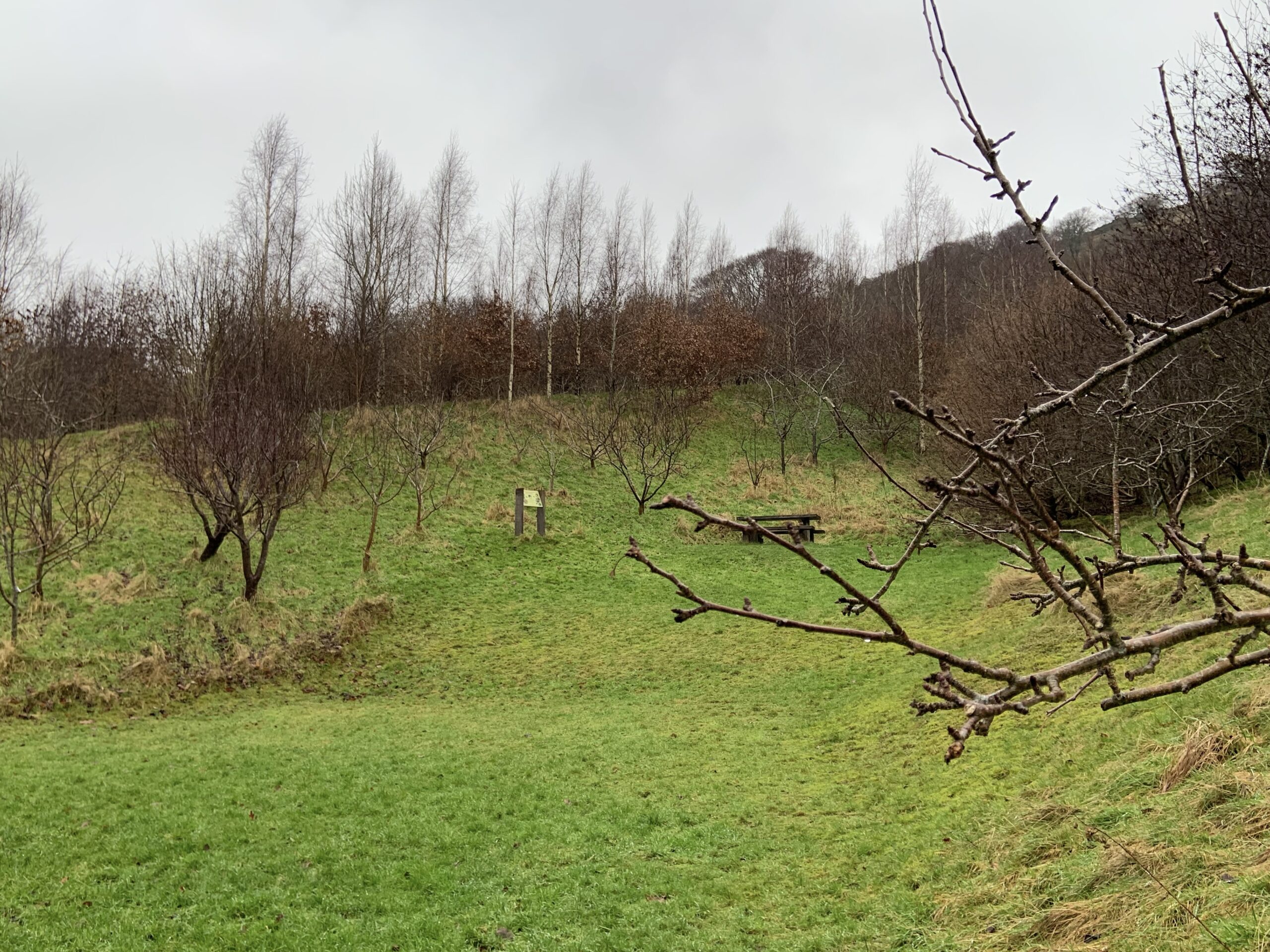
The orchard in winter
The orchard, alongside Portmoak Moss and other initiatives, has helped improve local access to natural spaces as footpahts are created, events are held and these areas are established as community spaces. When Louise moved to the area over 35 years ago, these spaces were less accessible and used than they are today.
Portmoak Moss: Restoring a Raised Bog
From Kilmagad Wood, we continued our walk to our second destination, Portmoak Moss. By the time we reached the raised bog, a light rain had started to fall. We followed the trail that loops around the bog and into the surrounding woods.
As we walked, Louise explained that when PCWG initially became involved, they didn’t realise the woodland had been planted on a raised bog. It was only after bringing in a scientist to survey the area that the presence of sphagnum moss revealed the bog’s potential for regeneration.
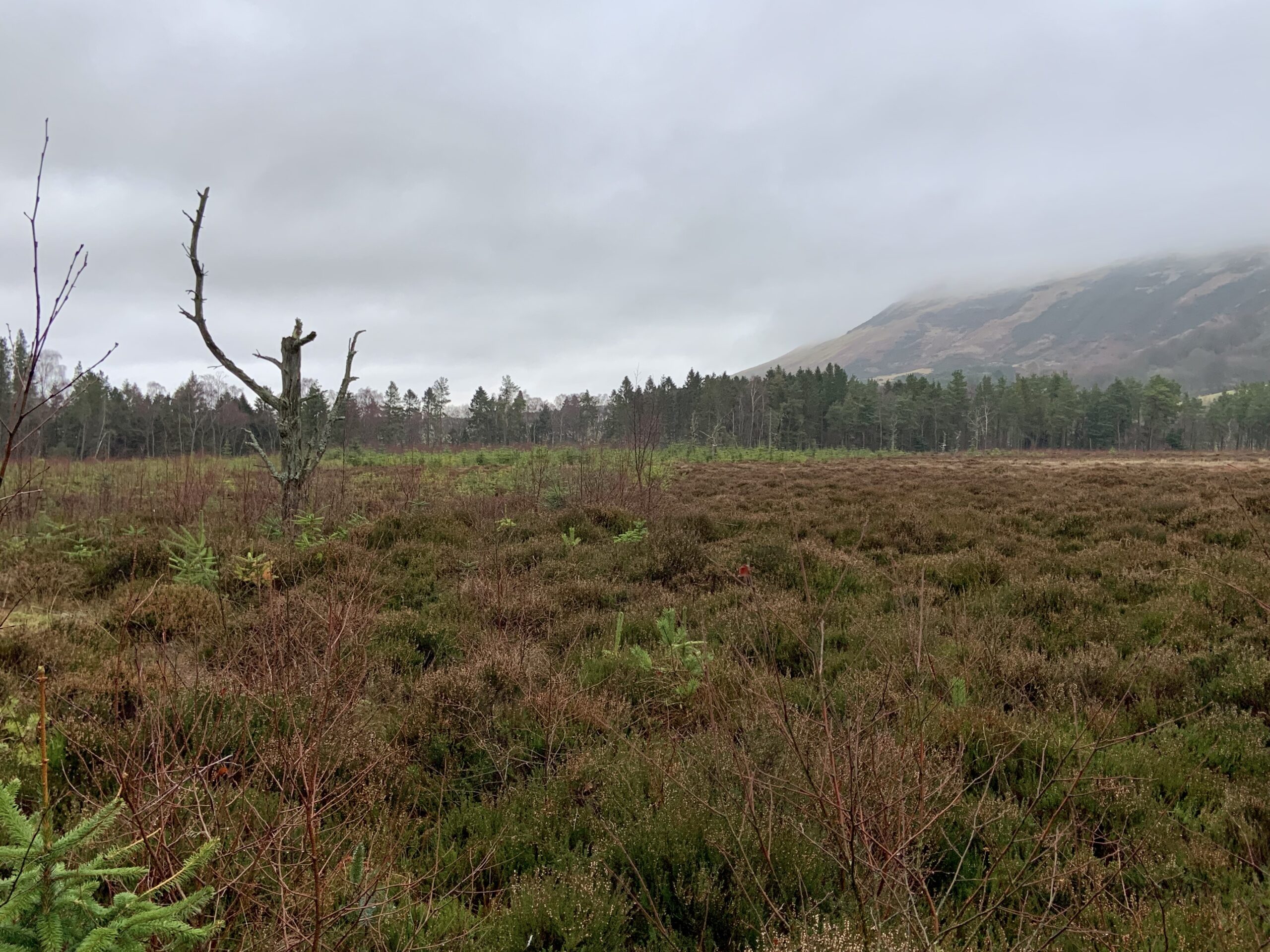
The raised bog of Portmoak Moss
Recognising the rarity of raised bogs—94% have been lost in the UK—and their ecological importance, PCWG started focusing on restoration. Raised bogs, deep layers of peat rising above the surrounding landscape, bring many benefits to humans as well as other living beings:
- Flood mitigation: The peat absorbs large amounts of water, releasing it slowly and reducing downstream flooding. Sphagnum moss, a key plant in bogs, can hold up to 20 times its own weight in water.
- Carbon storage: Globally, peatlands store twice as much carbon as all the world’s forests combined.
- Unique habitats: Raised bogs provide critical habitats for diverse bird, invertebrate, and plant species.
To maintain the bog, PCWG removes Sitka spruce trees that grow in the bog. Once a year, they host a Christmas tree event, where locals can collect the removed trees to use for their holiday celebrations.
For Louise, these ecological benefits are deeply tied to her personal commitment to Portmoak Moss. Over 25 years of involvement, she has seen how the restoration of the bog not only safeguards the environment but also strengthens the connection between people and nature. Her dedication stems from a passion for both ecological preservation and fostering community engagement.
“For a starting point, it’s care and worry about the environment. If there are things you can do locally, then that’s great. The second thing is that I really like the community involvement. I love seeing the pleasure people get from coming here.”
Final Thoughts: Inspiration from the Catchment
The importance of Portmoak Moss and Kilmagad Wood, as well as the importance of initiatives such as PCWG is reflected in the stories of locals. Their connection to the land is so profound, that it has even been reflected in people’s final wishes—for instance, a bench commemorating a dedicated volunteer paid for by the family or funds raised during a funeral to support the orchard.
For Louise, these places also hold personal meaning as well. One of her favourite spots to reflect and say farewell to the day is at the top of Kilmagad Wood:
“I do love the hillside where you can look out on the moss and the loch behind. I generally go up there in the late afternoon to catch the last of the light.”

A bench commemorating a PCWG volunteer at Portmoak
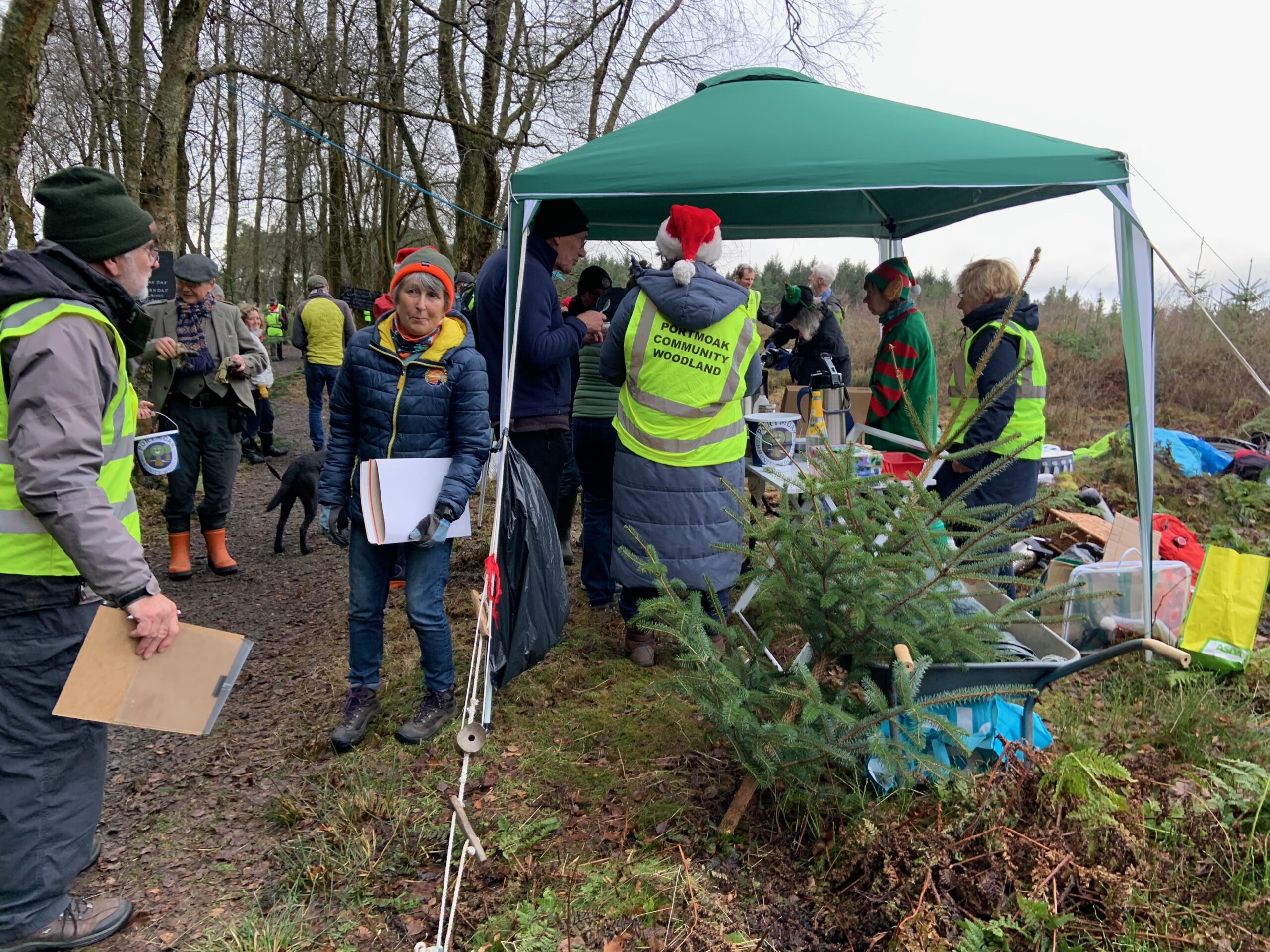
The yearly PCWG christams tree event
Talking with Louise and learning about the work of the Portmoak Community Woodland Group has highlighted the vital role of fostering inspiration and a sense of community when bringing people together to collaborate for long-term, landscape restoration.
As Louise aptly put it:
“The difference of the community being involved is that most of the ideas for the bog came from the community. When people have an idea and can see it made a difference, then they have other ideas, and it is really rewarding to see them come to life.”
Further Resources
🔗 Learn more about Portmoak Community Woodland Group: Portmoak CWG Website
🌍 Why Lowland Bogs Matter: Scottish Wildlife Trust
💡 The Power of Community & Inspiration in Restoration: Commonland’s 4Return Framework
🌱 Discover the Magic of Sphagnum Moss: The Wildlife Trust