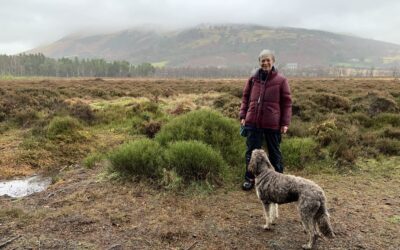
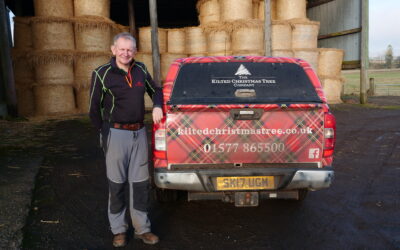
Mark Thomson standing in front of a gate to one the field overlooking Milnathort and Loch Leven
Meet Mark Thomson, who manages and runs Tillyrie Farm with support from his daughters Fiona and Rebecca Thomson. The farm spans 199 hectares, stretching from fields near Milnathort, across Upper Tillyrie, and up Tillyrie Hill. It offers breathtaking views of Loch Leven and the surrounding landscape. As Mark puts it, “On a clear day, you can see all the way to Fife and even the Pentlands.”
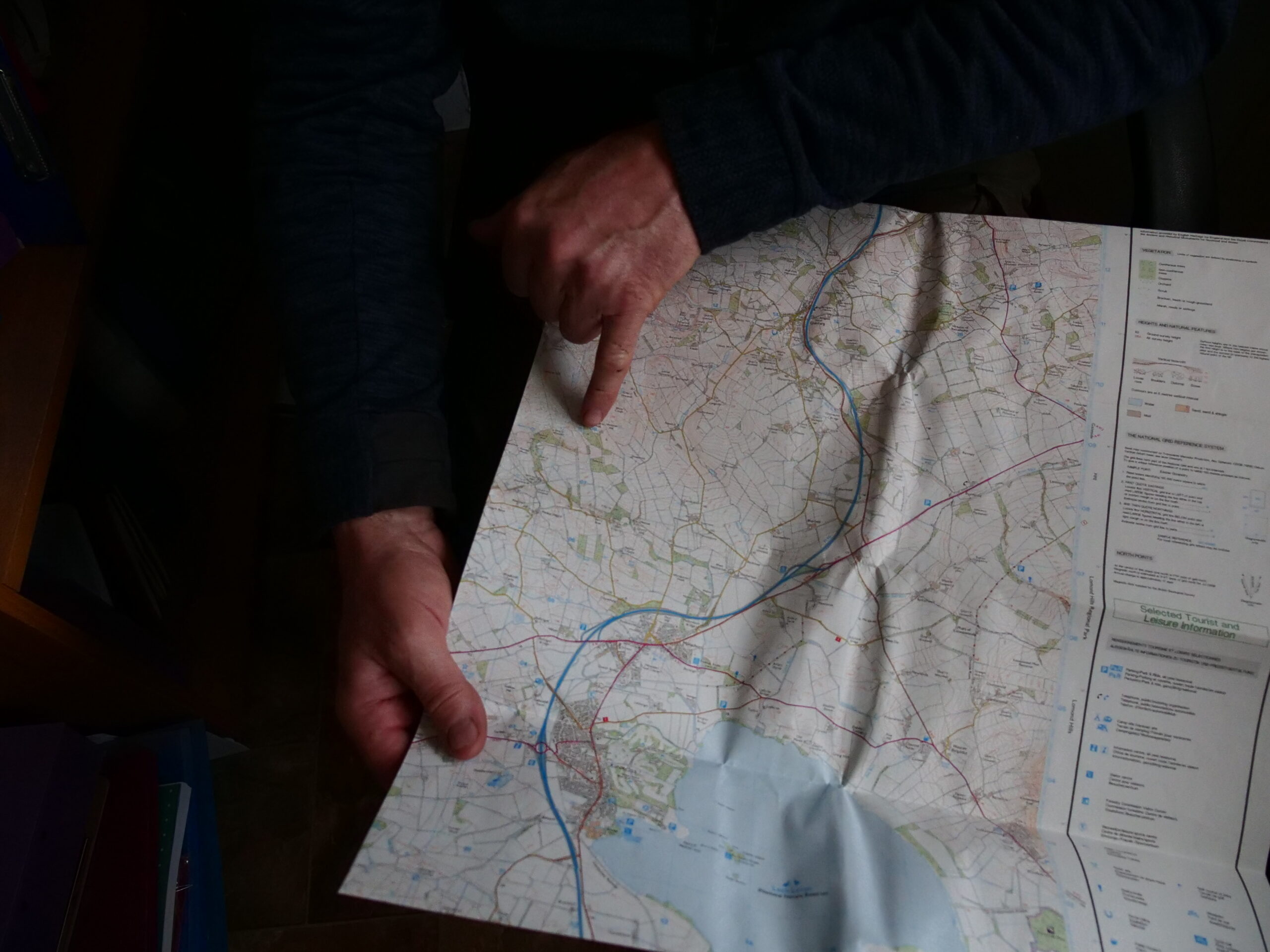
Mark pointing at the upper reaches of Tillyrie Farm
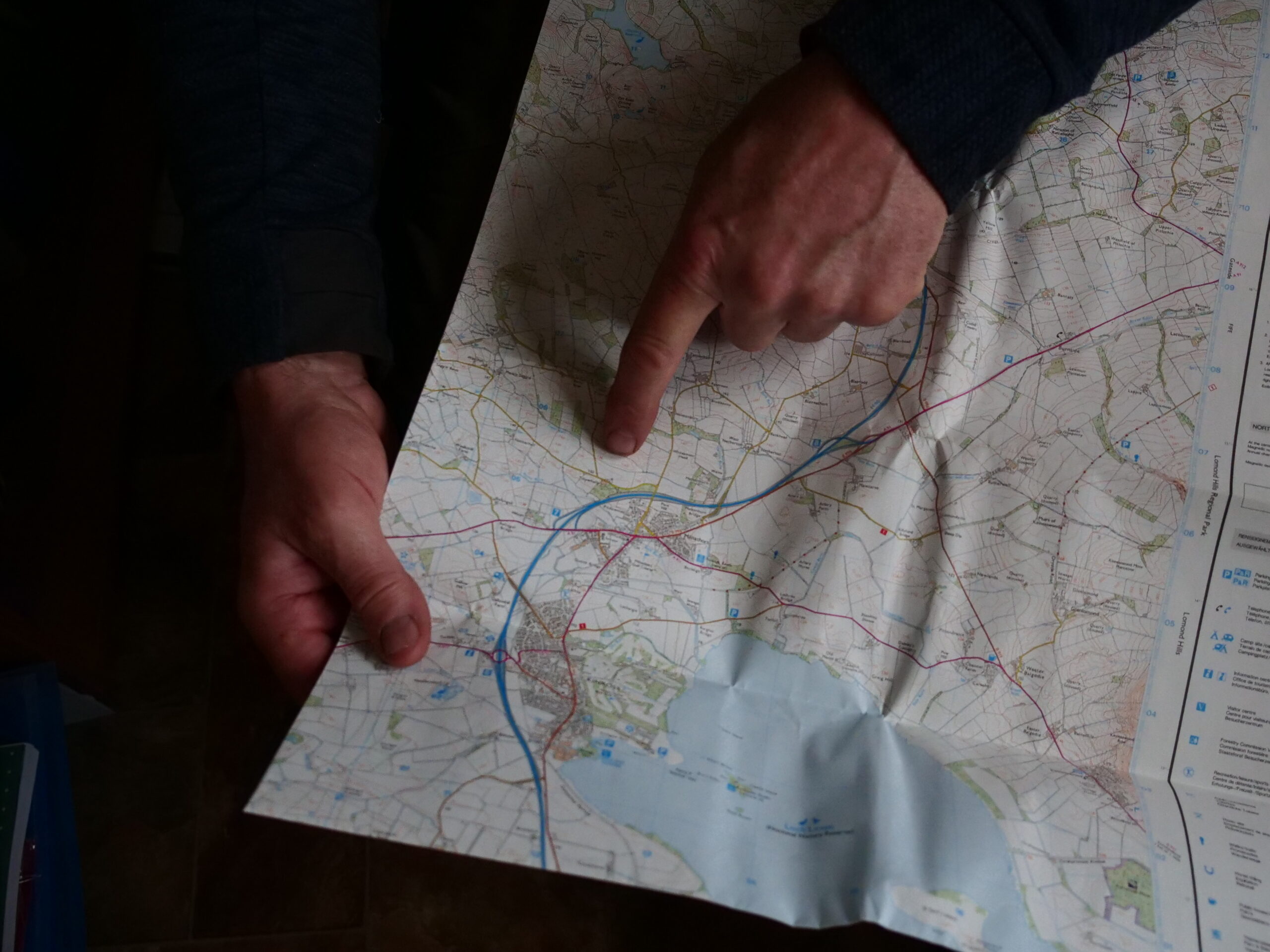
Mark pointing at the lower reaches of Tillyrie Farm
Over the course of two farm visits, Mark shared fascinating stories about the farm’s history, his personal farming journey, and showed me Rachel, my collague, around the farm. Getting to know Tillyrie Farm has been a real privilege, and I hope you will also be able to get to know the farm a little through this short read.
The Farm and (some) of It’s History
Tillyrie Farm has been in the Thomson family since 1948 when Mark’s grandfather took over from the Reidd family. Not long after, he had the chance to buy the farm. This enabled the family to continue their stewardship of the land. Over the years, the farm has been a mixed enterprise, with dairy cattle, sheep, arable crops, potatoes, and turnips. As time passed, Mark’s parents took the reins, and eventually, it was Mark’s turn to run the family farm.
When Mark came home from farming in East Fife, the family looked at keeping the dairy going, but like many small-scale dairy farmers back then and today, the numbers didn’t add up. They would either have had to increase production – buy more cattle and build a shed – or switch away from dairy. They decided to transition away from dairy and made other changes.
Today, Tillyrie Farm is home to around 90 cattle, 445 ewes, some fields of arable crops, and areas devoted to forestry. Some of the livestock is kept or sold for breeding and the rest goes for meat production. The farm’s arable crops consist of spring barley, vining peas, and forage crops. The remainder of the cropping area is down to grass for grazing and silage.
“If you take care of the land, the land will take care of you” – Mark Thomson
One of the standout features of the farm is Mark’s herd of Luing cattle, a breed known for its hardiness and ability to thrive even in tough weather conditions. This makes the Luing particularly well-suited for the uplands and the harsher Scottish climate. Thanks to their resilience, Mark is able to keep his Luing cows outdoors nearly all year round, grazing grass or forage crops only being indoors for calving.
This grazing system brings a range of benefits to the farm, the cattle, and the land. As Mark explained, it helps him maintain higher profitability—by reducing the need for silage and other inputs, the farm’s operating costs are kept lower. The cattle benefit from a natural, grass-based diet, spending most of their time outdoors. Meanwhile, the land reaps rewards too, with the cattle providing natural fertilization and maintaining year-round vegetation cover.

Luing cattle on Tillyrie Farm
Mark’s Journey Into Farming
Mark told me about this and much more, when I came once to do a physical soil assessment for a course on sustainable agriculture I am doing at SRUC. Over a warm cup of coffee in his office, I asked him more about why he initially got into farming, and what he likes about it.

Earthworm found during physical soil test
When Mark was in school deciding which career pathway to go down, he gave himself two choices: either he would join the army or go down the farming route. He chose the latter, and with his family having farmed for generations the choice felt natural. Although it doesn’t come without its challenges, Mark enjoys farming:
“Two days are never the same. You get up and you get out, and you get going with it. At the end of a day’s work, you feel satisfied. There is great satisfaction that comes with farming.”
Mark’s passion for farming is also one of the reasons why he volunteers with the Royal Highland Education Trust to connect more people, especially children, with what farming is and how to do it.
When I asked Mark what he enjoys about living in the area, he hesitated—not because he didn’t have an answer, but because my question didn’t quite fit. For Mark, it’s not so much about liking the area as it is about belonging to it. Born and raised here, with only a brief stint in Fife, this landscape has always been home.
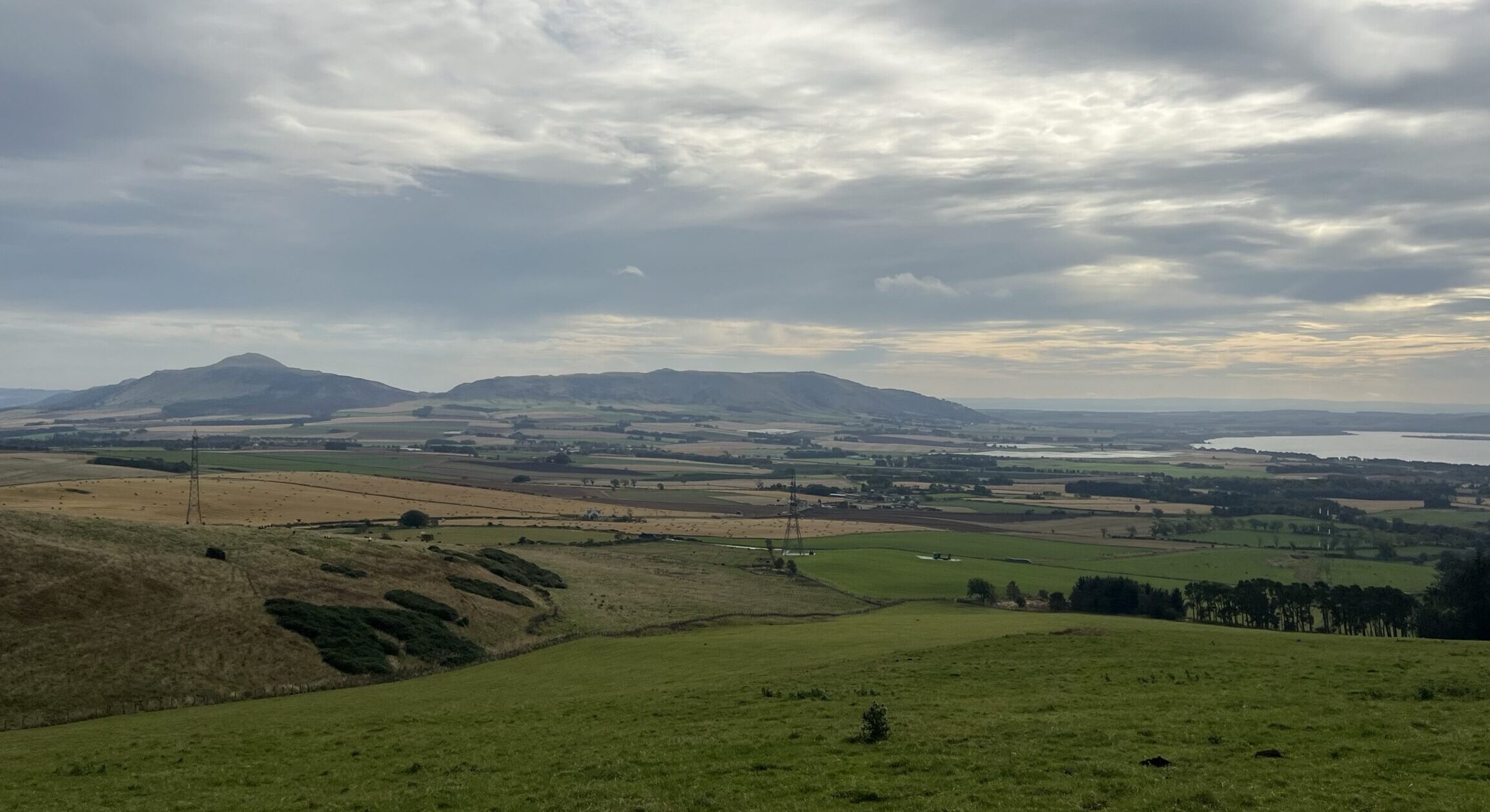
Views from Tillyrie Hill
Curious, I then asked him to name his favorite spot in the area. The top of Tillyrie hill was his answer.
Whenever life gets tough— for example during lambing season when things don’t always go to plan—Mark heads up the hill. As he put it:
“If lambing season is rough, and I lose some lambs, I sometimes go up on the hill, look out over the farm and Loch Leven, and it all falls into perspective. I see the cows and sheep walking around the farm, and it reminds me that, in the bigger scheme of things, it’s all alright.”
Regenerative Farming and Beyond
During our chat in Mark’s office—occasionally interrupted by some enthusiastic dogs in need of a scratch or two—we spoke about the evolving conversation on farming and the environment.
For Mark, the term regenerative farming feels like the latest buzzword, but the practices themselves are far from new. Direct drilling, minimal tillage, cover cropping—many of these so-called “regenerative” methods have been part of farming for centuries. Mark uses some of these techniques on his own farm.
This view isn’t unique to Mark. At Groundswell this summer, I spoke with another farmer who shared the same sentiment. It makes me wonder: Is labeling farming as ‘regenerative’ or ‘conventional’ helpful, or does it create unnecessary binaries? Perhaps it’s more useful to view these practices on a spectrum, with farmers adopting different methods to varying degrees based on their unique circumstances.
We also talked about the role livestock play in cycling carbon and nitrogen into the soil, their contribution to biodiversity, and much more.
I could share much from our chat & farm visit, but this is a blog post, not a novel!
If you’ve made it this far, I hope you’ve enjoyed getting to know Mark and Tillyrie Farm a bit better—I certainly have. His story and that of the farm offers a small but insightful glimpse into the many farms in the catchment.
Further Resources
- Interested to learn more about the Luing breed and how their hardiness lends itself to outdoor grazing in Scottish weather? Check out the Luing Cattle Society’s webpage here.
- Find out more about how pasture-fed livestock systems can improve profit margins here.
- Want to explore the debate about whether it’s helpful to create a binary between conventional and sustainable farmers? Check out this academic article.
- Wondering how livestock plays an important role in sustainable farming? Here is a helpful starting point to start exploring.
- Want to know more about the benefits of grass cover for soil health in arable rotations? Click here.