Morton Quarry Weir Removal
Overview
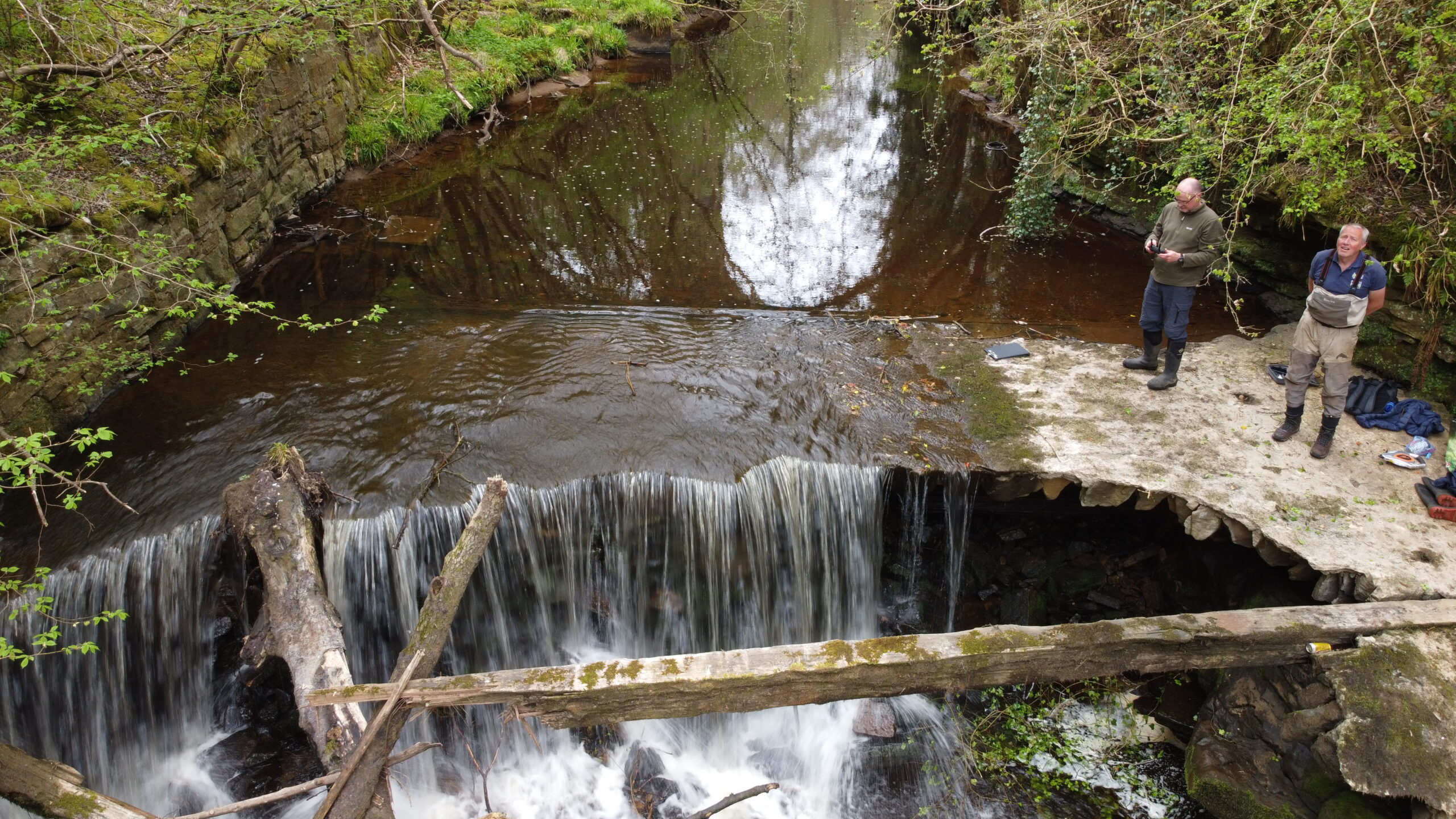
Morton Quarry Weir was originally constructed in the mid to late 1800’s to power pumps for the Oakbank oil shale mine. The weir, situated on the Linhouse water, a tributary of the River Almond was impassable to migratory fish such as salmon, sea trout, brown trout and eel and sat 2.2 metres tall and 10 metres wide. The main challenge was that it was in a difficult location, not accessible to machinery, so the Trust had to come up with a way of removing it without the use of a digger.
The Trust seen Morton Quarry Weir as a priority for removal within the Almond catchment as the Linhouse Water holds some of the best and cleanest gravels due to it mostly being untouched by industry. The Trust staff secured funding from the European Open Rivers Programme to remove the weir by hand.
Health and safety was a priority, with a risk assessment method statement created to detail every safety measure and risk associated with working on this kind of structure. Pre surveys were completed to determine the best way to dismantle the structure.
The weir removal occurred over 10 days with 7 days being work on the ground. Work was stopped over three days due to flooding that helped with the removal process.
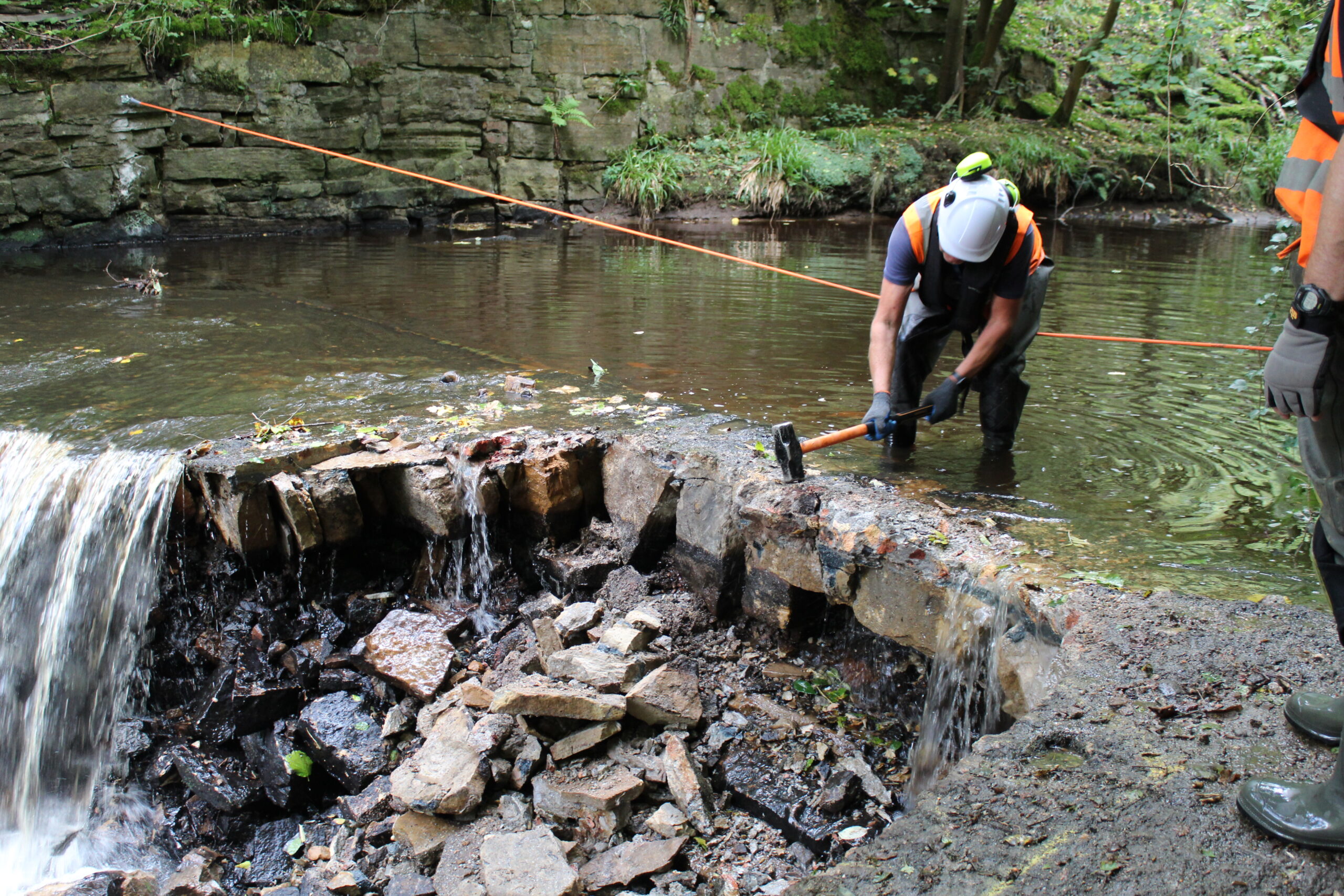
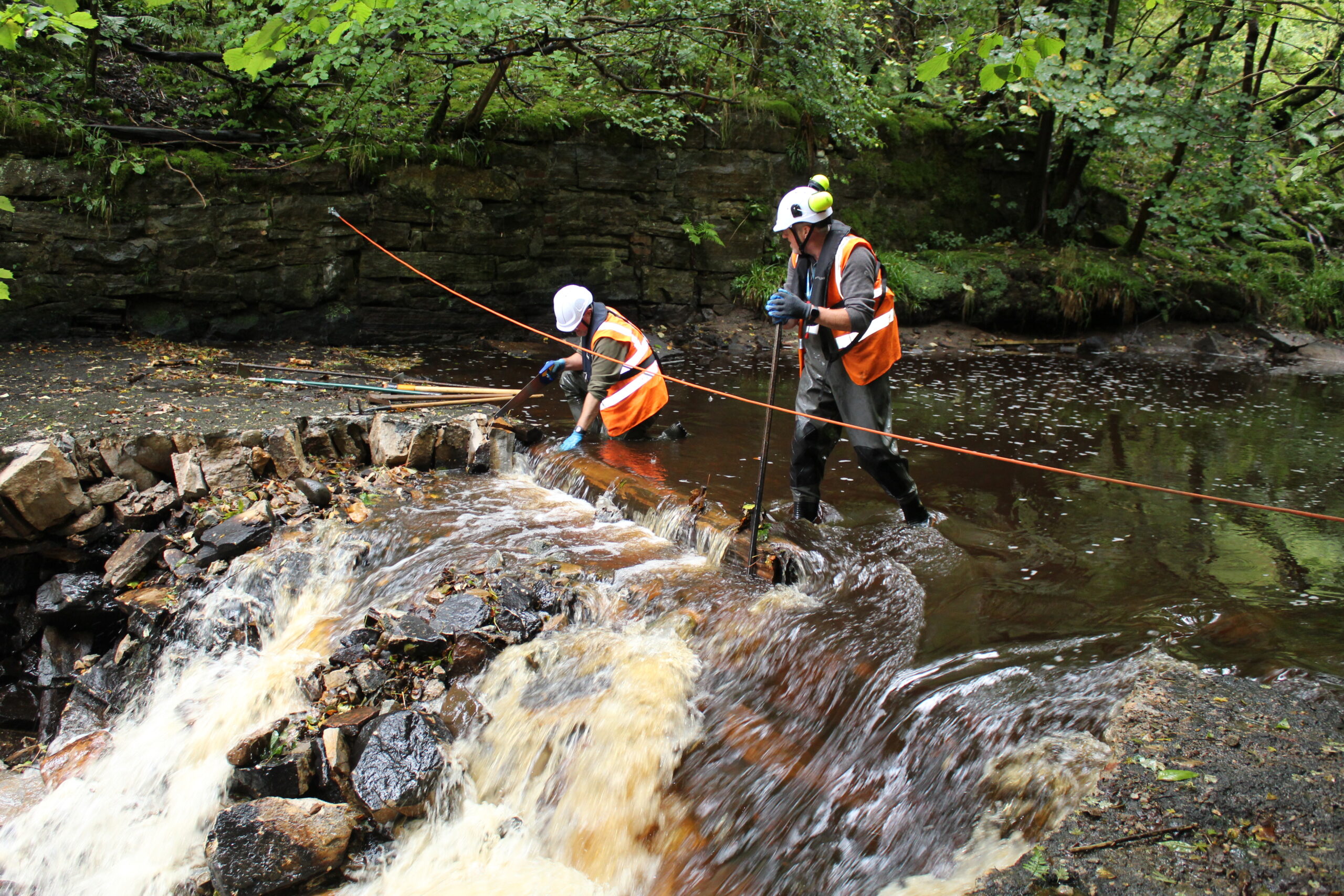
A mixture of sledge hammers, angle grinders and winches were used to remove the stone and concrete, exposing the core of the weir. After the 10 days of work, the weir was removed, allowing fish passage at the site.
Objectives
– Removal of the redundant structure to benefit fish passage
– Improve sediment transportation by restoring natural processess.
– Restore instream habitat through the removal of the impoundment upstream.
– Make safe a deteriorating structure to river users
Landowner
The landowner was unknown for this project. A process of notification was followed with both landowners on either side of the river contacted and giving permission from their part.
Funders
This project is funded by the Scottish Government’s Nature Restoration Fund, managed by NatureScot. This project has also been funded by The Loch Lomond and the Trossachs National Park.