Invasive Non-Native Species Control
Overview
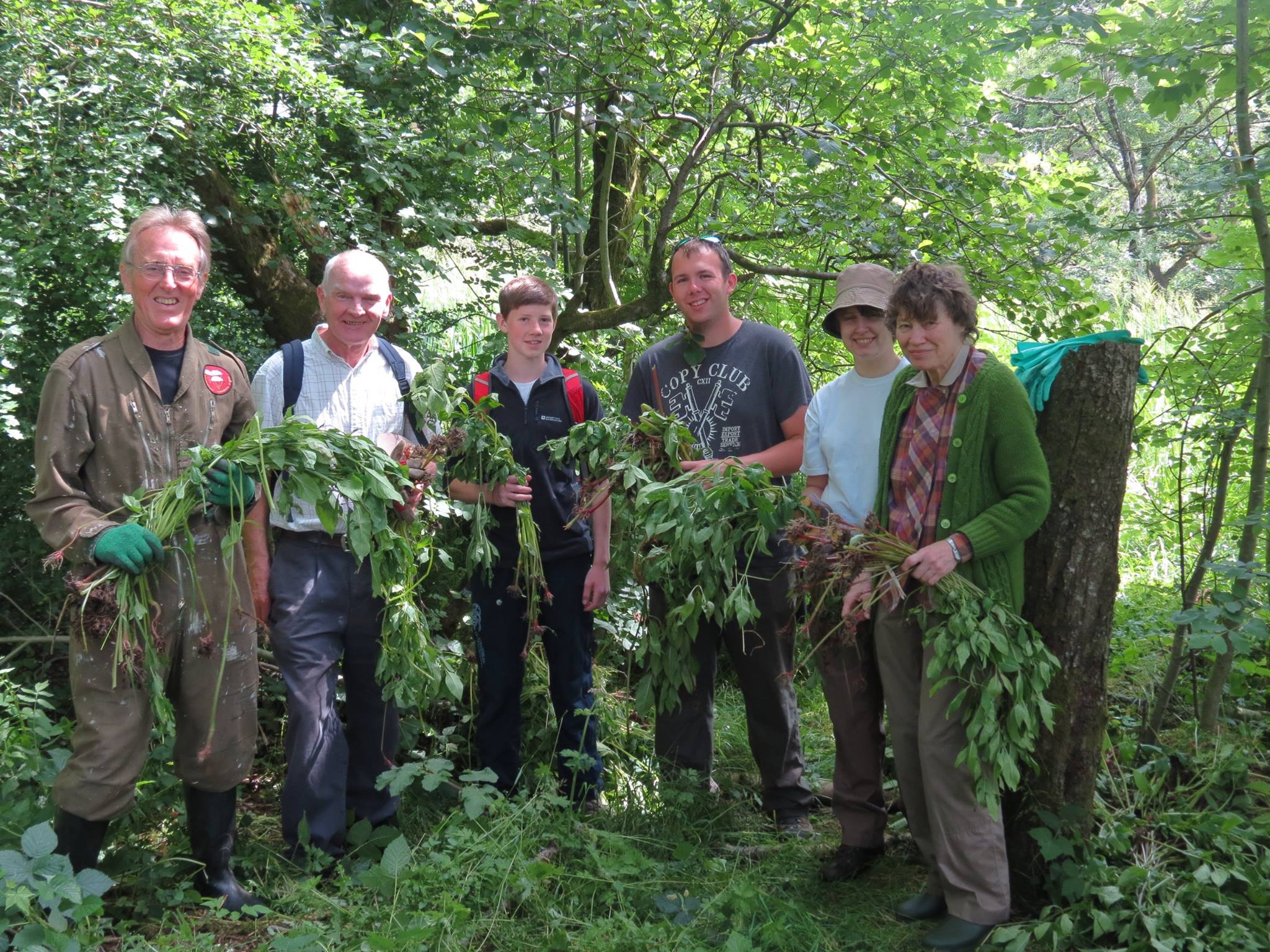
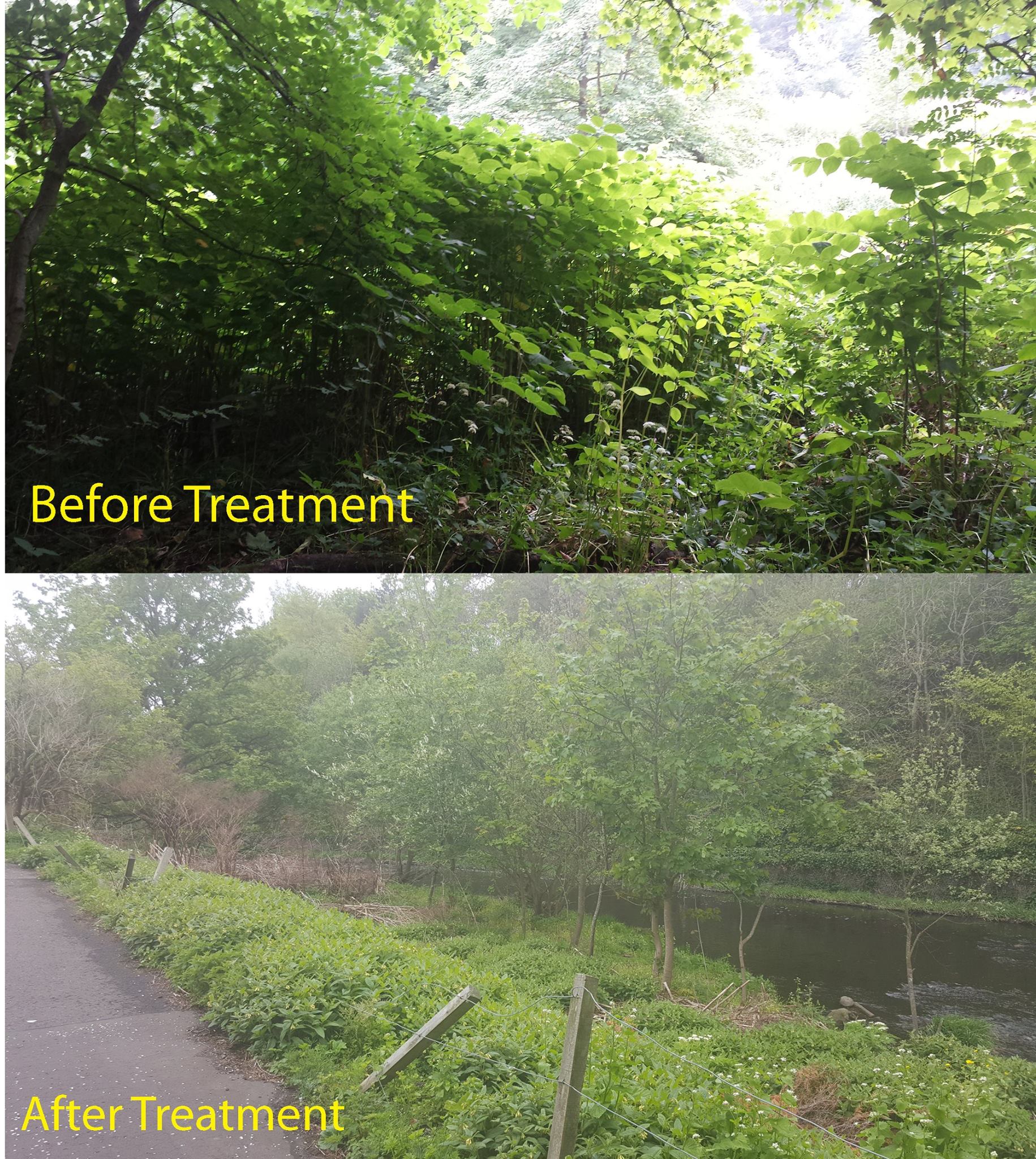
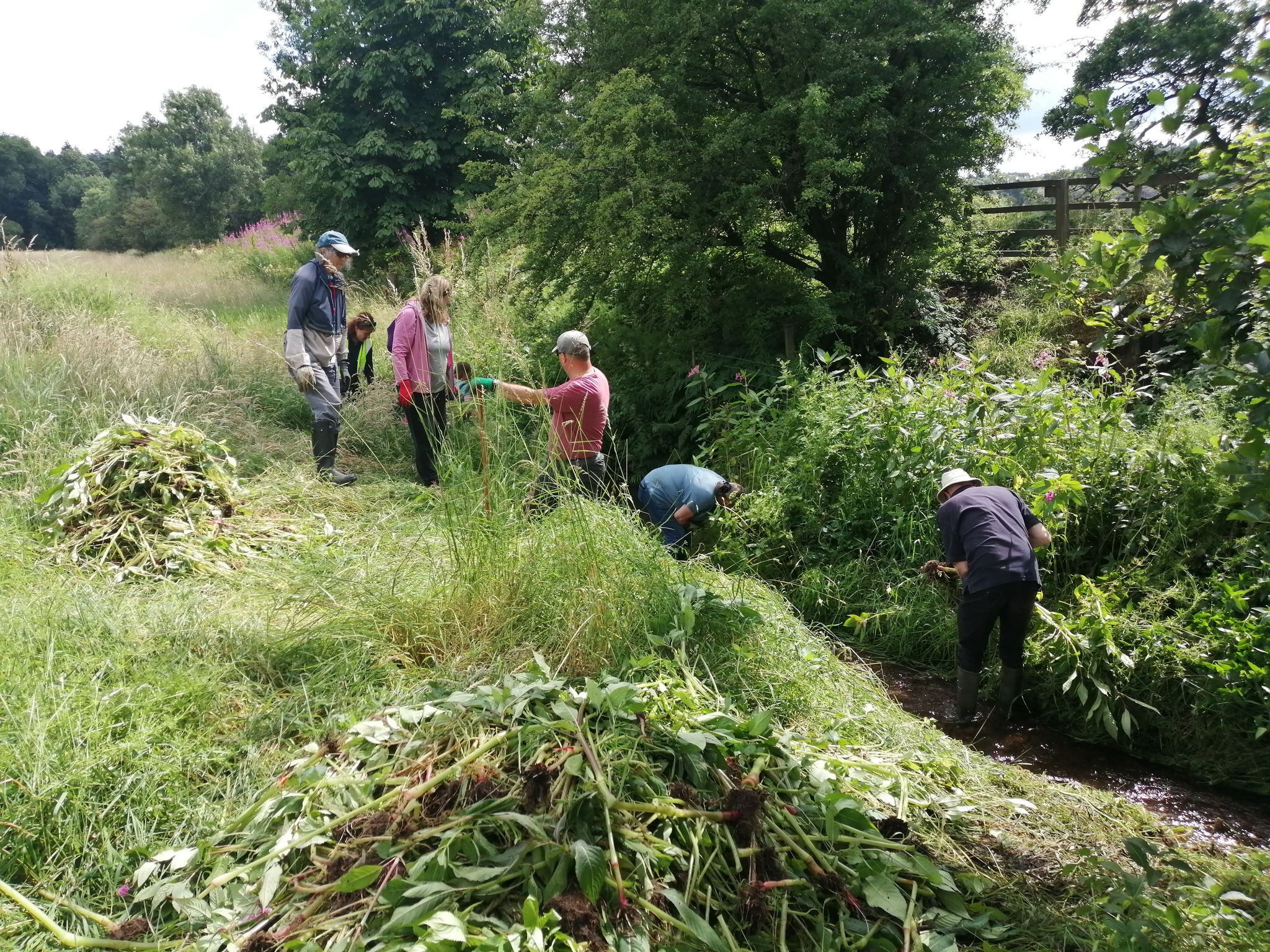
Since 2013, the Forth Rivers Trust has been working with communities to control Invasive Non-Native Species along rivers within the Forth District. The majority of the works have been volunteer led, coordinated by the Trust and funded via various grant schemes. The works were initially under the Forth Invasive Non-Native Species Programme banner which has progressed over a number of phases.
INNS control still takes place across the Forth but not to the same extent as before due to limited funding and the amount in which the Trust can coordinate has declined over the years. The Trust still tries to support communities where we can through the loan of equipment, chemicals (whilst stocks last) and advice, and will always try to gain funding for control works.
If you are a community member or organisation who would like to tackle INNS along rivers in your community but need some advice and support please get in touch. You can also contact Scottish Natural Heritage who are the lead authority on invasive species in Scotland.
For more information on Invasive Non-Native Species please visit the Great Britain Non-Native Species Secretariat.
***Please note, the Trust has been unsuccessful in securing further funding for INNS control at a catchment scale. If you have queries or would like to report INNS issues, please contact Scottish Natural Heritage directly. We are however carrying out limited INNS control in selected catchments as part of certain projects and supported by Local Authorities. Find out if we are active in your area by getting in touch.***
Objectives
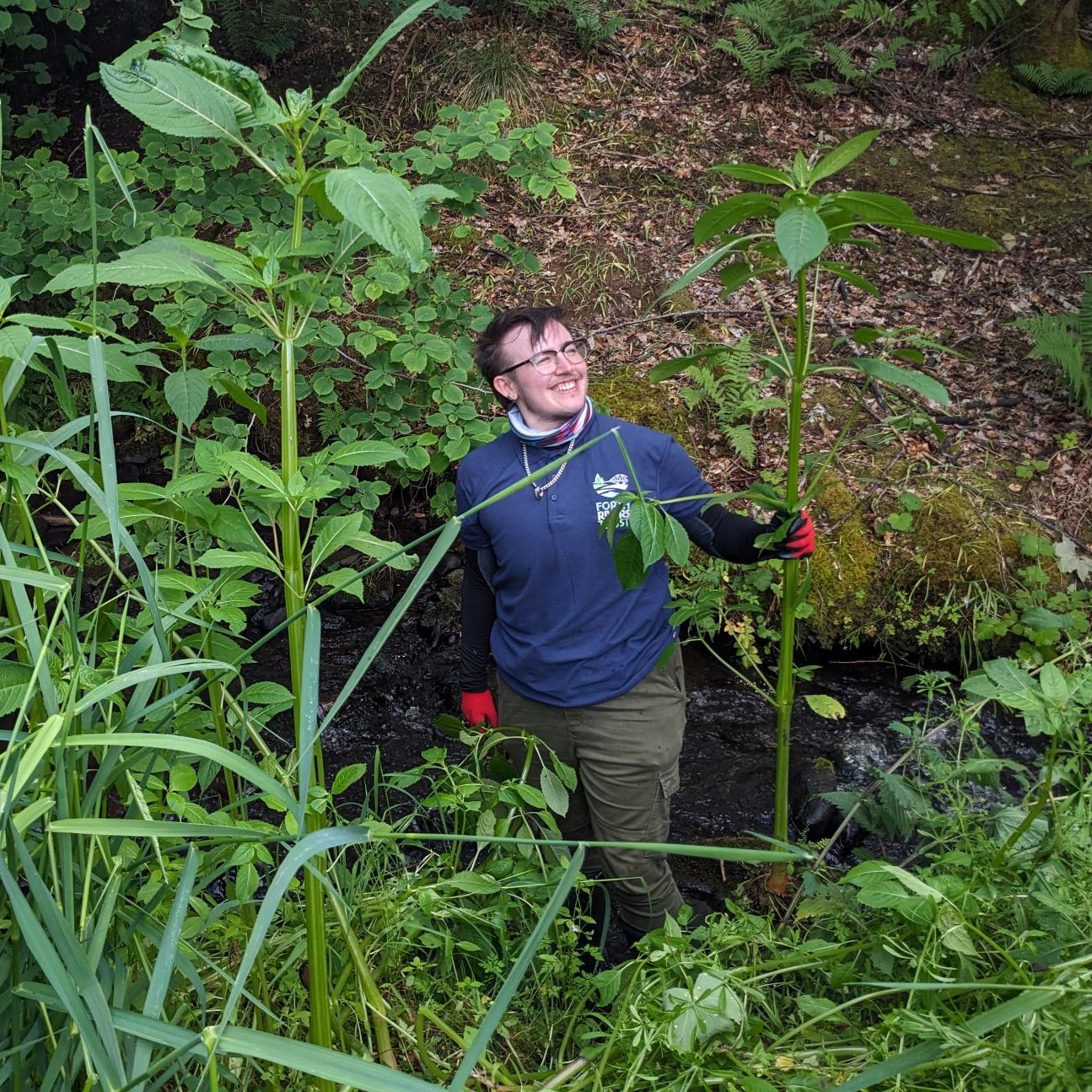
- Control Invasive Non-Native Species along river banks within the Forth.
- Engage with communities affected by INNS through workshops and training on identification, control and sustainable management of INNS.
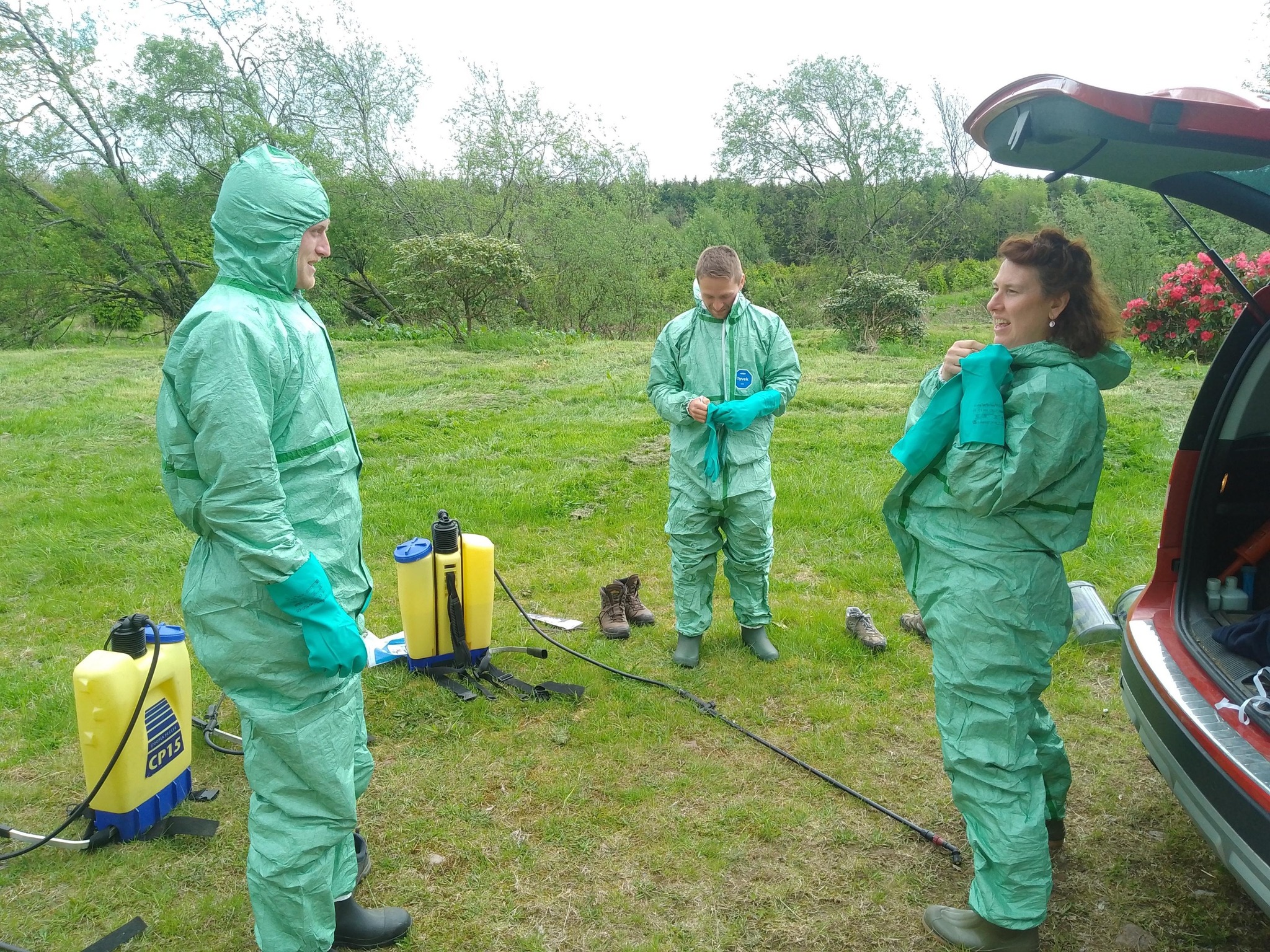
- Support communities to control INNS by providing advice, chemical and equipment.
Funders
At conception, this project was funded by Leader, SNH, SEPA, Landfill Communities Fund and the Loch Lomond & Trossachs National Park.

Japanese Knotweed
Latin name:
Fallopia Japonica
Description
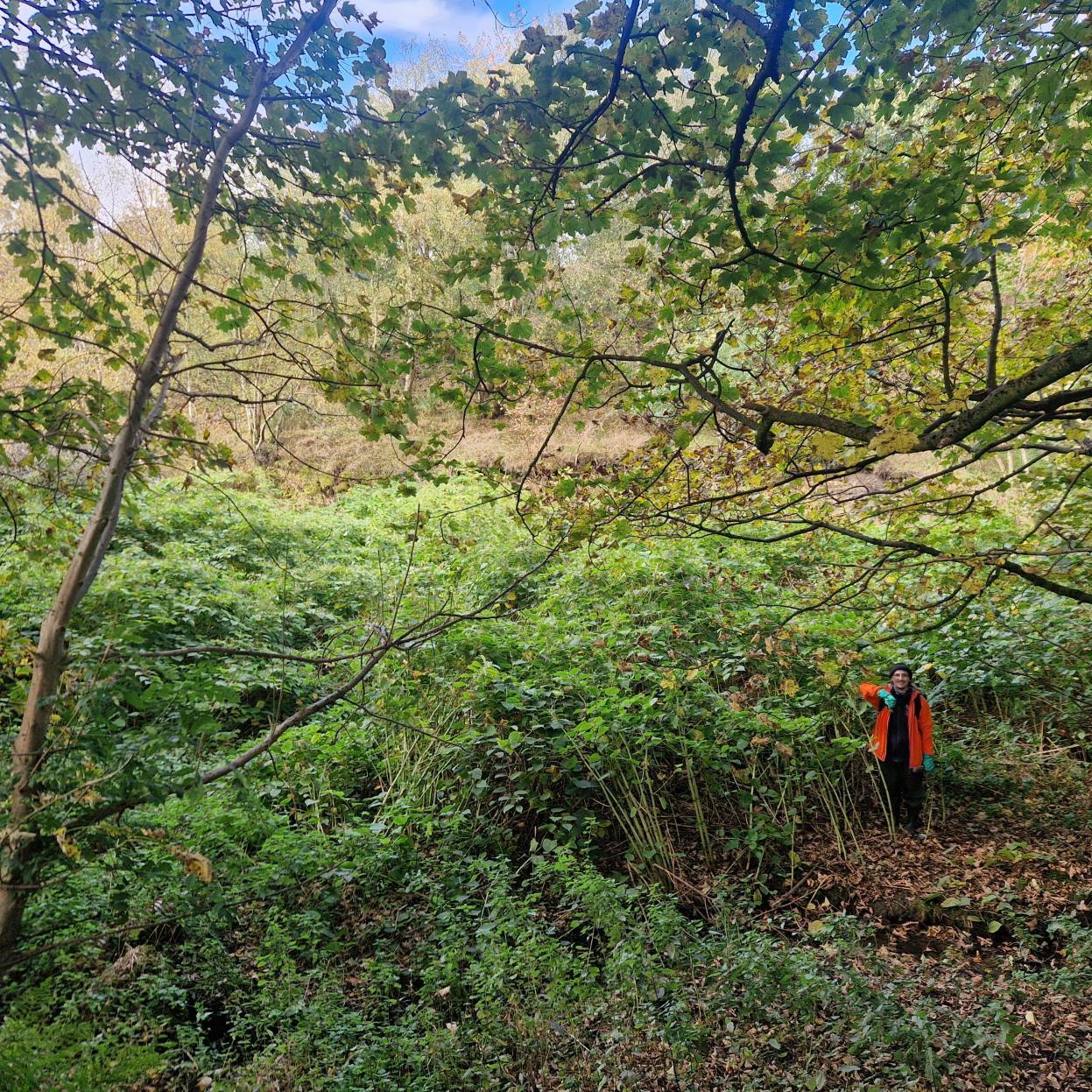
Japanese knotweed grows in large stands which consist of a number of individual stems originating from the same rhizome. The plant normally grows around 2m tall and has bamboo like stems which are green with purple speckles. The leaves of the plant are about 10-15cm and are a tear drop shape with a flat base. Japanese knotweed grows in many areas but prefers disturbed soil, river banks and loose ground. In it’s native range it grows in harsh environments and can be found growing in volcanic landscapes.
Giant Hogweed
Latin name:
Heracleum mantegazzianum
Description
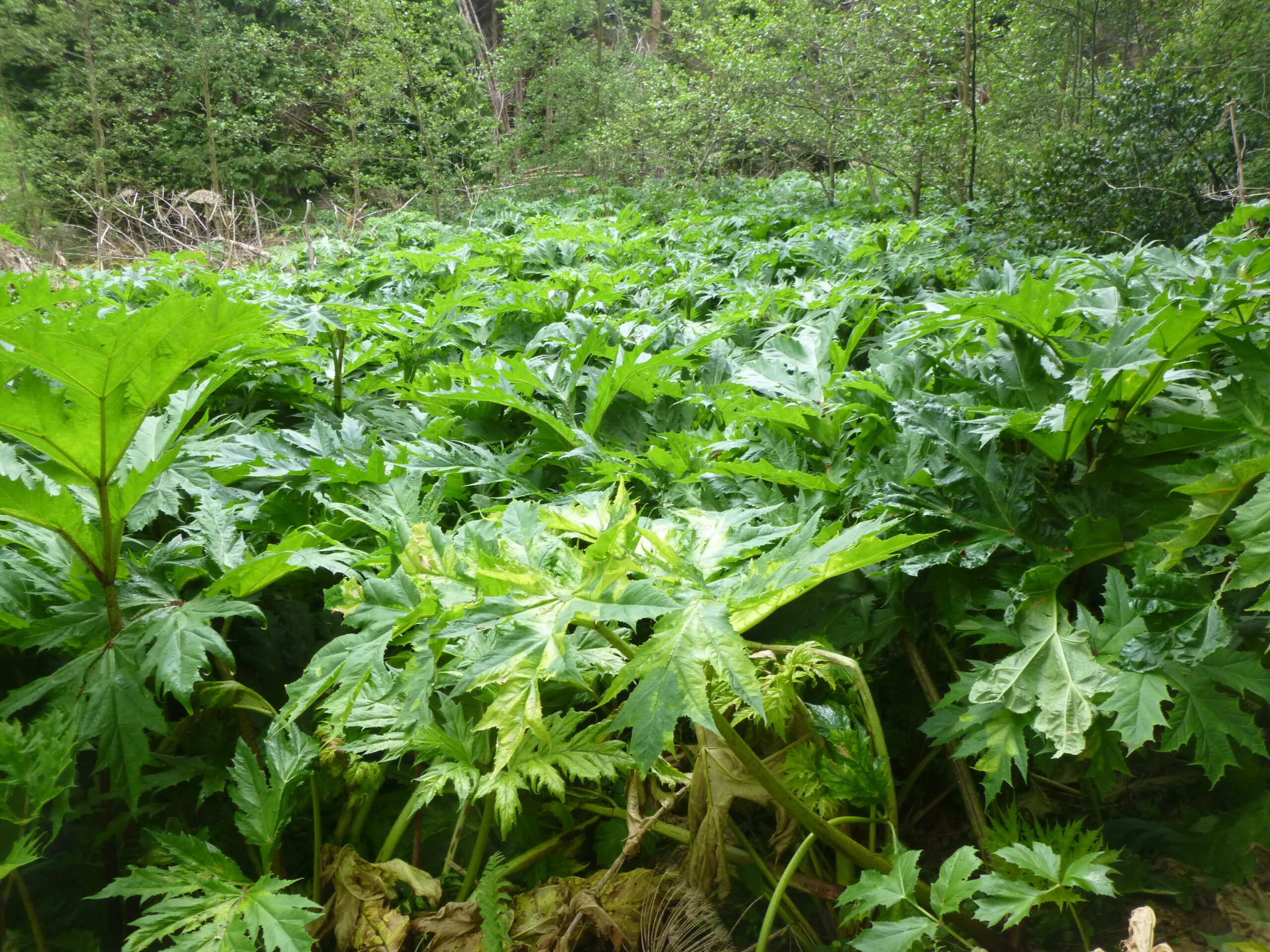
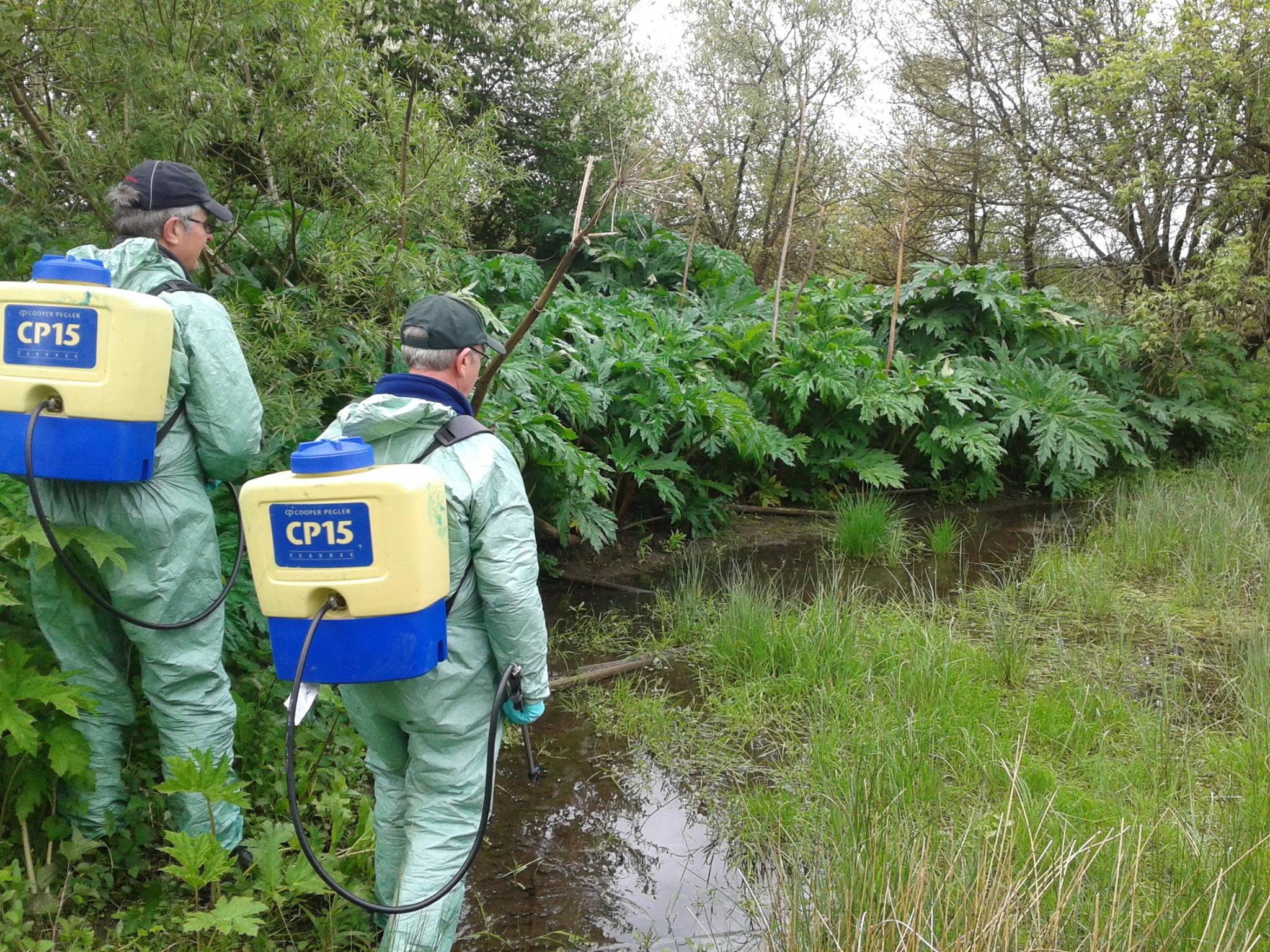
Giant hogweed grows in a range of places but can mostly be found along rivers or railway tracks due to the plant spreading by seed and these corridors helping distribute it. The plant normally grows between 2 – 3 metres tall with its leaves growing up to 1.5m long but when conditions are right, plants have been known to grow up to 5m tall. Each plant can produce anywhere between 20,000 and 30,000 seeds through producing large white “umbrella like” flowers. The seeds can lay dormant in the soil for 10+ years. Giant hogweed is a hazard and can cause harm to people due to its phytotoxic sap which causes blisters on skin when it comes into contact with sunlight.

Himalayan Balsam
Latin name:
Fallopia Japonica
Description
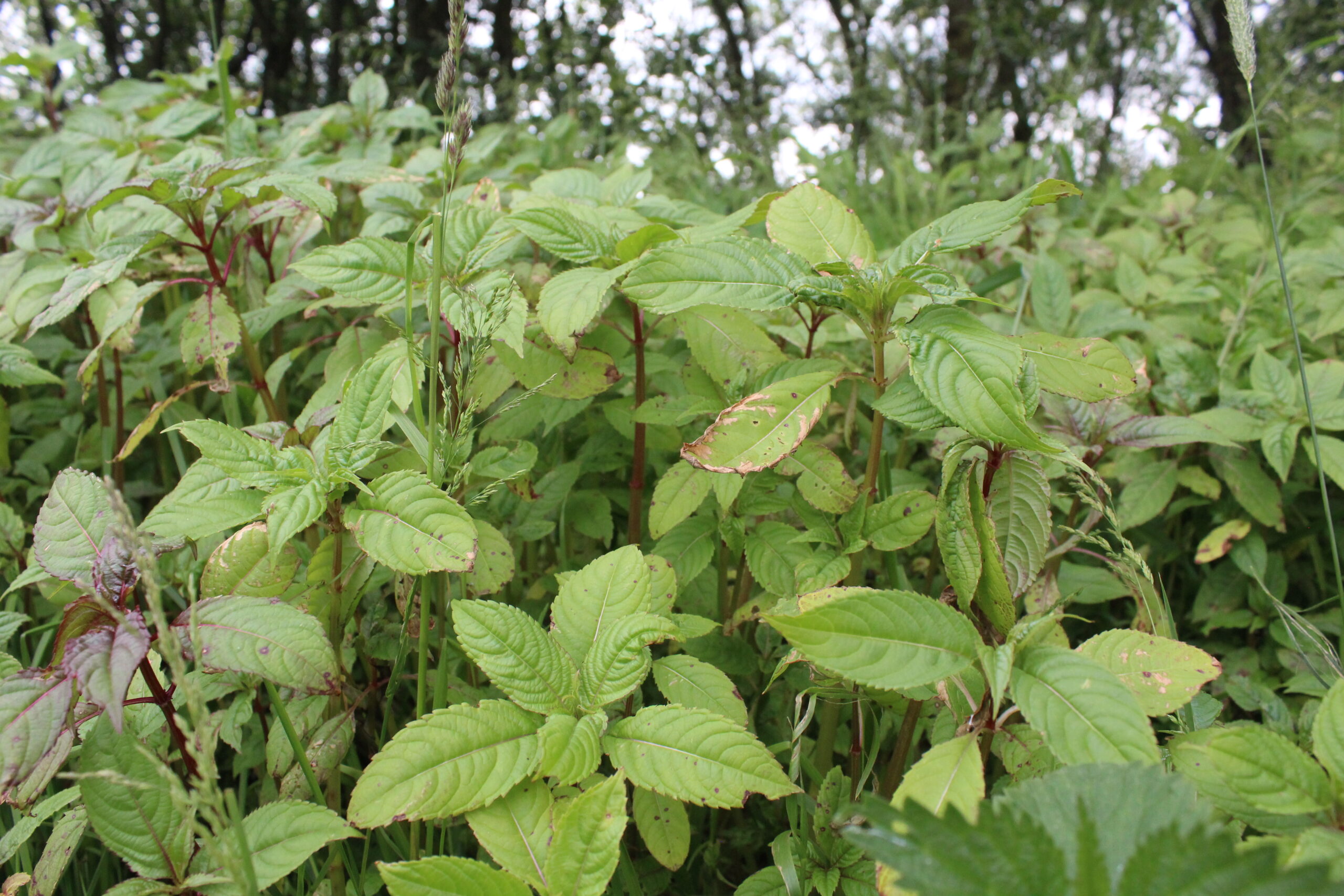
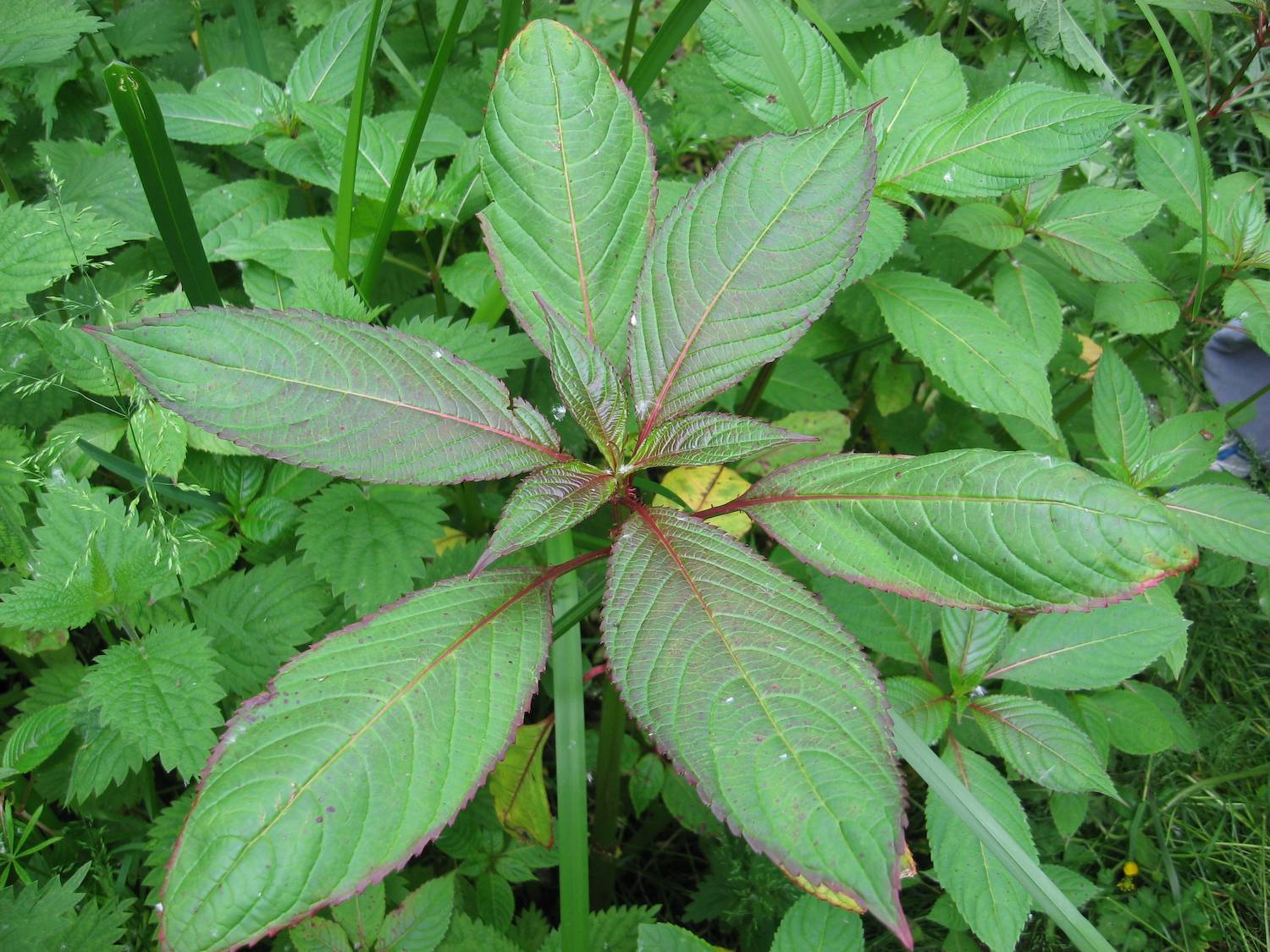
Himalayan balsam is a sweet smelling plant which grows along waterways and marshy areas. The plant can grow up to 2 metres tall and has a fleshy stem. Leaves on the plant are spear like and green in colour, the veins on the leaf are red in colour and the edges of the leaves are serrated. By mid summer, the plant has a number of small pink and white flowers which emit a strong sweet smell. Near the end of summer, seed pods develop on the plant which have a unique dispersal method. When ripe, the seed pods explode launching the seeds up to 7 metres from the plant.
American Skunk Cabbage
Latin name:
Heracleum mantegazzianum
Description
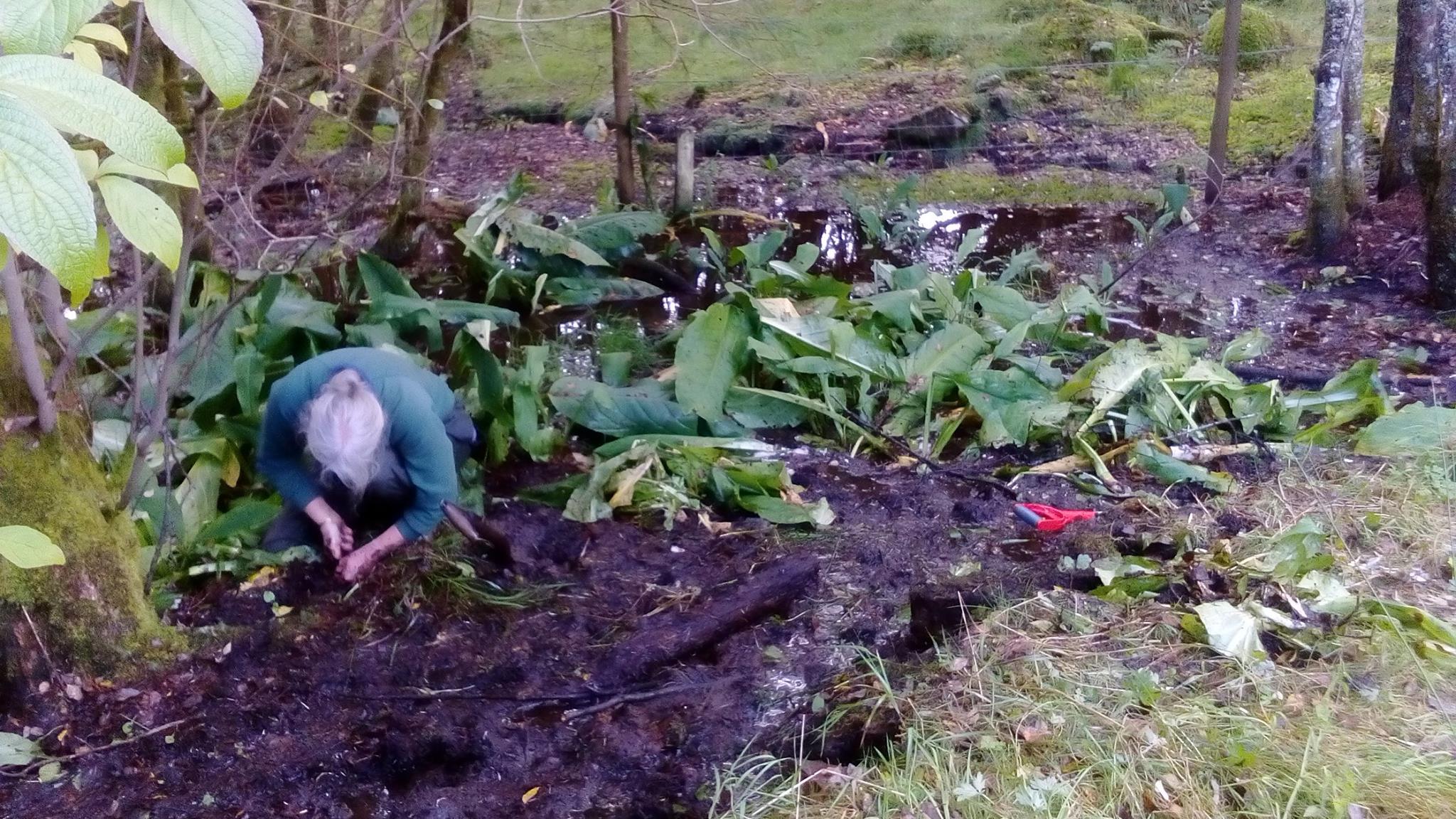
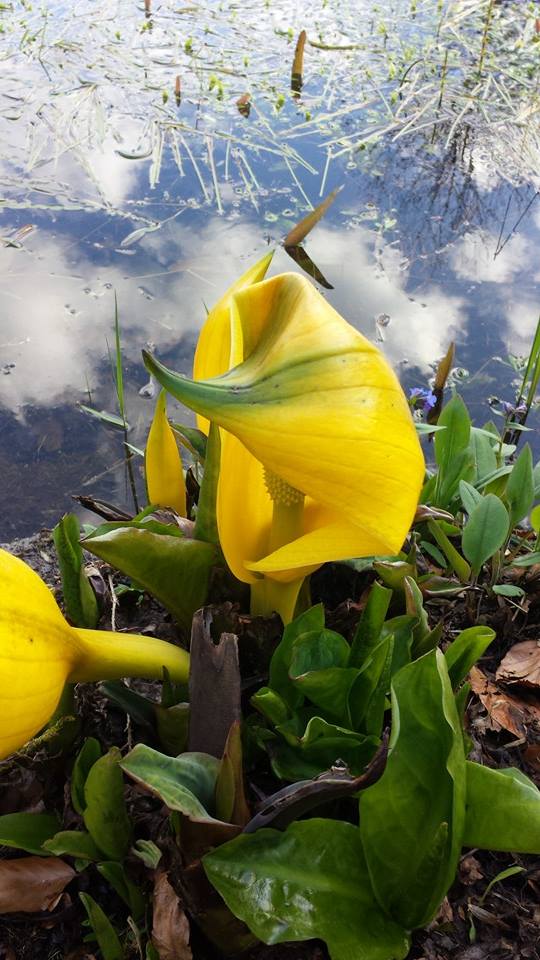
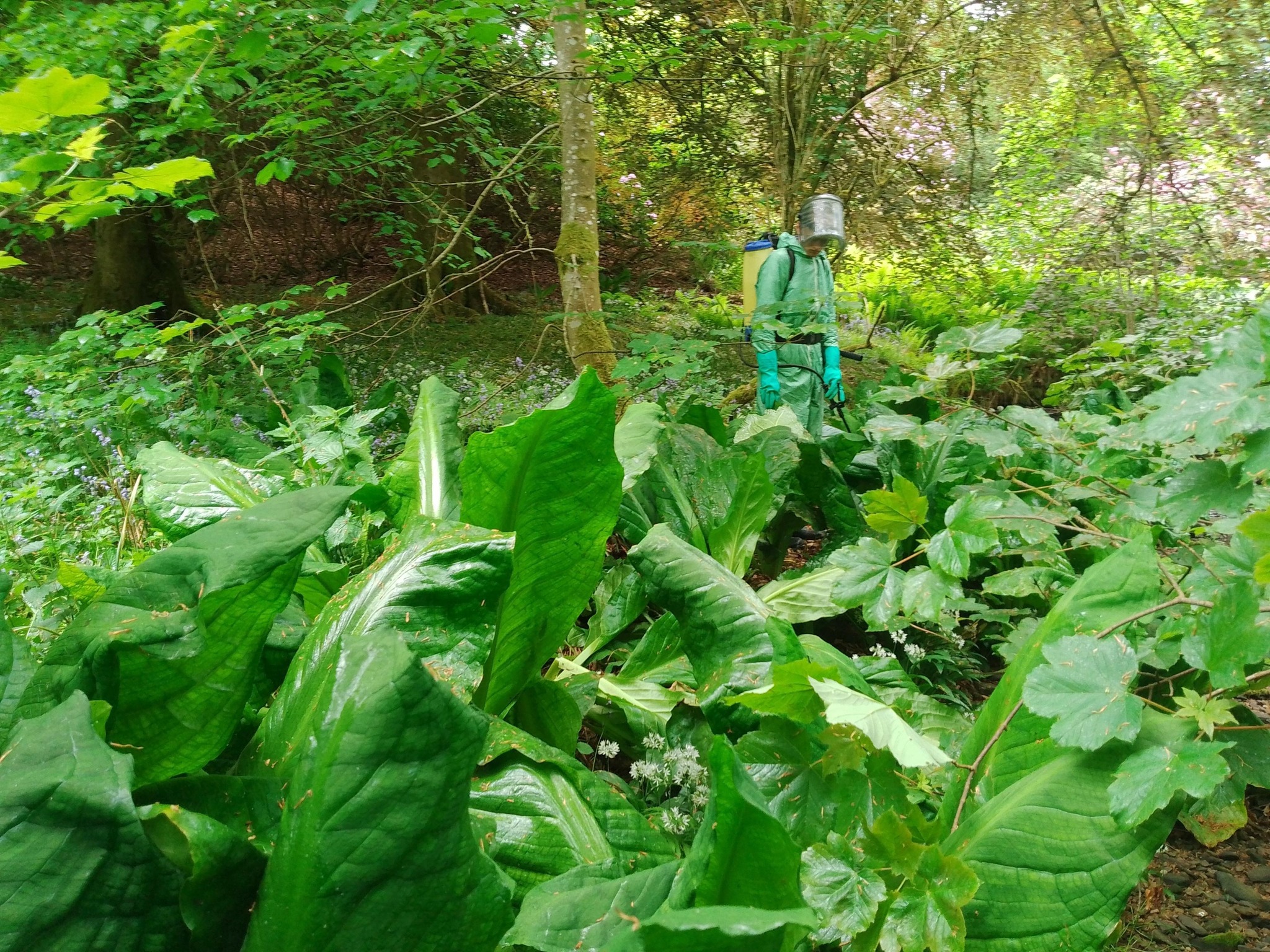
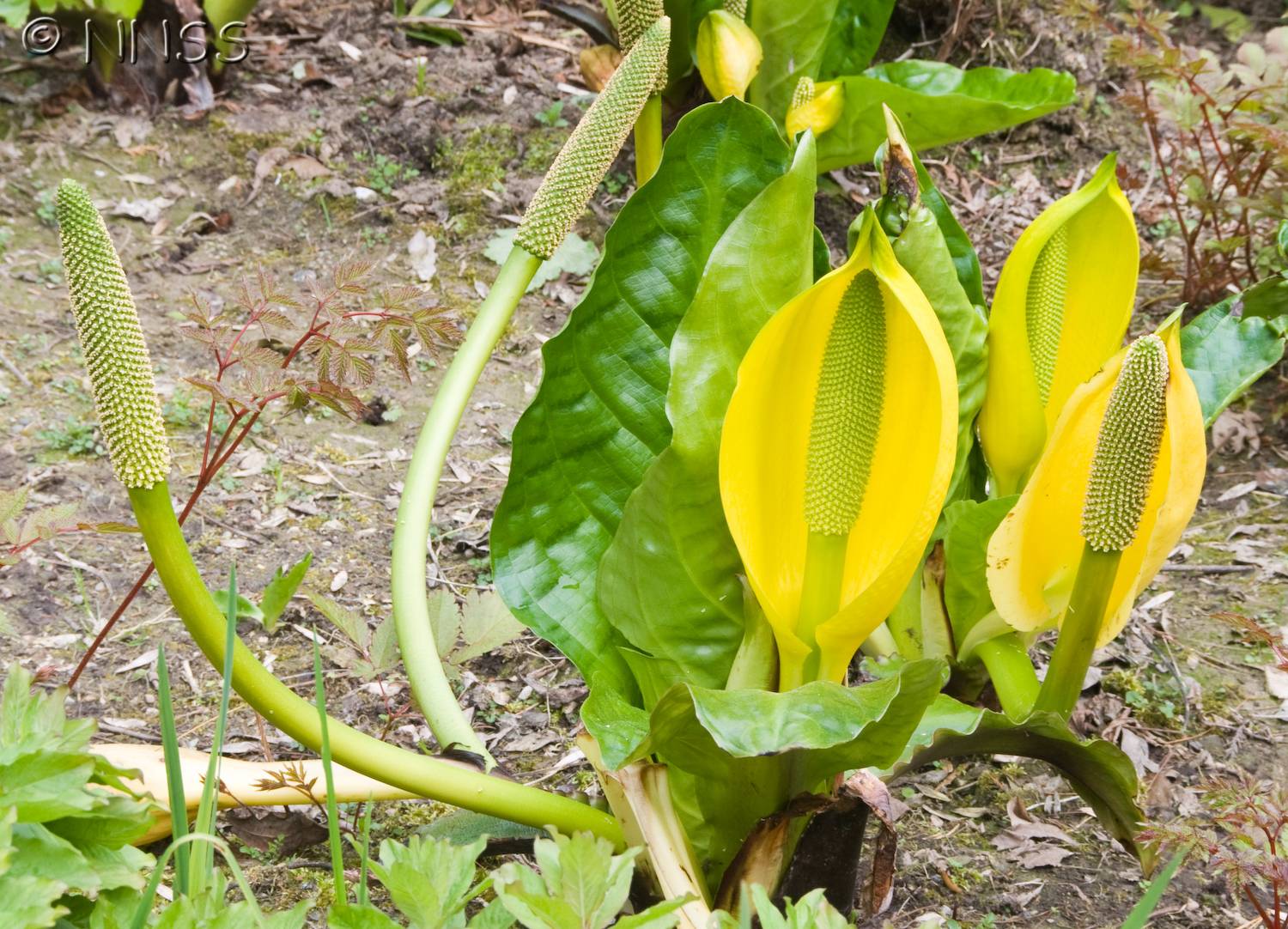
American Skunk Cabbage can grow up to 1.5 metres tall and can be identified through its large waxy leaves and a large yellow flower. The flower appears first in spring followed by the growth of its leaves. The plant thrives in slow moving water, lochs and marshy areas. Planted in the UK as a pond ornimental plant, this has now escaped and causes major issues for wetland plants. The plant spreads through the dispersal of seeds from a central seed pod.
American Mink
Latin name:
Fallopia Japonica
Description
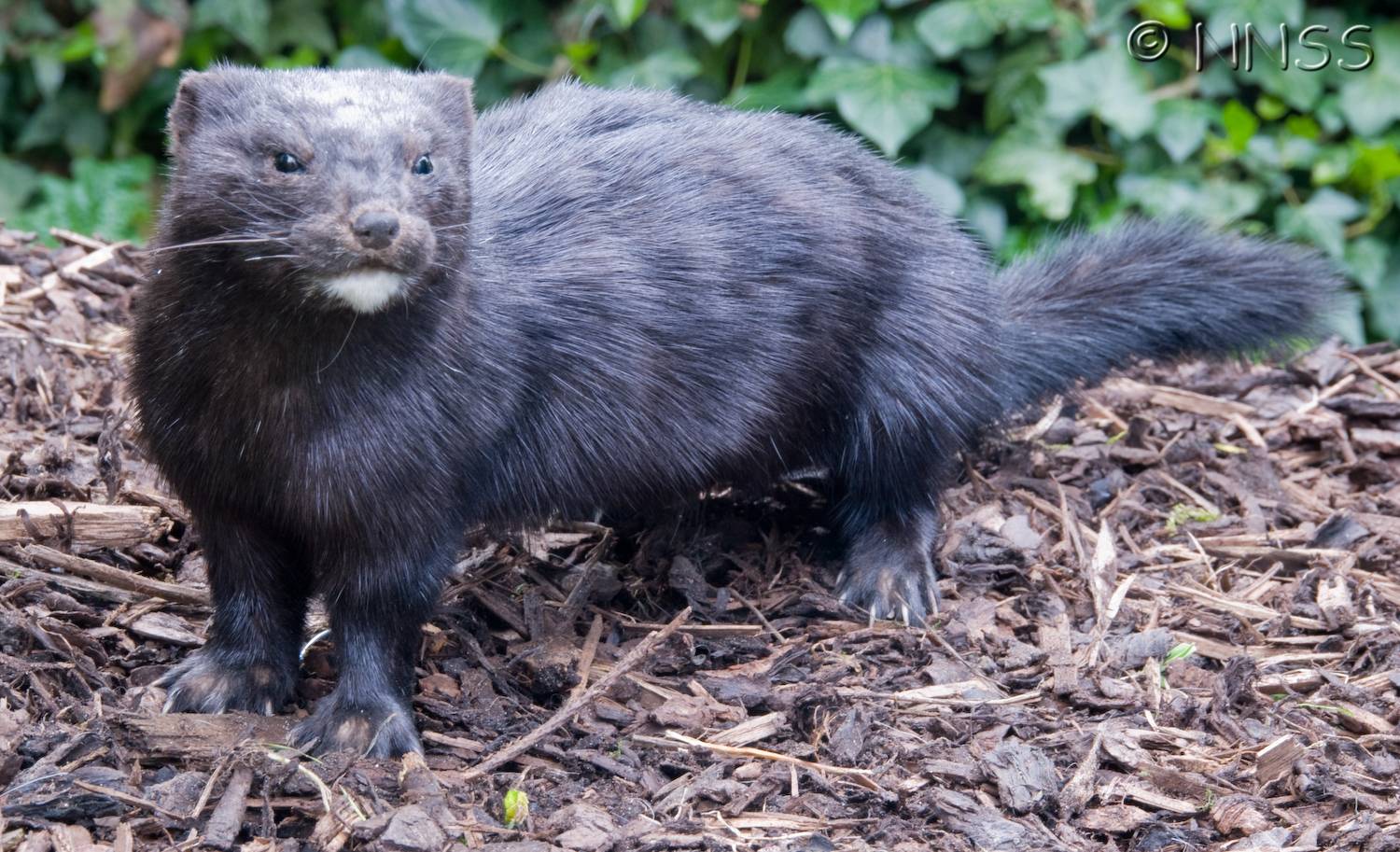
American mink are a semi aquatic mammal which live along rivers and wetlands. Mink were first introduced into the UK for the fur industry with many mink farms opening up right across the UK. Mink escaped or were deliberately released by animal activists which have caused issues for native aquatic wildlife. Mink are teretorial and have a territory of between 1 – 5km. They are mostly dark brown in colour but this does vary and some have been known to be white or a cream colour.
American Signal Crayfish
Latin name:
Pacifastacus leniusculus
Description
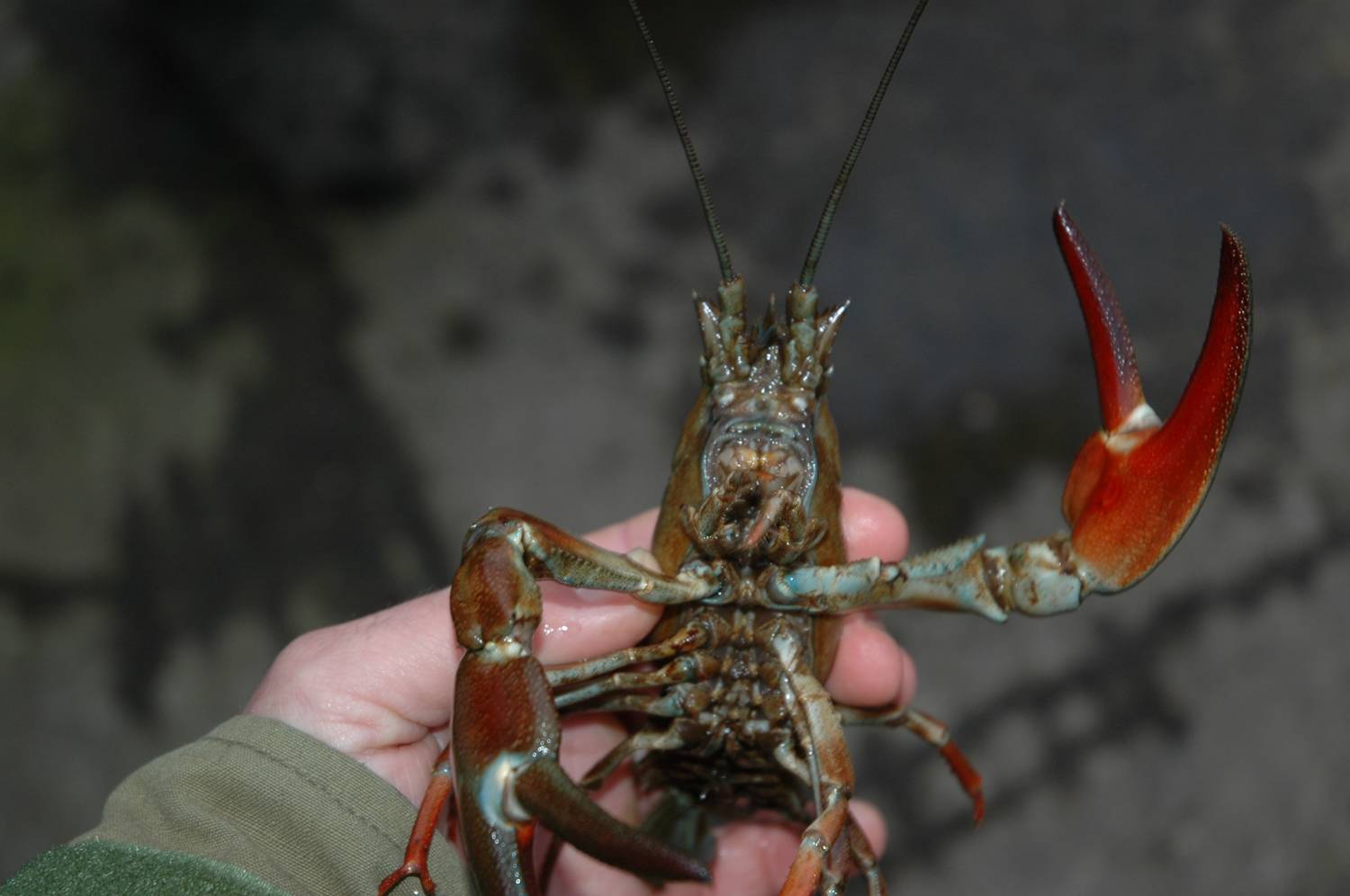
Signal crayfish are an aquatic freshwater species which resemble a small lobster. In Scotland, there is no native freshwater crayfish species so any crayfish found is non native. Signal crayfish can grow up to 15cm and are a dark brown/red colour. The underside of the claws are bright red and the hinge between claws have a white or turquoise spot. The signal crayfish are native to North America and were brought over to the UK through the pet trade and released into garden ponds as a food source.